
Category Archives: Meat Rabbits
Six Options for Culls
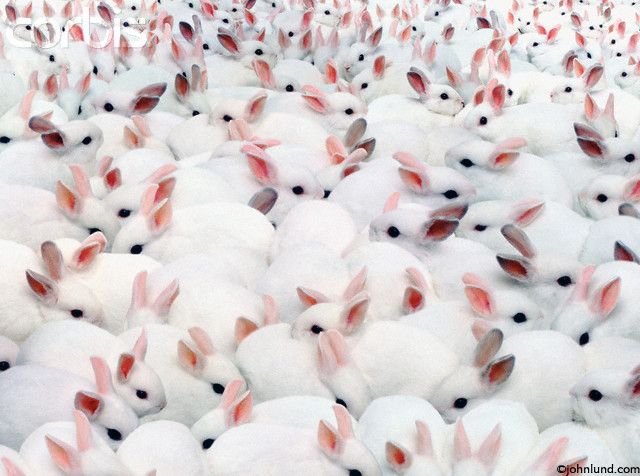
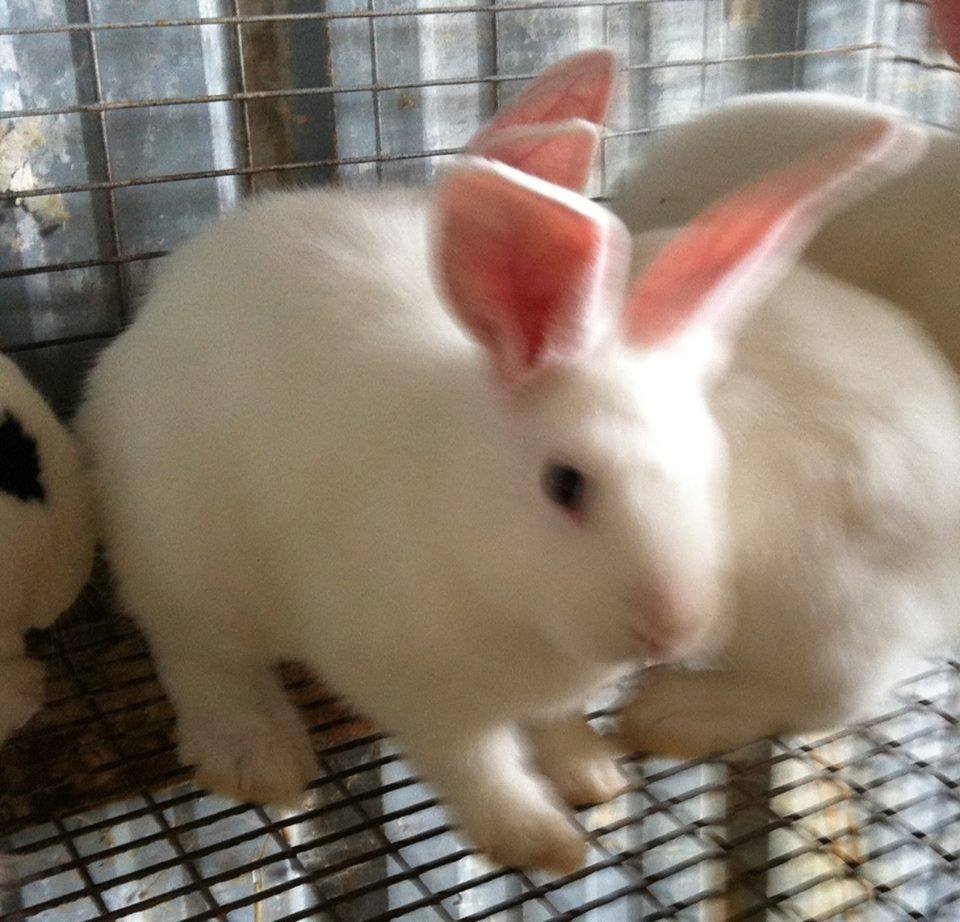
Group of White Rabbits — Image by © John Lund/CORBIS
One of the ongoing issues of raising rabbits is that rabbits breed like… rabbits. Which means you might possibly run into a situation where you fee like you have rabbits coming out of your ears!
It’s a wise idea to have an end game in mind before you ever breed your rabbit at all. It’s not only unwise to indiscriminately breed a living thing, it can also be unethical to overload yourself past the capacity of your rabbitry. Rabbits are such a versatile animal there are several options for utilizing rabbits you want to cull from your own breeding program. Here are just a few ideas:
- Help others get started raising rabbits. It’s always a joy to help others start their own urban homestead or make conscious choices about their food sources! Check with your local feed store to see if you can place an advertisement on their bulletin board about your rabbits for sale.
- Fill your own freezer. There is a beautiful sense of thanksgiving in knowing that you are providing for your own needs (and that all meat doesn’t come on a styrofoam tray filled with miscellaneous chemicals).
- Fill someone else’s freezer. We have a good friend who has an auto-immune disorder. Purchasing food that doesn’t cause their body to go into attack mode has become more and more challenging; our rabbits are one of the only meats she can eat at this point and providing them for her has been a blessing! Consider talking with your local food bank about families that might appreciate a healthy infusion of meat (be certain you’ve looked into the laws regarding providing food for human consumption in your area. In our area we can only sell the live rabbit without regulation.) There is a facebook group you might find interesting: Rabbit Breeders Feeding the Hungry.
- Raptor Rescues/Rehabilitation. Check to see if your area has a bird rehabilitation center or preserve. Many birds of prey live off of rabbit and donations could be considered a tax write off depending on your area and regulations.
- RAW/BARF Feeding. More and more dog and cat owners are turning toward non-processed foods for their pets. One of our friends has seen a life-saving turnaround in their dog after switching from a major name brand dog food to a “whole food” approach with her pet! Check your local Craigslist or ask around at pet shops for contacts of people who might have a need for rabbit.
- Snake Feeding. Snakes love rabbits in the wild or domesticated. The snake breeders in our area will not feed live animals so their snakes do not develop aggression, which makes me feel better about this outlet! While I am not a snake-lover in any way, my spouse is and has regularly reminded me snakes need to eat, too. {yuck!}
You’ll notice I don’t include pet sales in this list. Many people do sell rabbits as pets and we have done so on occasion. More and more we frown against it however, as rabbits really aren’t genetically inclined to be cuddlers and the closer breeders get to the pet market the more ground is lost against breeding in general and specifically for health, vitality, dress out percentages, and self-sufficiency. This is a personal opinion, so take it with a grain of salt, but I would avoid pet sales. We have also discovered the expectations of a pet owner are quite different from those of a commercial breed rabbit owner and thus can be challenging.
We’d love to hear of your outlets for culls/excess rabbits in the comments!
Posing and Evaluating Commercial Rabbits
As a new breeder it was very hard for us to understand exactly what people meant when they would say “Commercial Type.” We started out by basically describing it as a basketball with a head!
We went to shows and did our best to listen and learn whenever any breed of rabbit that is supposed to have the body type of our breeds was on the table. We also discovered some really great resources, like this diagram of Commercial rabbit type:

Even as awesome as photos and diagrams are, sometimes it’s helpful to actually see something, so I took a few (very amateur!) videos of our rabbits and what we look for when posing and evaluating them. The disclaimer is that we are not rabbit judges and we are not the be all end all of rabbit breeders – but we are pretty good listeners and active learners from those who will teach!
Here is a dialogue of a few of the things we have learned and try to implement in our rabbitry. If these videos can be helpful, we’re happy to share!
This is Triton. He’s a Grand Champion Silver Fox with six championship legs to date and has won Reserve in Show.
This is Dawn. She is a blue silver fox, which cannot win any awards as it’s not a recognized color yet, but you can see that we like her depth and don’t prefer her fur. There’s no perfect rabbit!
This is Lucy. She is a Grand Champion Cinnamon with six championship legs to date. She was kind enough to show you the difference between an unposed rabbit and a posed rabbit.
Here are a pair of two 10 week old Silver Fox kits.
BunnyVac: Two Years Later
 Hi, friends.
At least once a month I get a message from someone who wants to know our experience with BunnyVac. I don’t blame them, whenever BunnyVac is mentioned on a facebook group there is a violent debate about those who are completely pro-vac and others who consider BunnyVac a horrible hoax at best and blatant subterfuge at worst.
We use BunnyVac. We’ve never had an outbreak of snuffles in our rabbitry and I feel confident that the rabbits we’ve sold have had healthy lives and done well for their new owners.
We are not pro-vaccination. In fact, we don’t vaccinate for anything else. We do our best to raise rabbits that are low maintenance and don’t require anything except humane treatment. We add Apple Cider Vinegar to their water daily, worm with grapefruit seed extract once every 4-6 months. When we have a mama with a brand new litter she gets a little calf manna as a treat. We’ve seen nestbox eye occasionally and treat it with vetricyn; every once in awhile we use Nutri-Drops as a supplement. That’s it. You now know our whole medicine chest for rabbits!
Because of our philosophy we don’t feel much angst about using BunnyVac, despite those people who are passionately speaking out against its use. BunnyVac is an insurance policy in our mind, a way to protect our investment in livestock.
At the beginning we vaccinated everything in our barn. Now, we only vaccinate a rabbit that goes out of our barn to a show. I believe it works – we haven’t seen any pastuerella here (knock on wood!) and I am aware that one of my rabbits who went to a large cooped show was definitely exposed to something, as the rabbit in the coop next to it was sneezing/snotting. Once that rabbit came home we kept it in quarantine for almost four months before putting it back in the main rabbitry. To date we still have seen no signs of any sickness.
We’ve written a few blog posts on BunnyVac over the years if you’d like to learn more about our personal experiences with it and more in-depth reasoning:
Snuffles, the Rabbit Boogie Man
Bunny Vac:
Bunny Vac: The 8 Month Follow Up
We’re always happy to answer any questions about this product, but honestly all of our answers are in these links! We’re almost two years into using it and have had good results. Just that simple!
Researching Raising Rabbits
More and more we are contacted by people who are interested in beginning their rabbit raising adventures! This is a huge kick for us, as we have found raising rabbits to be affordable, entertaining, and nutritious!
There are a few basic resources we recommend to anyone getting started in rabbits; ways to research the breeds and learn best practices from those who have been there, done that. Here are our favorites:

This is a first stop resource for beginning rabbit breeders.
Read Storey’s Guide to Raising Rabbits by Bob Bennett from cover to cover. This is a great resource! We found our copy at CalRanch but it’s also available on Amazon. His perspective helped us decide what design to use for our rabbit hutches, and gave us practical information on basic rabbit husbandry items. While it doesn’t go into great detail about every single aspect of rabbits, it does provide plenty of information to get you started well and understand what you’re doing and how to purchase your initial stock.
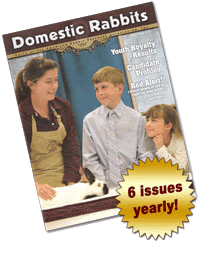
A subscription to the Domestic Rabbits magazine comes with your ARBA membership.
Join ARBA (the American Rabbit Breeders Association). Not only will being a member of ARBA give you access to their publication, Raising Better Rabbits and Cavies, you will also receive the Domestic Rabbit magazine! Every issue provides articles, district reports, veterinarian tips, and listings of individual rabbit raisers who are setting the bar high. This is a great resource for finding breeders who are showing, registering, and granding their rabbits – find the people who are serious about their rabbitry and you’ll find people who will help you get started well. The articles are top notch and relevant.
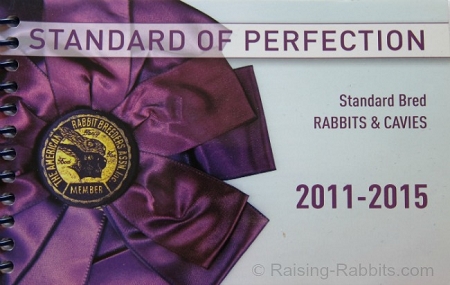
The ARBA Standard of Perfection gives the details of each breed.
Purchase the Standard of Perfection. This is an ARBA publication that is invaluable to the new breeder. The SOP has vocabulary and definitions of different rabbit body parts, diseases, breeds, etc. Each recognized breed is listed in the SOP along with the expectations for weights and how the rabbit should look. If you want to raise rabbits that promote the breed well – and be reputable, you need to know what’s in the Standard of Perfection.

Rabbit Production is a comprehensive manual and excellent resource.
Consider Rabbit Production. Once you’ve fallen in love with rabbit breeding and you’re looking for a much more detailed explanation of best practices, diseases, etc., you will want to spring for Rabbit Production. This comprehensive guide is amazing in its scope! It’s a true asset to have in your library, although it does run on the pricier side.
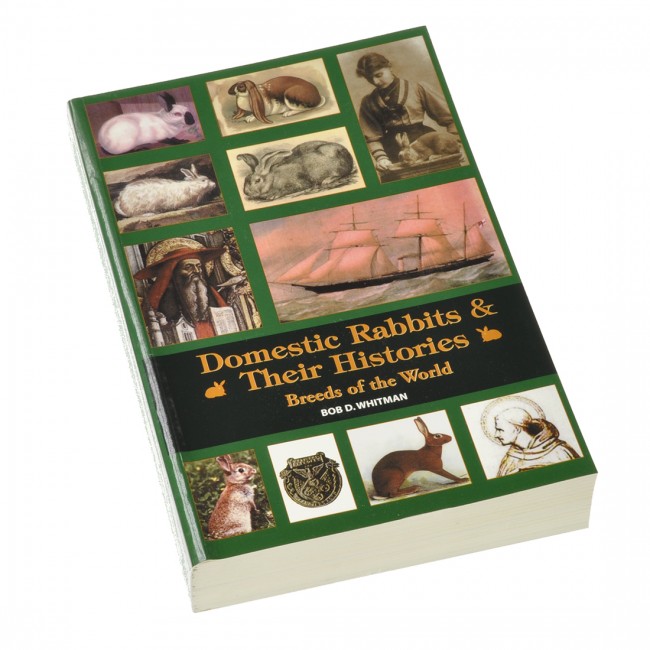
Domestic Rabbits and Their Histories can give you great insight into the work needed to establish rabbit breeds.
Learn the History. Each of the breeds recognized by ARBA has a long and interesting history. While you might be most interested in your specific breed, it’s still interesting to learn the stories of how breeds came to be. The book, Domestic Rabbits and Their Histories by Bob Whitman is a beautiful book with really interesting stories. While it may not be on your “urgent” purchases, it’s definitely worth the read as you become more knowledgable about rabbits in general.
Rabbit Pots and Bunny Berries

The display of our bunny berries at the craft fair.
We have been stretching all of our boundaries lately.
Earlier this year we invested in a cubit press from the Urban Rabbit Project to make Rabbit Pots. (For the unfamiliar, Rabbit Pots are cubes of compressed bunny berries (rabbit poop). These are excellent starters for seed sprouts, or can be crumbled over houseplants as a fertilizers. The cubit press can also be used to create fire starters and compressed fodder cubes.)
We have friends who are going through the adoption process and asked us if we could participate in their fundraising efforts by offering something to sell in a local craft fair. We were absolutely in favor of supporting them but yours truly doesn’t rank high on the “crafty” scale.
But we do have poop.
So, our family put our heads together and put together an assembly line packing moistened, aged bunny berries in Dixie cups and squeezing it into cubes. (Best case scenario will allow the poop to air dry thoroughly before packaging, although a dehydrator is also a good option.) Then we primped and packed our offerings to try to “gussy them up.”
The results:

The Rabbit Pots we made are about three inches square. They’re a little delicate.
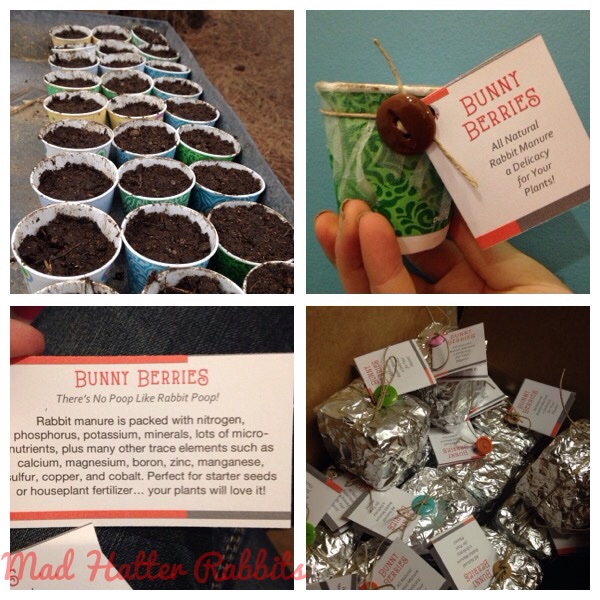
Dixie cups with compacted Berries make this a good option as a seed starter.
To be frank, the feedback we received is that the Bunny Berries were the talk of the craft show and people thought it was very clever but the sales were slow, as most of the craft show clientele (it was hosted in a retirement community) were more in the market for crocheted pot holders and scarves than manure… go figure!
The general take away is this is a good idea, but better marketed in Farmer’s Markets or at local plant nurseries. Either way, we’re glad to add this to our arsenal of ways to make rabbit relevant to every day life!
Blanc de Hotot Sports — Photo and Classification

Obviously, this is not a rabbit. It is a sport. Or a hat. Your call.
Don’t you just love it when something forces you to think and learn? We do!
Raising Blanc de Hotot have given us a whole new topic to explore and learn. To be frank, we’re just working to figure out the genetics piece, and I’m also deep in the research different factors affecting spotted rabbits.
Genetically speaking, the Blanc de Hotot is a black bunny with a really, REALLY large white spot! Here’s the starting point: the genetics of a purebred Hotot should be aaBBCCDDEEEnEnDudu. And the broken gene in an Hotot is also called the “English Spotting” gene.
I’m sure that means something to you genetic gurus out there. I’m still figuring it out, personally!
Since I’m not fluent with the genetic identifications here, another thing we’re learning is that different Hotot sports have different names. I’ve collected photos from around the internet with explanations of what these markings are called. Thank you to anyone who actually took these photos – in many cases I haven’t been able to identify the owner of the photo or rabbit.
If a “broken” Hotot produces a show marked animal (dark eyes, white rabbit, black spectacles or eye bands) and looks like this:

Is this not a beautiful rabbit?! Photo Courtesy of Autumn Denistoun
Then a “solid” Hotot produces a Piebald, which looks a lot like a Dutch rabbit:
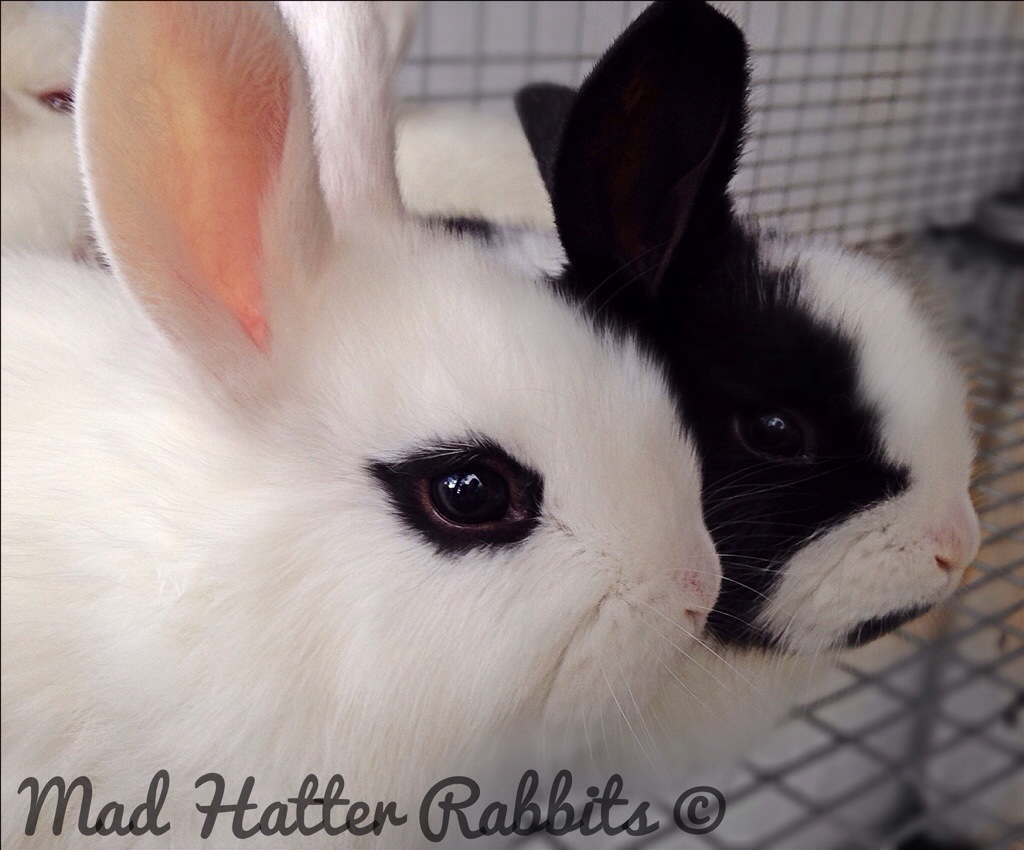
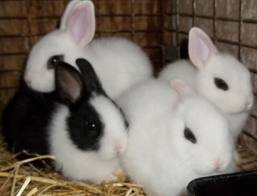
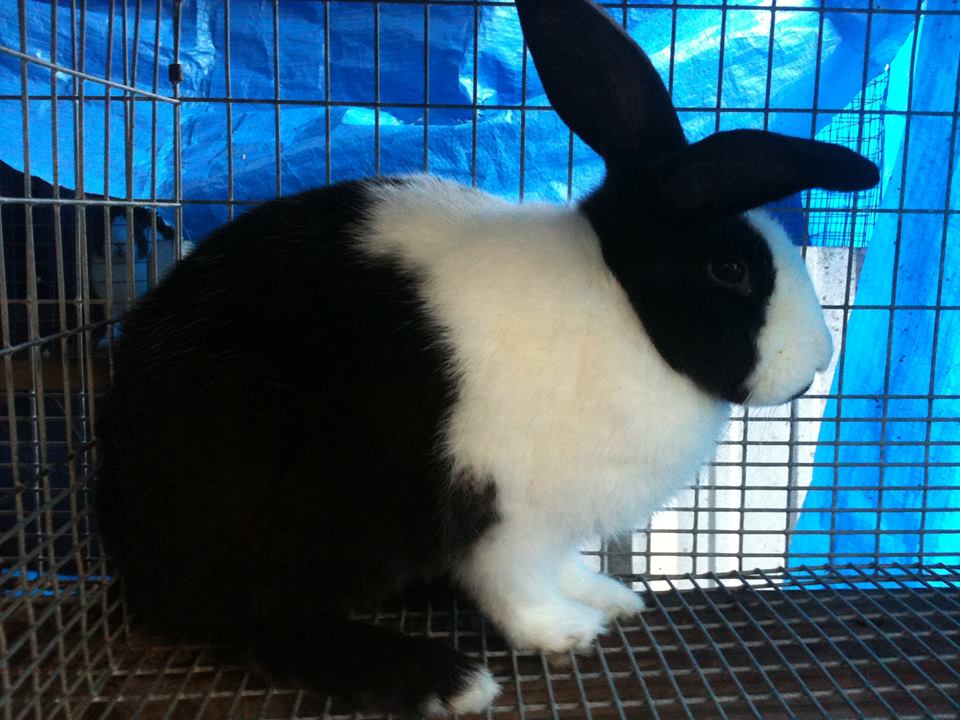
Photo courtesy of Evil Bunny Rabbitry
Now, within the piebald category there are also silver pied. This is a rabbit exhibiting the Dutch markings but with silvering throughout the black blanket of its coloring:
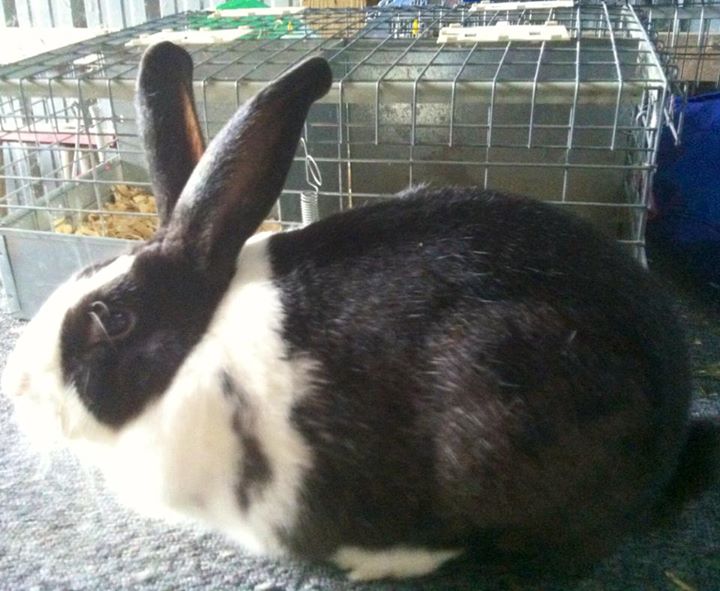
See the white silvering in the black? That’s a giveaway that you’ve got an hotot! Photo courtesy of L. Staley.

Piebald with spots – baby fur. Photo courtesy of L. Staley.
The markings of the Hotot also have specific names. When an hotot has only one eye (instead of both) with the black fur rimming it is called a boxer:
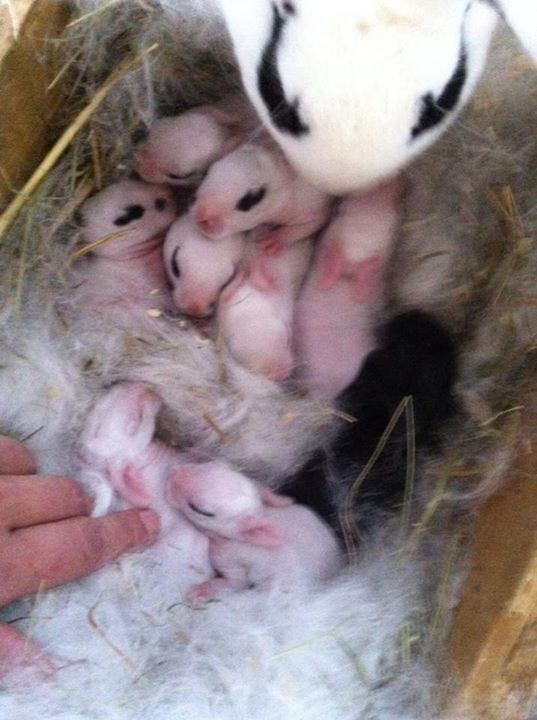
Finger is on the boxer baby. Photo courtesy of L. Staley
Older boxer, missing one of the eye bands. Photo courtesy of Evil Bunny Rabbitry
(And reminds me of Petey from Little Rascals!):

I know, wrong animal. Cute nonetheless, though, right?!
The original goal of the Blanc de Hotot was to build a breed of pure white rabbit with dark eyes. The woman credited with starting the breed is Madame Eugenie Bernhard of Northern France. Because of her influence, when you run across an hotot with NO eye bands at all, it’s called a Bernhard:

A bernhard, named after the founder of the breed, has no black rings of fur around their eyes. Photo courtesy of L. Staley
Another interesting variation of the Blanc de Hotot sport is the evidence of blue “marbling” in their eyes. Marbling refers to having blue spots or streaks on an otherwise brown iris. This is not a desirable trait, but does come up:

Most of the time the marbling will not be the entire eye, although it’s possible for an entirely blue iris to occur.

Do you see the blue there in the bottom of the eye?
Many times I am confused by descriptions and need a visual to understand what people are mentioning. I hope this little pictorial will help others as we learn about this wonderful breed. Many thanks to all who offered photos for us to see! We welcome your comments!
Blanc de Hotot Breeders
 One of the things we have committed to in our rabbitry is raising rare breeds in as quality a manner as possible. That means not only breeding them, but also culling hard toward the breed standard and promoting them whenever possible.
One of our breeds is the Blanc de Hotot. It is ranked #1 on the Rare Breed list and adds a certain challenge to the breeder because it is a marked breed – the Standard of Perfection calls for evenly marked black eye bands — “spectacles— round dark eyes on a perfectly white rabbit. Additionally, the fur has a frosty appearance due to longer guard hairs.
In our litters we often have show marked rabbits, as well as “sports,” those rabbits who aren’t completely white and have black markings on them in random spots. We see our spots most often in between the ears or along the spine. Unless a sport has incredible body type, we cull them out of our program, and are working toward having exclusively show marked rabbits. But it’s a long process!
One thing that often confuses people is that there is a difference between a Dwarf Hotot and a Blanc de Hotot. The Blanc de Hotot is what we raise, and it is a commercial breed rabbit… BIG! It’s comparable to a Champagne d’Argent, Satin, Silver Fox, Californian, or New Zealand. The Dwarf Hotot is also white with black eye bands but it’s a little thing, more along the lines of a Netherland Dwarf. It’s much more common to see Dwarf Hotot around, we have often gotten comments from people who are shocked at the size of the Blanc de Hotot because they’ve never seen them in real life!
Since the Blanc de Hotot are a rare breed rabbit, it’s often difficult to figure out where other breeders are located. There is a facebook group called Blanc de Hotot rabbit breeders that has been very helpful to us as we have gotten more involved with the breed. We recently came up with a breeder listing and now have a map to generally see where people are located:

We’re a small but mighty group! Would you like to join us in preserving this rare breed?!
Doesn’t Arizona look lonely?! It’s just our single little dot on the map! We’d sure love to see other Blanc de Hotot breeders come forward and work with us to preserve this breed! They’re funny rabbits, solid for meat production, curious in temperament, and in need of people to work on improving their type and competitiveness!
My Rabbits Bought my Keurig

Our rabbit money purchased a Keurig for our family this fall.
People will often ask if it’s possible to make money on rabbits.
No. (Kinda.)
Raising rabbits is a lot like the blogging world in some respects. There are some people, like the Pioneer Woman, who make money on their blogs because they have a massive following and sponsors. But for every Pioneer Woman there are 5,000 people who opened their free blog account and post on occasion and make nothing.
Kinda like rabbits.
There are people who run commercial rabbitries who are able to make money for themselves selling meat rabbits. There are some people who have worked very hard on their lines and can make money on sales for their rabbits that actually support them in their retirement.
But for the average person, rabbits can be a bit of a money pit, especially if you’re addicted to buying new stock all of the time and you haven’t clearly stated your objectives.
For our family, we have three priorities for our rabbits:
1. To provide a healthy meat source for our family, where we know what is in the food we are eating. In this respect we are paying about $3/lbs for rabbit meat when we process on a 10-week schedule. That takes in to account the amount of food consumed by mama while nursing the litter and the amount of food consumed by the individual rabbit until butcher time.
2. To produce show animals that pay for themselves. We enjoy showing. I get it that not everyone does, but we find it to be a lot of fun for our whole family. Showing a rabbit is not terribly expensive, but it does take money in gas, entry fees, purchase of carriers to get them to and from the show, and incidental costs while there, like a soda. If we are able to sell stock to cover the cost of our show experience we consider that a fun experience that pays for itself… and that’s a win-win. As time has gone on our rabbit sales have also slowly chipped away at the initial purchase cost of our cages and supplies. We have a depreciation schedule for this so I’m not expecting to break even but, it’s happening slowly!
3. To allow this hobby to bring our family together. This is a purpose that doesn’t have a price tag, but so many of the hobbies we see as options are not whole family events. We love to go snowboarding, but now that we have kiddos it’s a bit of a scheduling nightmare to figure out how to manage all the childcare so we can hit the slopes. Rabbits aren’t like that for our family – we come together to take care of the daily husbandry tasks and when we go to shows we are often en masse with the kids and have found rabbit people to be extremely welcoming to well-behaved children.
We also recognize that rabbits have become our family hobby. Hobbies of all types exist in the world, but usually you expect to have a bit of expense involved whether it’s buying a specific size of knitting needle or yarn, or a special rope perfect for bouldering. Hobbies come with a price tag – ours also comes with fur!
The first year we had rabbits I fretted quite a bit over the monthly budget allowance we had going to the animals, thinking we would never break even. We sell our animals to people for show and starting their own meat operations, and have gotten a fairly steady stream of people who are interested in purchasing the poop — ‘bunny berries’ — for their gardens, which brings in a little extra cash. Now that we’ve been at it awhile, we also have been able to scale back our regular costs significantly to basically food and shows.
That has left a little extra room on occasion to save for bigger upcoming expenses. Dollar by quarter we are able to set money aside… and just a few weeks ago I was able to completely pamper myself by buying a Keurig coffee maker using our rabbit profits! So now we’re caffeinated as we pet our bunnies, a crazy combination! Ha!
I suppose when it comes down to it, it’s about your priorities. I would never recommend rabbits to someone as a money-making proposition. If you’re interested in a rewarding hobby with lovely relationships with others and potential to make a healthy lifestyle choice, this might be right up your alley!
The Rabbit With No Ears and Big Teeth
It was a rough day around the rabbitry for No Ears.
If you’ve been following our blog for awhile, you’ll remember that back in February we had a litter of Cinnamon born where their first-time mother got over zealous in her cleaning at birth and ate the ears of several of her kits! Most were damaged only a little bit, but one poor rabbit had his ears bitten right down to the ear base.

No Ears’ baby photo. He’s … the one with no ears.
This little buddy has been known as “No Ears” since then. I wasn’t sure he’d make it through the summer, as rabbit ears are important for a rabbits body temperature regulation and our rabbitry is outside in Arizona! (It’s a mountain town but it can still get hot here!) He made it through the summer just fine but this afternoon… he’s hit a spot he probably won’t make it through.
We have children here. Our children get rabbits out and play with them almost every day. Our rabbits are loved, harrassed, and spend time hanging out on a trampoline with kiddos regularly.
When you have children and animals, there’s a special level of kindness necessary on the part of both the children and the animal. We think of it kind of like this – the children have to treat the animals in a way that will engender trust… and the animals have to not bite the children.
We’ve only had two biters around here and both found their way to the slow cooker almost immediately. Today, No Ears made the unfortunate choice of unleashing his teeth on my arm.
At this moment, he’s still breathing, but he signed his death warrant with that decision. Some might say we’re harsh to have such black & white stance on the subject, especially since No Ears is the last of his line and has a pretty nice body type. I’m tempted to breed him before he hits the road… but we’re also firm believers that personality is a genetic trait as much as body type.

No Ears is a satinized Cinnamon, which I was looking to use to work with a torted Satin project. This photo was taken just minutes before “the incident.”
No Ears has proven his mama was a biter and he’s a biter – I’m a little concerned about any animals produced out of him and their demeanor.
Do any of you have experience with this? Can you confirm or deny the biting tendency and whether it is passed down from generation to generation?
 Mad Hatter Rabbits & MicroFarm
