Tag Archives: bunny

Can You Feel The Love Tonight?

ilco / stock.xchng

ilco / stock.xchng

As silly as it may seem, sometimes rabbits don’t… breed like rabbits.

I often hear complaints about a doe that won’t lift or is otherwise reluctant to breed. This is not necessarily uncommon and can be a factor of age, weather, or general temperament. Most often a buck is more than willing to oblige but occasionally you run into troubles with your mister refusing to be a “kisser.”

There are some fairly standard recommendations for getting your rabbits “in the mood”:

  • Add Apple Cider Vinegar to their water or wheat germ to their feed;
  • Make sure they have at least 16 hours of daylight each day;
  • Put the doe and the buck in one another’s cages for 24 hours;
  • Table breeding;
  • Breeding by moon calendar.

But just this month we came across a totally new (to us) method – breeding by moonlight.

Since rabbits are fairly nocturnal it’s not a surprise that they are more active at night. In warm weather we sometimes sleep with our windows open and the noise the rabbits make playing with their toys and thumping around can be quite noticeable. (They’re no match for an antsy barking dog or a cat in heat, but for a rabbit they’re loud!)

Rabbits are lively at night!

Just this month we got home late and remembered that we needed to breed a few rabbits in order to plan their due dates around some travel plans next month. So, even though it was fully dark, we decided to head out to the rabbitry and see if we could get some dirty business started.


Oh. My. Goodness.

What a shock! Those girls were so ready it was as though their backsides were attached to rockets! We had such immediate success by moonlight fraternization we even attempted to breed a few of our most reluctant ladies — and they were quite happy to oblige!


This was such a blatant change of pace that it’s another trick we’ll be adding to the options for what to do when your doe isn’t interested. After all, everybody loves a little late night romance, right?!


*We will continue to use the moon calendar for our breeding programs. Here’s the link to a 2014 moon breeding calendar!*

Get the Blues

A few drops of blue food coloring per gallon of water has inhibited algae growth in our water bottles.

A few drops of blue food coloring per gallon of water has inhibited algae growth in our water bottles.

Until we have an automatic watering system we will be best friends with our flip-lid water bottles. I love these bottles and especially the flip top lids – it takes so much less time than unscrewing the nozzle of each bottle to fill with water!

One thing I DO NOT love about water bottles is that they can get “ew!”-stuff inside of them – algae, moths, dirt, etc.

Earlier this year I complained about this at the feed store and one of the workers suggested putting blue food coloring in the water. She told me the blue coloring would inhibit the growth of mossy-type things in the water bottles.

We tried putting 1-2 drops of blue food coloring per gallon of water for months and didn’t think much of it, it was under the category of “can’t hurt, might as well try.” We saw only minimal algae growth over the following months. When we ran out of blue food coloring we tried green for about a week – but that actually seemed to encourage growth in the bottles!

When it was all said and done, space was at a premium I was being cheap. I didn’t want to buy all the other colors of food coloring from the box of four colors I could buy at the grocery and only use the blue, so we finally just gave up on it and for several weeks we haven’t put anything but our normal Apple Cider Vinegar in the water.

Granted, it’s summer time and our bottles spend a few hours a day in direct sunlight, but the algae growth has been impressive! I could scrub those bottles every other day and they’d still not be clean. (If only I could figure a way to market algae – we have been able to produce it!)

Last week after examining the cuts on my hands from scrubbing the bottles – yet again – I broke down and ordered blue food coloring off of Amazon. It arrived yesterday and I’ve been happily dripping the coloring in the water again. I have no scientific proof that this works, but from our real-life assessment, a few drops of blue could be what you need to fight the algae growth in your water bottles, too!

Gardening and Composting with Bunny Berries

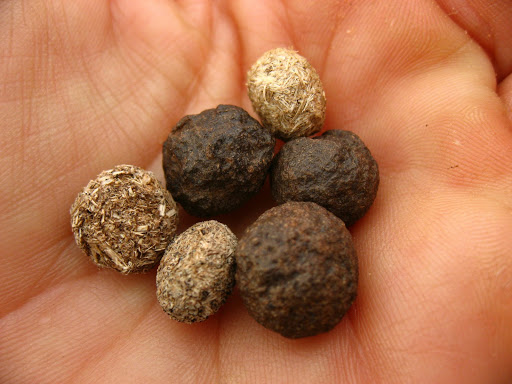
Bunny Berries are excellent for reuse in gardens.

Bunny Berries are excellent for repurposing in gardens.

There’s  no poop that works as well for the garden as rabbit poop. It has all the uber-benefits of horse and steer manure but with a distinct advantage: because it’s considered a “cold” manure, you don’t have to let rabbit poop age or compost before you use it. Other manures that come from chickens, sheep, horse, cows, and pigs or “hot” manures, need to be composted for months before you can safely use them or you’ll burn your plants to death. Not so with rabbit poop.

Rabbit manure is packed with nitrogen, phosphorus, potassium, and many minerals, lots of micro-nutrients, plus many other beneficial trace elements such as calcium, magnesium, boron, zinc, manganese, sulfur, copper, and cobalt just to name a few.

N – P – K VALUES 

Rabbit 2.4 -1.4 -.60

Chicken 1.1-.80-.50

Sheep .70-.30-.60

Horse .70-.30-.60

Steer .70-.30-.40

Dairy Cow .25-.15-.25

As you can see the nutrient values of farm manures and how they measure up and rabbit manure really shines! Rabbit manure also doesn’t smell as strong as other manures making it easy to use.

Grab a handful and spread it all over the garden or fold it into the soil. It’s like time release capsules, as the pellets don’t completely break down right away. It’s slow-release thing.

As they break down, they build your soil’s structure, improve the porosity, add stability, and hold nutrients for plants as well as other organisms in the soil.

Another great way to take advantage of rabbit pellets and all their growing goodness is to make “bunny brew” or rabbit compost tea. Find a five gallon bucket, and a large scoop of rabbit pellets and drop them into the bucket. Give it a good stir every now and again for a day or two.

Let the manure settle and use the tea at the top of the bucket to water your plants. You can dump the remaining manure at the bottom of the bucket onto your compost pile (no waste here). Of course, the proper English way would be to use a big piece of muslin or burlap and make a big tea bag and let it dangle into the bucket!

If I gave you an earful on the virtues of rabbit poop in the garden, then you have to know that this goes double for the compost pile. With even a small pail of rabbit poop every once in a while, you’ll be in nitrogen heaven as far as composting goes. Bunny gold is nitrogen on steroids; it really gets a pile going.

Thanks to The Vegetable Gardener and Rise and Shine Rabbitry for this insight!

When the Weather Outside is Frightful…

20121219-074814.jpgThe challenge of living in our area during the winter include a wicked wind and occasionally several feet of snow. It’s Arizona, but it’s definitely not the desert in our mountain top town!

This picture is of one of our hutches. It’s enclosed on three sides, and has a simple tarp that can be dropped down to shield the rabbits against our high winds. Having the entire area fenced helps as well. Not only from the wind, but from any passing dogs or other animals who might be inclined to make trouble or consider our rabbits their dinner!

We have been pleasantly surprised at the effectiveness of the tarp. The last several days, when the overnight temperatures have been in the teens, the water bottles have not been frozen (the metal spouts are another story, however…) Each morning we roll the tarp up and are greeted by sweet, furry, curious faces with wiggly noses!

One additional thought, we pull the tarp up every single day to allow for as many sunlit hours as possible. Rabbits have a hard time breeding if they spend too much time in darkness (natural instincts take over). We will only keep the tarps down during the day if we have driving, wind swept rain that would end up soaking the rabbits or extremely cold temperatures (well below zero).

Hutch

How do you keep your rabbits warm?

Meet Duchess

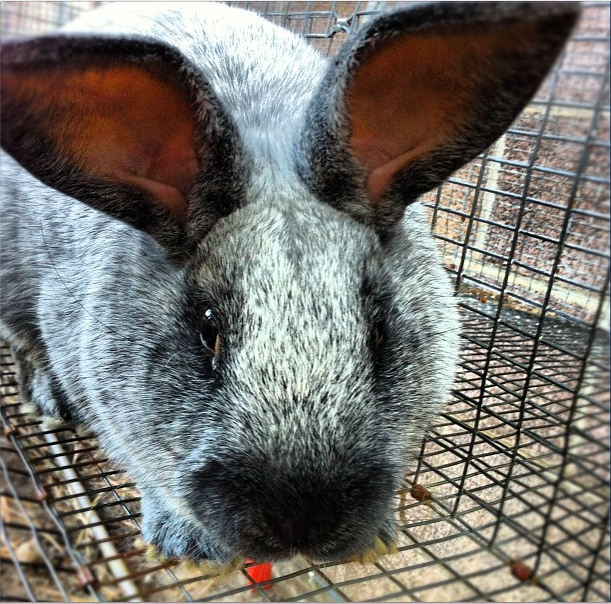
Duchess is a beautiful Champagne d’Argent doe. She comes from championship lines on both father and mother. She’s a little shy and quite the observer.

Meet Bucky

Bucky is our Champagne d’Argent buck. He’s quiet and laid back.

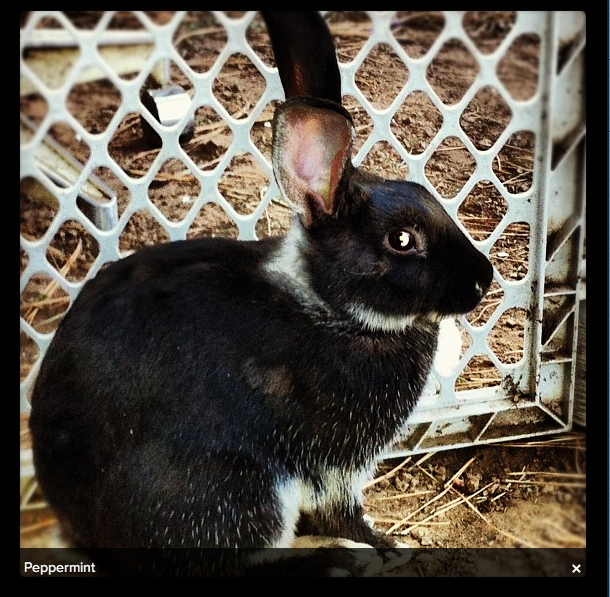
Meet Peppermint

Peppermint is a beautiful black Silver Marten doe. Her coloring is lovely and she has a sweet, gentle personality.

Meet Joey

Joey, Silver Marten doe


This Joey, one of our Silver Marten does. She’s a little grubby n this photo from playing in her playpen! She’s curious and funny.

Silver Marten Rabbits

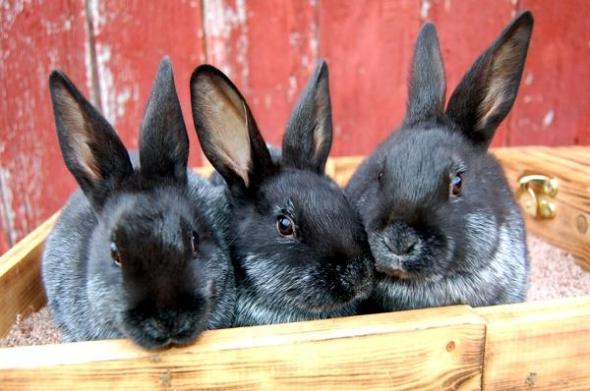
Silver Martens are recognized by their silver-tipped fur.

Known for his cute expressions, unique coloring and charming personality, the Silver Marten breed of rabbit has been a favorite for nearly a century!
The Silver Marten HistoryThe Silver Marten breed of rabbit was originally a naturally-occurring mutation in the coats of Chinchilla-colored rabbits. Some say these strangely-marked little black rabbits occurred early on, while others say it was the cross-breeding of Black and Tan bloodlines that created the Silver Marten. According to the Silver Marten Club, these mismarked Chinchillas occurred on their own, but that the Black and Tan was later introduced, in an attempt to improve the clarity of color and markings on these bunnies. This seems a logical explanation, particularly when one sees the similarity between the Silver Marten and Black and Tan markings.It was in 1924 that the Silver Marten rabbit was finally given his name and, by 1927, they had developed a working standard for the black and chocolate Silver Marten. These were accepted by ARBA (American Rabbit Breeders Association) and the first breed club came into being. A third variety, the blue, was accepted in 1933 and sixty years later, in 1993, the sable silver was approved. Silver Marten rabbits can also be found in lilac – a light dove gray – but the color is not registerable at this point in time.

The Silver Marten Breed Description

A compact breed, the Silver Marten rabbit usually weighs in between 6.5 and 8.5 pounds as a senior (a mature adult, 6 mos. or older). Their ears are held upright and are of a medium thickness with good length. The Silver Marten’s eyes are alert and bright, and should compliment their variety – the darker shades having dark brown eyes and the diluted shades having blue-gray eyes.

The body of the Silver Marten is firm without being bulky and should be well rounded from the shoulders and up over the hips, having an almost half-moon appearance when properly posed. Their hips are well-developed and should not pinch in at the table. They often have a muscular look that makes them seem larger than what they actually are.

The Silver Marten comes in 4 recognized varieties: the black, the blue, chocolate and sable. All possess the same characteristic white around the eyes and nose, inside the ears, the underside of the rabbit and the light silvering along the sides. The lilac, a dilution of the chocolate Marten genes, often occurs in the breed. This color is not accepted in the breed standard, however, though these bunnies do make fantastic pets.

The Silver Marten Personality

The Silver Marten is known for being a charming little clown and terribly curious. They can, however, be a bit on the skittish side and startle easily – for this reason, one may look for a calmer breed if they are looking for a first bunny for a younger child. They are a delightful companion for older children and adults though, and their markings give them a cute appearance that few can deny.

Silver Marten rabbits, like most other breeds, are notorious chewers. If you are intending to have a bunny as a house pet, be forewarned that you will definitely have to “bunny-proof” your house. This means getting down on the floor and looking at anything and everything that could possibly chewed. Some examples of tasty treats, that bunnies love (and that will have you pulling your hair out about) include wood furniture legs, electrical cords, stereo/DVD/computer wiring, or important papers. Don’t ask me how they know what papers are the important ones, but they do…and they will chew them (or leave bunny tracks on them), if you leave them within reach. Fortunately, products like Bitter Apple are available to help discourage chewing, but the best discouragement is keeping things out of reach.

Silver Martens can be litter trained, like most other breeds, though they will usually leave a few bunny tracks around the house. These are NOT to be mistaken for Coco Puffs cereal and just require a little sweep or vacuuming to clean them up.

Sources:

Personal experience breeding and showing rabbits

http://www.silvermarten.com/ – The Silver Marten Rabbit Club

American Rabbit Breeders Association

http://voices.yahoo.com/rabbit-breed-profiles-silver-marten-6441150.html?cat=53

Champagne d’Argent Rabbits

Image

Also known as the French Silver, the Champagne d’Argent is one of the oldest known breeds of rabbit in the world. Originating in the Champagne province of France more than 400 years ago, he was prized for both his meat and for his beautiful silvery coat. Born pure black, Champagne d’Argents begin to develop their beautiful silvery ticking at about 3 weeks of age and will continue to change until they mature at about 6 months of age. At this time, they will be a striking silvery-gray throughout, with black shadowing along the ears, tail, face and legs.

The French Silver’s History

Rabbits have been domesticated for hundreds of years, but the selective breeding of rabbits began in Europe during the Middle Ages. Much as they enjoyed selectively breeding their prized hounds, the art of rabbit breeding quickly caught on and, as early as the 1500’s, various breeds of rabbit and different color varieties were already being cataloged and traced. The Champagne d’Argent would be one of the first and would quickly gain popularity throughout his native France and the rest of Europe.

Champagne d’Argents can be found in the United States, though it may take a bit of searching. While strikingly beautiful, they are a commercial breed and are often overshadowed by larger and more compact breeds, like the Californian or New Zealand White. Equally troublesome is that, while their pelt is beautiful, it is often passed over in favor of more versatile white-furred rabbits. This makes the Champagne d’Argent less desirable to some. Still, fanciers of the breed stand behind the Champagne d’Argent, as well as the more popular variety, known as the Creme d’Argent or Orange Silver. Gradually, the breed has been gaining more and more popularity throughout the United States and Canada.

The Champagne d’Argent’s Appearance

So what does a Champagne d’Argent look like? Well, that can be a very good question, depending on when you take a look at him! Believe it or not, the Champagne d’Argent is much like a Lipizzan horse, in that he’s born pure black and slowly silvers out as he matures. By 2-3 months, they can appear almost downright comical with their mixture of black baby fuzz and silver adult coat. Some even sport Lone Ranger-like masks and unique swirling patterns – you can never be bored, raising Champagne d’Argent bunnies!

Champagne and Creme d’Argents were both bred for meat, as well as their beautiful pelts and, because of this, they were expected to bulk up and mature quickly. By the time an Argent is 3 months of age, he should weigh at least 4.5 pounds. As a mature adult, the Champagne usually weighs an average of about 8 pounds. While they still produce a good amount of meat, it’s obvious why they are usually passed over for the 9-11 pound rabbits that are commonly bred for commercial use.

Champagnes As Pets

Champagne d’Argents are known for their docile temperament, as well as their striking color. Due to their size, however, they are not a very common household pet bunny. Additionally, the fact that this is still a relatively uncommon breed often makes them a little harder to come by, as well as often making them a little more pricey to purchase. Advocates of the breed, however, are quick to say that they are worth every penny, between their beautiful “old silver” coloration and sweet temperaments. If you’re looking for a unique bunny, you just may find a Champagne d’Argent to be what you want.

So how do you find a reputable Champagne d’Argent breeder? I highly recommend going through the American Rabbit Breeder’s Association, local Champagne d’Argent Breed Clubs, or even your local Cooperative Extension office for more information. Another good way to choose a bunny is to attend a local rabbit show in your area – not only is it a good way to spend the day, but it also gives you the opportunity to watch different rabbits being judged, hear the judge discuss the good qualities of the breed, and grants you a perfect opportunity to speak to a wide variety of different breeders. Beware, though – those bunnies are so adorable, it’s hard not to come home with a whole car full!

Sources:

A.R.B.A. (American Rabbit Breeder’s Association) Standard of Perfection

http://www.arba.net/ – ARBA’s website

http://voices.yahoo.com/rabbit-breed-profiles-champagne-dargent-5943988.html