Category Archives: Show Rabbits

How to Identify Rabbit Body Parts

Even with a background in rabbit showmanship, when we started raising rabbits as adults, I was often confused by the terminology of rabbit husbandry.


Too many big words, not spoken slowly enough!


I’m not sure who created this graphic, but I have saved it on my phone and often refer to it when I am unfamiliar with a term or exactly what a judge is talking about. I hope it’s helpful to you as well!

Knowing what something is called on your rabbit is a big deal!

Knowing what something is called on your rabbit is a big deal!

Six Questions to Ask Before Starting Your Rabbitry

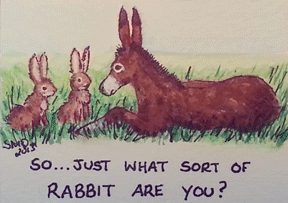
rabbit-are-you-aceo

Sometimes you just need to know how to begin!

I had a great conversation tonight with a friend who is seriously considering raising rabbits. We went around and around about what type of rabbits he should get, what supplies he needed before his initial purchase, what his rabbitry goals would be. The reality is that we can’t answer any of these questions for him – he needs to spend time thinking about what will be the best fit for his purposes. However, we can ask him some questions to get his creative juices going… here are the few he left tonight pondering:


1. How many? The number of rabbits you choose as an initial investment depends on your purposes for your rabbitry. If you are looking to show, you’ll likely want to consider three does and two bucks per breed. You’ll want some options for genetic strength, plus it’s not as much fun to take a single rabbit to a show. Set yourself up for success by giving yourself some options.

If you are specifically breeding for meat, a trio of two does and a buck will be a strong start, even closely related rabbits would be fine to start as long as you have a plan for infusing new blood sometime in the next year or so. Ask yourself how often you’re hoping to have rabbit on the menu? How many mouths are you feeding?


2. What’s your Budget? Your purposes for your rabbitry must inform your anticipated budget.

Are you planning to keep rabbits only for your own consumption? Then an unpedigreed meat mutt might be a good start as they are typically as much as 50% cheaper in initial investment. The downside to an unpedigreed rabbit is you don’t have an idea of the size or colors in the background of the rabbit – of course, if your main goal is for meat… those are considerations that really don’t matter! In this area meat rabbits are sold for around $25 per rabbit (I’ve heard people quote a range from $5 to $35 for a meat mutt around the country).

Are you hoping to sell the babies of your rabbits to offset other rabbitry expenses? Then you’d better be willing to spend a little more for a pedigreed rabbit as your initial purpose – a registered rabbit is even better if you can find one. The pedigreed rabbits I’ve seen advertised are anywhere from $45 to $150+ per rabbit, depending on your lines, the show worthiness, proven or unproven, registered, etc.

Obviously, with that much of a price range, it makes sense to consider your intended outcomes before you make your first stock purchases. I will suggest to purchase the best quality rabbit you can find in your price range. Don’t go simply off of slick websites or advertisements, instead contact several breeders and ask for recommendations.

Facebook is a good way to connect with other rabbit breeders, although be cautious – sometimes the people who post the most and sound the most knowledgable are the same ones you should avoid at all costs. Particularly on Facebook, once you’re in the group for your rabbit breed, spend time reading through the archives of comments and posts. Over time you’ll get a sense of those breeders who have a similar value system to your own… contact them and see what can come from that!


3. What will you Feed? Are you planning on feeding your rabbits pellets or letting them range and eat grasses? A smart buyer will purchase their initial stock from a breeder who is set up similar to what they want to do.

We feed pellets and hay and can give someone a pretty good idea of what weights to expect at which ages in our lines. However, if someone took our rabbit and switched it on to a fodder system I can almost guarantee it would not hit the same weight gains in the same period of time. If someone approaches us wanting meat rabbits for fodder I’m going to encourage them to check in with a few other breeders as our rabbits will likely not perform as well for them. (The caveat to this is that it only takes a few generations of careful culling to transition a rabbit from the desired growth rates on fodder. So the question is how long you’re willing to wait!)


4. Where will they be Housed? Similar to the advice on feed, consider whether the rabbits will have a similar environment to what they have been used to when they come to your home. Our rabbits are outdoors 100% of the time – and they don’t all transition with excellence to an indoor garage rabbitry! On the other hand, we’ve purchased rabbits coming from a garage rabbitry and there’s been a significant adjustment season for them to enjoy life in their new outdoor space with a view!

On the same lines, consider temperatures. A rabbit used to Phoenix temperatures will likely not fare very well in, say, Minnesota if it goes to it’s new home in January! Try to either purchase your stock from a rabbitry in a similar climate to your own or in a “shoulder season” so the rabbit has time to transition to the new season with as little stress as possible.


5. What breed? Do you want a 13+ lbs Flemish Giant rabbit? Is a mini Satin going to be just the right fit on your lap for a snuggle? When you look at your rabbitry, which rabbit is going to take your breath away just by looking at it? Start browsing photos of the different rabbit breeds. Educate yourself on the pros and cons of each breed – they all have both!

Ask yourself again what your goals are for your rabbitry, and what gives you joy. There is a great deal of poop cleaning, water bottle scrubbing, consistent feeding, etc. necessary to care for your rabbit – so whatever you do, get a breed you enjoy watching move! Learn about their personalities and make an educated decision. Genuine pleasure in being around the animal makes the endless hours of husbandry less daunting.


6. What breeder? Do you want a simple transactional purchase of livestock? Do you want to develop a relationship with a breeder? Do you want someone you can contact months after the sale and ask questions about raising your animals? What is the breeder’s philosophy about rabbit raising? Take your time in selecting a breeder.

Some people will be attractive to you right off the bat and you just know they’re the right fit for your first rabbit purchase. Others are the exact opposite and you’ll know you don’t want to work with them right away. Occasionally you’ll work with someone you don’t particularly like because you’re terribly interested in their specific stock!

Challenge yourself to think through some of these questions as you start your search so that you’ll recognize a good fit for a breeder quickly.


Finally,

Relax! Regardless of anything else, relax! It’s a rabbit! We’re over the top crazy about these little critters, but they still are just that… critters! There is not a thing in this hobby/lifestyle that can’t be adjusted or fixed, so try not to freak yourself out with all the options. Just relax, have fun, and be intentional about your rabbitry!

Newest Rare Breeds List Released!

20140706-100603-36363433.jpg

We are pleased to be raising the #1 rare breed in the U.S.! Glad to be doing our part to keep Blanc de Hotot going!

Every three years a “rare breed” list is released. We’ve been raising three of the 15 rare breeds until now… And with the release of this list we now have two! Cinnamon and Silver Fox are making a come back!

What is the Rare Breeds List?
Here is the short version
#1 is most rare, #16 is less rare

2014 Rare Breed Rabbit Rank
(with 2010 rank on right)
1 Blanc de Hotot (1)
2 Giant Angora (2)
3 American (5)
4 Beveren (4)
5 Giant Chinchilla (7)
6 Creme d’Argent (14)
7 Belgian Hare (11)
8 American Sable (10)
9 Satin Angora (6)
10 Cinnamon (3)
11 Lilac (8)
12 Silver (9)
13 American Chinchilla (12)
14 Palomino (16)
15 Standard Chinchilla
16 Rhinelander (15)

Note: Silver Fox was #15, is now #17 and is off the list, but remains as a Watch status. Standard Chinchilla has joined the Rare Breed List as #15


Creating an Emergency Manual for Your Rabbitry

As I write there is a wildfire raging less than 20 miles away from home with a current 0% containment. It has exhibited extreme fire behavior and consumed more than 4500 acres of land in just over 24 hours. Our friends who live closer to the fire area are on pre-evacuation and, while I really suspect we will not see any danger at our home, we are carefully considering what measures we will take if we need to evacuate the area ourselves.

Too many times I prefer to sit in la-la land, assuming the best of everyone and believing that nothing out of the ordinary will ever happen. However, as so many of us know, this is simply not the reality. Life is unexpected because, well, life is unexpected!

Not long ago a magician made news when the USDA forced him to submit an emergency plan for the rabbit he used to pull out of his hat while performing. The rule was from the agency’s Animal and Plant Health Inspection Service (APHIS):

“APHIS published a final rule requiring all dealers, exhibitors, intermediate handlers, carriers, research facilities and other entities regulated by the Agency under the Animal Welfare Act (AWA) to take additional steps to be better prepared for potential disaster situations.  They are required to develop a plan for how they are going to respond to and recover from emergencies most likely to happen to their facility, as well as train their employees on those plans.”

Admittedly, this seems like overkill in the case of a magician and his single rabbit, but the reality is it’s good business and solid animal husbandry. Many of us depend on these animals to provide for our family’s protein. They are defenseless without daily care taking – and if we want to be ethical (who doesn’t?!) we really must give some thought to how we could best care for these animals should the worst occur.

A rabbitry management book is a useful tool in case of emergency, someone taking over the care of your rabbitry while you vacation, or to produce as proof that you really are doing your best to provide the very best care possible for the animals under your management.   The USDA actually outlines what your rabbitry risk management manual should include. (These guidelines generated a 34-page report for Marty the Magician and his bunny that is really worth the read.) Your emergency plan should:

  • Identify types of emergencies seen frequently in your region
  • Identify emergencies that could occur at your particular type of facility
  • Identify specific tasks that facility staff will undertake in an emergency situation
  • Establish a clear chain of command for all employees to follow
  • Identify materials and resources that are available to your facility and elsewhere, and
  • Ensure all pertinent employees are trained on this plan

The guidelines further explain that “the terms ’emergency’ and ‘disaster’ are not limited to major natural disasters, such as hurricanes, and should include consideration of localized events such as a fire, severe weather, or any other unexpected situation that interrupts normal animal care activities.”

Truthfully, while the bureaucracy is intimidating (and overkill), it’s also really useful to take a look at these guidelines to see where the holes may be in your own rabbitry emergency response manual. I’ve had many of these ideas floating around in my head off and on, but I’ve never committed them to paper and communicated with my family about the plan for the rabbits in case of emergency.

While the guidelines consider many different types of emergencies such as structural fire, electrical outages, disruption in feed or water supply, road closures, intentional attack on facility/personnel, unexpected change in ownership (or death of owner), HVAC malfunctions, animal escape, animal disease outbreak, as well as other natural disaster scenarios. Specifically, for evacuation, the APHIS guidelines point out the need for a plan for:

  • Transportation vehicles and equipment/caging. Do you have carriers for every animal you have on site? Once filled, do you have a vehicle that can fit and transport all of those carriers to safety?
  • Alternate location for housing animals. Where are you going to take your furry friends where they will be welcome? Most Red Cross shelters are open to humans, not animals!
  • Husbandry and care needs for the animals during transport and once animals are relocated. Do you need nest boxes? Do your carriers each have a water and food bottle? Do you have enough food on hand to send it with the animals and expect it to last until the emergency is resolved? Are there significant temperature or climate differences between your home and the relation spot that need to be considered?
  • Animal Identification. Are all your animals tattooed in a timely manner all the time? Do you have a list of which tattoo number belongs to whom out of the danger of the disaster?
  • Records Transfer. Do you have electronic back ups of your pedigree programs? Breeding records? How about a paper copy of registrations and Grand Champion certificates, as well as Bills of Sale?  Are these stored in a location that would be unaffected by your disaster?

A few other thoughts that have crossed my mind as we consider the logistics of possibly moving our animals:

  • Actually practice the plan. Nothing on paper is committed to memory unless it is practiced.
  • In an emergency situation, a bale of hay can go a long way for a lot of rabbits! Having a bale on hand at all times provides a distinct level of comfort.
  • Identify — in advance — which animals can be quickly culled and which are essential for the survival of the breeding program. Write it down and consider identifying their cages with a mark so anyone helping with the evacuation will know where to focus their energies.
  • What is available for nursing mamas and their babies for transport? Possibly laundry baskets, banana boxes, or larger pet carriers are a possibility.
  • How many bags of feed do you use a week/month? Do you have a 30 day supply as a general practice?
  • Consider the ethics of releasing domesticated animals to fend for themselves in an emergency. Obviously, the priority in any situation must be the humans… but to expect natural survival instincts to kick in for a rabbit that has been bred to be dependent upon humans for decades is irrational. Their care must be a priority in the same way a human baby should be protected in a disaster.
  • Do you have a “go bag” of  rabbit first aid packed with items like gauze, Neosporin, critical care, electrolytes, nail clippers, Vetricyn, etc. Where is your tattoo kit?
  • Where is your plan kept? Is is handy where you can grab it and skim if your mind is stressed and you’re worried about other things? Could you hand your plan to a helper and feel confident they would understand your methods and wishes from what’s written down?
  • What about copies? I have my pedigree program on my computer – but if my computer is damaged I’m in trouble! I also have a notebook binder with rabbitry information. This needs to be copied and sent to a safe place completely separate from my zip code in case the binder burns or is damaged through water or wind attacks.

I hope this post isn’t the world’s biggest downer! I’m a big believer that if you see 10 problems coming down the road at you, 9 will fall into the ditch before they ever meet you. BUT — there’s always that one… and Murphy’s Law!

When Kids Win, We Win

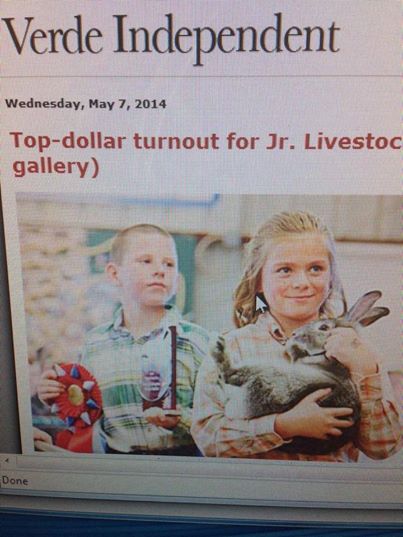
That's our rabbit in the paper! Just pulled in $550 at auction because that child rocked her fair experience! Woo hoo!

That’s our rabbit in the paper! Just pulled in $550 at auction because that child rocked her fair experience! Woo hoo!

This year we worked with several 4H groups around the state to set kids up with rabbits for their upcoming fairs. We decided early on that kids would have access to the best rabbits we have available at a discounted rate. Our decision was to start with a set price that was discounted from our normal sales prices, and then give the kids a chance to answer three trivia questions about rabbit husbandry. Each correct answer was an additional $5 discount.


The rules for showing in 4H are different from the rules for showing in ARBA. Typically the 4H guidelines are not as stringent on the “show” quality of a rabbit, which has led to some breeders selling 4H members their worst rabbits and justifying it by saying, “It’s just for 4H.”


When we first got in to rabbits we had an experienced breeder get quite animated about how rotten he thought that mindset was, so from the very beginning we have been of the opinion that 4H kids will get the best quality show rabbit we have available. We want them to love their rabbit, be proud of their animal, and have a decent chance at continuing to show as adults. Getting good rabbits in to the hands of kids is a major step toward achieving those goals.


Having four kids of our own might have also biased us toward helping kids as well!


Over the past few months we have gotten messages from the parents of the 4H-ers who have our rabbits with reports of does having litters as expected and rabbits showing well at the fair. Then today I got news that one of our rabbits went to auction at the fair and earned a $550 bid!


We’re so stinkin’ proud of these kids and the hard work that goes in to preparing for a fair and for showmanship! They have worked their tails off to learn their breeds, about rabbits, and how to present themselves with confidence! Their parents have made sacrifices to get livestock and educate themselves so they can help their children succeed and their project leaders have gone the extra mile to arrange for quality animals. It truly is a group effort and we appreciate that so very much!


We’re thrilled that our rabbits have been able to play a piece in the success of these kids, but mostly just proud of these children who are willing to go the extra mile and participate in agriculture and their communities. When they win, we win… and we truly believe they are a light toward a brighter future for our country.

Can You Feel The Love Tonight?

ilco / stock.xchng

ilco / stock.xchng

As silly as it may seem, sometimes rabbits don’t… breed like rabbits.

I often hear complaints about a doe that won’t lift or is otherwise reluctant to breed. This is not necessarily uncommon and can be a factor of age, weather, or general temperament. Most often a buck is more than willing to oblige but occasionally you run into troubles with your mister refusing to be a “kisser.”

There are some fairly standard recommendations for getting your rabbits “in the mood”:

  • Add Apple Cider Vinegar to their water or wheat germ to their feed;
  • Make sure they have at least 16 hours of daylight each day;
  • Put the doe and the buck in one another’s cages for 24 hours;
  • Table breeding;
  • Breeding by moon calendar.

But just this month we came across a totally new (to us) method – breeding by moonlight.

Since rabbits are fairly nocturnal it’s not a surprise that they are more active at night. In warm weather we sometimes sleep with our windows open and the noise the rabbits make playing with their toys and thumping around can be quite noticeable. (They’re no match for an antsy barking dog or a cat in heat, but for a rabbit they’re loud!)

Rabbits are lively at night!

Just this month we got home late and remembered that we needed to breed a few rabbits in order to plan their due dates around some travel plans next month. So, even though it was fully dark, we decided to head out to the rabbitry and see if we could get some dirty business started.


Oh. My. Goodness.

What a shock! Those girls were so ready it was as though their backsides were attached to rockets! We had such immediate success by moonlight fraternization we even attempted to breed a few of our most reluctant ladies — and they were quite happy to oblige!


This was such a blatant change of pace that it’s another trick we’ll be adding to the options for what to do when your doe isn’t interested. After all, everybody loves a little late night romance, right?!


*We will continue to use the moon calendar for our breeding programs. Here’s the link to a 2014 moon breeding calendar!*

If Worst Comes to Worst: The Second Buck Insurance Policy

Blue Silver Fox

Blue Silver Fox

On the theme of starter stock and how to best begin your rabbitry in our previous post, How Do You Find Starter Stock?, I wanted to share some advice I saw an experienced breeder give recently.


This breeder recommended buying two pair of rabbits, a quad, when beginning your rabbitry. Most experts will suggest buy just a trio, two does and a buck. If you’re in an area where it’s easy to find your breed that is perfectly sound advice as one buck is certainly able to service two does without a single problem.


However, if you’re looking at a hard-to-find or rare breed, or you’ll have to transport the rabbits a good distance to get them home, you might strongly consider purchasing a quad. This helps insure your investment is anything goes wrong (because we all know Murphy and his stinkin’ Law!).


For example, what if something incapacitates just one of your rabbits… but it’s the buck? What will you breed to your does for babies? In the “what if” possibilities that buck becomes pretty important and have another boy around might not be so bad!


I had never considered this prior to reading his advice, but now think it’s a pretty smart plan. That second buck is like purchasing insurance – possibly never necessary or utilized but terribly, terribly important if worst comes to worst.


How Do You Find Starter Stock?

Asking the right questions is the first step to locating great foundation stock.

Asking the right questions is the first step to locating great foundation stock.

I loved this post over at Rabbit Ranching and got permission from Ms. Cahill to reprint it on Mad Hatter Rabbits. If everyone who contacted us for rabbits followed this advice it would be so awesome! (I have added a few thoughts at the end.)

Q&A Session #2 from Rabbit Ranching by JuliCahill

This is the first part of an ongoing series allowing readers to ask questions about the rabbit hobby. There are no rules or guidelines. Have a question? Ask away! Post your question as a comment on our blog or email oakridgerabbits@gmail.com.

Readers are encouraged to share their own ideas or opinions in the comments below.

What questions should you ask a breeder when choosing “show” foundation stock?

Ah, the age-old question. When you’re starting out with rabbits or starting a new breed, your foundation stock will ideally carry you through the first generations of creating your own line. But it’s easy to get burned by lesser quality animals or fake pedigrees if you’re not sure how to search wisely.

The best place to start is ARBA’s recognized breed page, which can be found HERE.

From this page, you can click on the photo of any currently recognized breed, and it will take you directly to the breed’s specialty club. To my knowledge, every (or at least most) breed clubs post sweepstakes standings on their website. Sweepstakes is a contest based on show wins, and only club members are eligible. Look to see who is at the top of the list and keep those names in mind.

Next, visit the registered breeder directory, which should also be available within the breed club website. Keep in mind that this will only list contact information for breeders who are currently members of their specialty club. ARBA has a more general breeder directory on their website. If you don’t find the name you’re looking for on one, check the other.

I would choose about five names of people local to you (or within the distance you’re willing to travel). There is usually an email or phone number listed for contact.

Now…what to ask? …

How should a newbie, who wants to show their favorite breed, approach a show breeder to purchase stock?

Tell them them exactly what your goals are:

Example: “I want to show and raise Holland Lops.”
Example: “I am looking for two Satins to keep as pets and show locally.”
Example: “I want a pet Dutch.”

The breeder needs to know exactly and directly what you want the rabbits for. If you just email asking, “Could you send me a list of rabbits for sale?” you’ll probably find few who take the time to respond. Everyone has rabbits for sale at some point in time, but they need to know exactly what you’re interested in.

Other information to include:

– The number of rabbits you’re interested in buying.
– The time frame in which you’re looking to buy.
– Your location.

Example: “I would like to start with one buck and two does. I am hoping to find my starting stock this spring, and I’m located in Dallas, TX.”
Example: “I want to find two bucks and three does before September. I’m located in Trenton, NJ.”

This is all of the information specifically needed to get you started, and I recommend leaving the rest up to the breeder. If they have other questions, they will ask. Mentioning other specifics (wild, unusual colors being a common one) not only narrows your search, but also makes most serious breeders question your intentions.

Instead, ask the breeder whether they have rabbits available that meet your criteria. If you are unsure of which color, group, or variety is strongest and most developed – just ask! This is what you will want to start with, and an experienced breeder can guide you directly to it.

So, how do you know you’re speaking with someone reputable?

Ask everyone within your original inquiry – “I am new to this breed. What lines do you recommend working with?”

This is the golden question because it will reveal the authority in the breed of your choice. Like it or not, the success of every breed is strongly influenced by a handful of very dedicated, very successful breeders. They are the names you’ll see over and over again on pedigrees all over the nation. If you ask five breeders this question, you are likely to find out quickly which lines are “go to” in the breed.

If you can (whether they are local or whether you have to arrange transport from a national convention), try to purchase stock directly from those people. If you can’t, try to find someone who has used their rabbits to build their herd.

A name doesn’t mean everything, but it does mean a lot. A reputation is something that’s built by word-of-mouth and personal experience. If people, in significant numbers, speak highly of someone in particular, they are likely to be a trustworthy source. If it’s someone no one has heard of or mentions without prompting, it’s generally not a good starting place.

I could talk more about this topic, but I think I’ll save that for another day. This is where I recommend starting. From there, many reputable breeders will be interested in helping you learn more.


A few thoughts from Mad Hatter:

I completely agree about the recommendation to follow breed sweepstakes… and I don’t. We have six different breeds here and are members of the national clubs of only three. Some national clubs have far too many politics for us to want to get too involved right now… or it just isn’t the right time for us to have many memberships… what not. So, while I believe sweepstakes points are one factor in determining a reputable breeder, I would consider it with other knowledge as well.

Another research option is to check the Domestic Rabbits publication from ARBA for those owners who have Grand Champion rabbits in their breeds.

Being completely clear about your intentions is important! For us, since we raise mostly dual meat/show rabbits this is especially significant around here. If you tell us you are going to show rabbits we will set you up with the best-typed rabbit we can. If you tell us your entire purpose is for meat we won’t put as much emphasis on show promise as your desired outcomes will likely have more to do with production, making weight by a specific age, and mothering abilities than the length of shoulders or whether their body is conformed to the Standard of Perfection!

Entertaining your Rabbit

Canning lids are a favorite toy around here.

Canning lids are a favorite toy around here.

Many rabbit owners give their rabbits toys to play with – but it’s not necessary to spend tons of money on toys to keep your rabbit entertained.


Rabbits will play with anything from wiffle balls to golf balls and bells but are equally happy with bits of untreated 2×4 or sheet rock that doubles as a resting board. Natural options include apple wood and willow tree twigs, and pine cones. Baby teething toys like plastic key sets or evenshower curtain rings provide satisfactory noises when thrown around their home.


Toilet paper tubes, empty tissue boxes stuffed with hay, empty oatmeal containers, or boxes give rabbits lots of entertainment.


We’ve recently discovered the metal rings for canning jars are great toys for the rabbits. They’re metal and clang when tossed, plus we can put them in the dishwasher to sanitize and clean them up without ruining them!


IMG_4495


What do you give your rabbits as toys?


Moon Phase Rabbit Breeding

Krappweis / stock.xchng

Krappweis / stock.xchng

I don’t know about you, but I tend to check the Farmer’s Almanac before major surgeries like getting wisdom teeth extracted and when the winter weather map came out I pretty much decided it was gospel and made my plans accordingly.

I don’t have the slightest idea how the Farmer’s Almanac comes up with the stuff they print, but it seems to be proven over the course of time. To be honest, I don’t even read my personal horoscope, so it’s kind of strange that I’ll put stock in something that seems, well… hokey. I am most certainly a skeptic.

Along those same lines are the myths about breeding rabbits according to the moon cycle. There are people who swear they can predict the number of bucks and does born in a litter, the number of show rabbits, and various other items based on breeding their mama do on the waning and waxing, new and full moons.

And then there are those who say, “It’s a rabbit. Stop making it so complicated.”

I fall somewhere in between. Obviously there’s some truth to the idea or it wouldn’t persist… but it doesn’t have the trappings of the scientific method to quantify and qualify the hypothesis. After talking with obstetricians I’ve learned that hospitals typically expect a rush on their labor and delivery departments during a full moon; so whether proven or not, something must make sense about the moon cycle’s affect on the fertility process!

From personal experience I can say we typically breed according to a Breeding Calendar. I’ve discovered when I follow this schedule my does are usually perfectly happy to lift and accommodate the bucks… without it I usually see disinterest or downright menace!

Several of these sites suggest breeding on a new moon to have a doe-heavy litter and a full moon for buck-heavy litters. Farther than that, there’s a belief that moon phases can influence the quality of the litter. Here’s a snapshot I’ve learned from other sites:

Possible Outcomes when Breeding Rabbits by Zodiac Signs

Possible Outcomes when Breeding Rabbits by Zodiac Signs

So the idea would be to choose which outcome you want (i.e., best quality does), then check the moon phase, and breed your mama doe in that zodiac period during a fertile moon phase and, whammo!, you’ve taken control of a completely uncontrollable process! Ha!

Note – if this worked so scientifically, everyone would do it.. but when I asked other rabbit breeders to give me the birth dates of their best rabbits, every one of the initial 10 responders fit the above graphic!

I suppose the bigger question is: Why do we even care whether we have bucks or does? I heard one person say that more bucks being born was a sign of a hard winter to come. Others try to breed for specific genders so their prospects at large shows are better.

Interesting, huh? It’s an idea each person needs to decide independently, but if you have personal experiences that either prove or disprove these breeding methods, I’d love to hear them in the comments! We will continue to breed based on the calendar, and if I get my act together enough maybe I’ll do some comparisons for gender and litter size in the future.

In the mean time, here are some links I’ve found helpful when educating myself on this topic:

Moon Phase and Gender (via Courtney McCullough’s 2012 California State Science Fair Project) – Results: “The results of the data showed a distinct trend toward a correct hypothesis (that more does would be born if bred during the full moon and more bucks would be born from a litter bred during the new moon). The total number of kits born was 108, with 57 bucks and 51 does born, a typical percentage one might expect; however, during the full moon, there were 7 bucks and 25 does born, and during the new moon, 29 bucks and 9 does were born. When breeding in the middle of the moon phases, there were 21 bucks and 17 does.”

Moon Phase and Litter Size (via Natalie Davis’ 2010 California State Science Fair Project) – Results: “Over 300 individual litters indicated that rabbits bred during a full moon phase had an average of more kits (3.2 kits), than rabbits bred during a new moon or a waxing/waning moon phase (2.8 and 2.7 kits).”

Rabbit Breeding and Moon Phases (via ThreeLittleLadies) – information posted is from 2006 but provides a framework someone with skill in knowing the zodiac and moon phases could recreate fairly easily.

2013 Breeding Calendar (via BunnyRabbit.com) – We use this calendar to plan our litters

2014 Breeding Calendar (via BunnyRabbit.com)

2015 Breeding Calendar (via BunnyRabbit.com)

2016 Breeding Calendar (via BunnyRabbit.com)

2017 Breeding Calendar (via BunnyRabbit.com)

2018 Breeding Calendar (via BunnyRabbit.com)

2019 Breeding Calendar (via BunnyRabbit.com)

2020 Breeding Calendar (via BunnyRabbit.com)