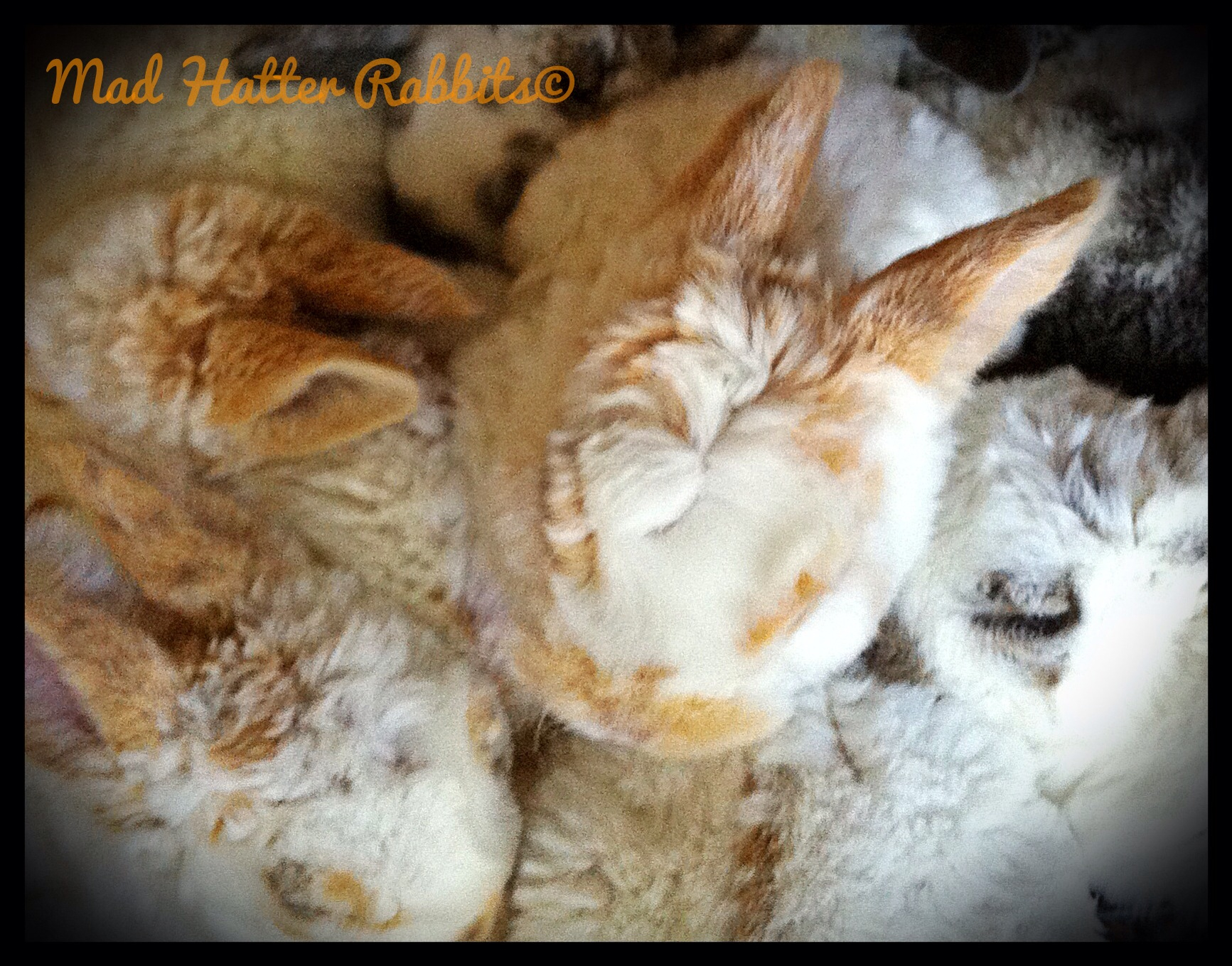
Astrex Update – Who Wants One?!

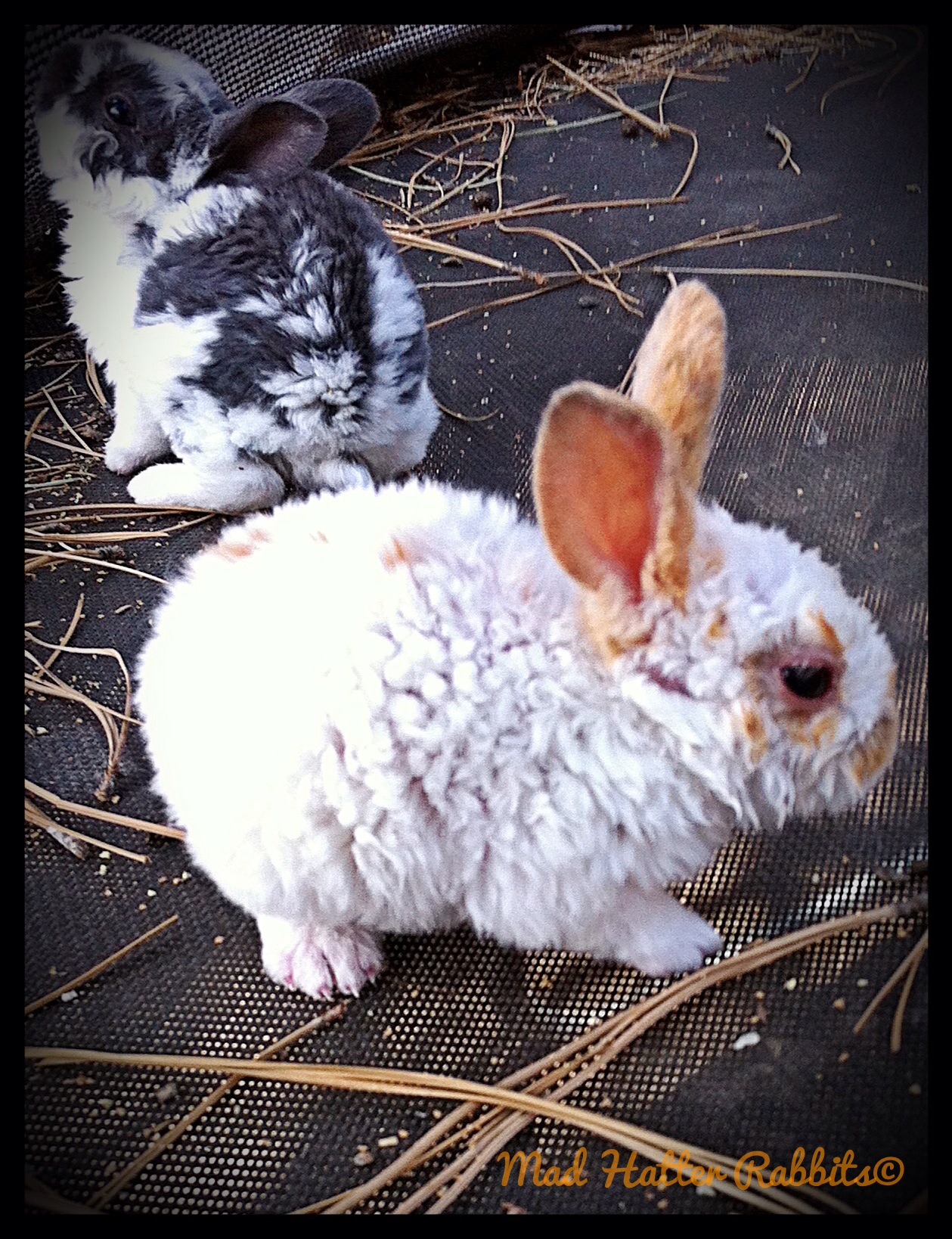
We’ve had three litters of Astrex born around here! They’re pretty cute. I wouldn’t say they’re healthier or sicker than the average litter – so my non-scientific understanding of how the Astrex gene works and whether it’s an indicator of any healthy issues in inconclusive.


Two of the litters have had kits with eye issues, however. My current theory is the eye is irritated by a curly hair hitting the lens. Again, can’t prove it so I don’t know whether to believe this or not without more litters to research.


They are very cute, however! Here are the most recent pictures:


1013493_399480296840249_907247651_n

The Originals (Inca x Bushy DOB 4/29/13)
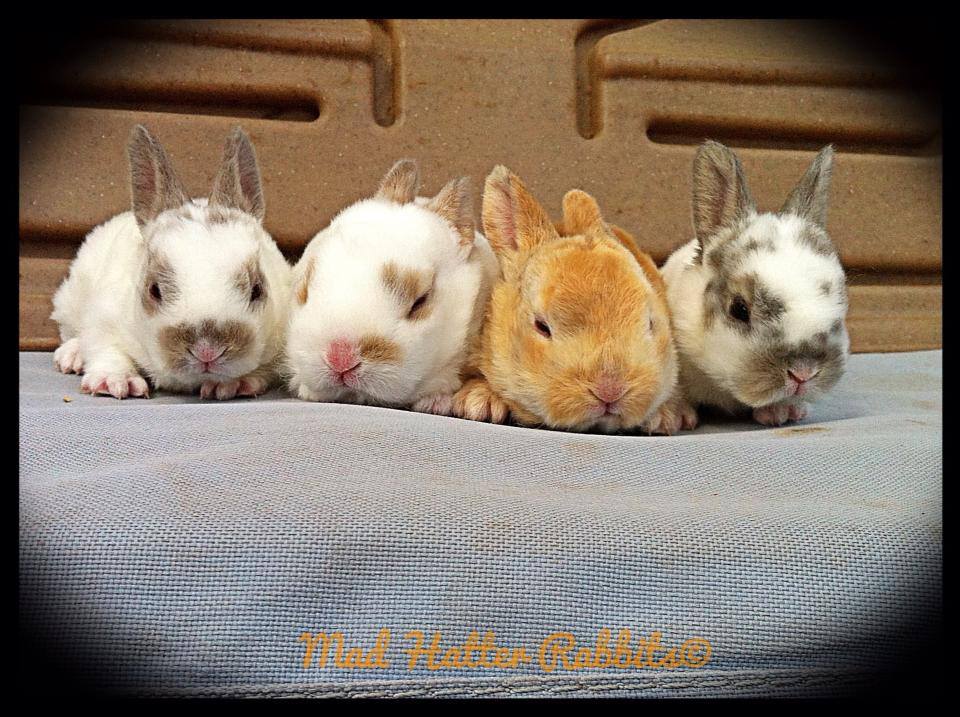
Left to Right: Grommet (B), KickFlip (B), Zulu (D)


Butterscotch x Bushy DOB 6/13/13 Left to Right: Who (B), What (B), Where (D), Why (D), When (D)

Butterscotch x Bushy DOB 6/13/13
Left to Right: Who (B), What (B), Where (D), Why (D), When (D)


Inca x Bushy DOB 6/26/13 Left to Right: Narabeen (D), Crankin' (B), Gidget (D), Boogie (B)

Inca x Bushy DOB 6/26/13
Left to Right: Narabeen (D), Crankin’ (B), Gidget (D), Boogie (B)


I’m hoping to get these guys out to other people who want to raise Astrex. There’s a wonderful family that will be doing a driving vacation of the US in August. I’m hoping interested people will be able to utilize his services to transport some bunnies their direction!


Keeping Rabbits Cool When It’s Hot Outside

saflora / stock.xchng

saflora / stock.xchng

Remember the Nelly song in the 90s? “It’s getting hot in here so I’m gonna take my clothes off!”

Well, sorry, Nelly, rabbits can’t take their clothes off. They’re stuck wearing a fur coat while temperatures soar.

I’ve been believing, hoping, that we would escape the worst of the heat since we’re living at about 8,000 ft. in elevation. Just this weekend we did a backyard campout and all of us ended up in a huddle in the wee hours of the morning because it got so chilly!

However, today’s temperatures moved into the high 90s and we lost the runt of our Silver Marten litter to heat stroke. I’m a believer in natural selection but I’m mad about the loss and we’re going to do our best to make sure we don’t lose this battle against summer time heat!

We’ll be trying a few different ideas to cool our rabbits down. This afternoon we filled Ziploc baggies with ice and distributed a bag to each rabbit. Tomorrow I have prepared bananas, cut in half and frozen solid. All of my friends are scrounging around for glass jars and bottles I’ll fill with water and freeze over night – I’m hoping by two days from now we’ll have enough to cycle them in and out of the freezer.

Though we have the ventilation of our rabbitry working in our favor – open air hutches are good for catching the breeze – we do still have to take precautions against heat stroke for our rabbits. The ideal temperature in a rabbit’s mind is in the low 50s – so anytime temperatures soar over 85° it makes sense to incorporate some cooling techniques into your animal husbandry tool bag.

Rabbits don’t have the ability to sweat, so their entire cooling system is coordinated by their ears. A cold rabbit will keep their ears close to their neck, a hot rabbit will have their ears high and wide open to cool their necks and catch any breeze that comes by. There is actually a phenomenon called “summer ears” – where a rabbit born in the summer will have longer ears than a rabbit born in the winter!

Rabbits suffering from a heat stroke will have glazed eyes, be relatively motionless, and may have spit coming out of their mouths. This is very bad stuff and can cause permanent brain damage or death.

In a quick, easy to read list, in order to cool your own rabbit(s), you might consider:

  • installing a mister system outside of your hutch.
  • wetting their ears with a washcloth to turn them into swamp coolers.
  • freezing water bottles they can lay next to.
  • giving them ceramic tiles to sit on (this can be a cause of hutch burn so watch and remove if they’re urinating on the tiles).
  • spraying the buns with water.
  • (in extremely hot weather) dunking a rabbit’s body in a bucket of cool water.
  • spraying down the roof of your hutches with a hose.
  • soaking cheesecloth or a burlap bag in water and draping it over the cage.
  • moving them to an air conditioned area.
  • moving them to a well-shaded area or installing a sunshade over their cages.
  • pulling the hair off of babies in the nestbox.

What other suggestions do you have for keeping your rabbits cool in the summer heat?

Our Silver Fox Friends

We’ve decided to put our trampoline to another purpose lately – the large space and netted enclosure has been perfect for doubling as a rabbit run.

The rabbits are on a rotation and it’s fair to say they love their time in the trampoline, bounding, hopping and generally frolicking about.

Because I was tired of holding the baby I did some analysis and decided to pop our 10 month old son, who’s a very able crawler, into the tent with the rabbit. Within minutes he’d located Fennel, our white Silver Fox, and was giving him loves.

20130608-140045.jpg

20130608-140159.jpg

This is why I love our Silver Fox rabbits! They are laid back to the extreme. It’s a little bit like what I see in Saint Bernard or Great Dane dogs – they’re huge, they have nothing to prove, and they can just be cuddle bugs!

We have black, blue, and white Silver Fox at our house. The only recognized color for showing right now is black – although blue is under development and will likely be showable in the next year. They are all sweet, but our white SF have really stolen my heart. Their fur is amazing and their personalities are gentle.

When Good Bunnies Go Bald

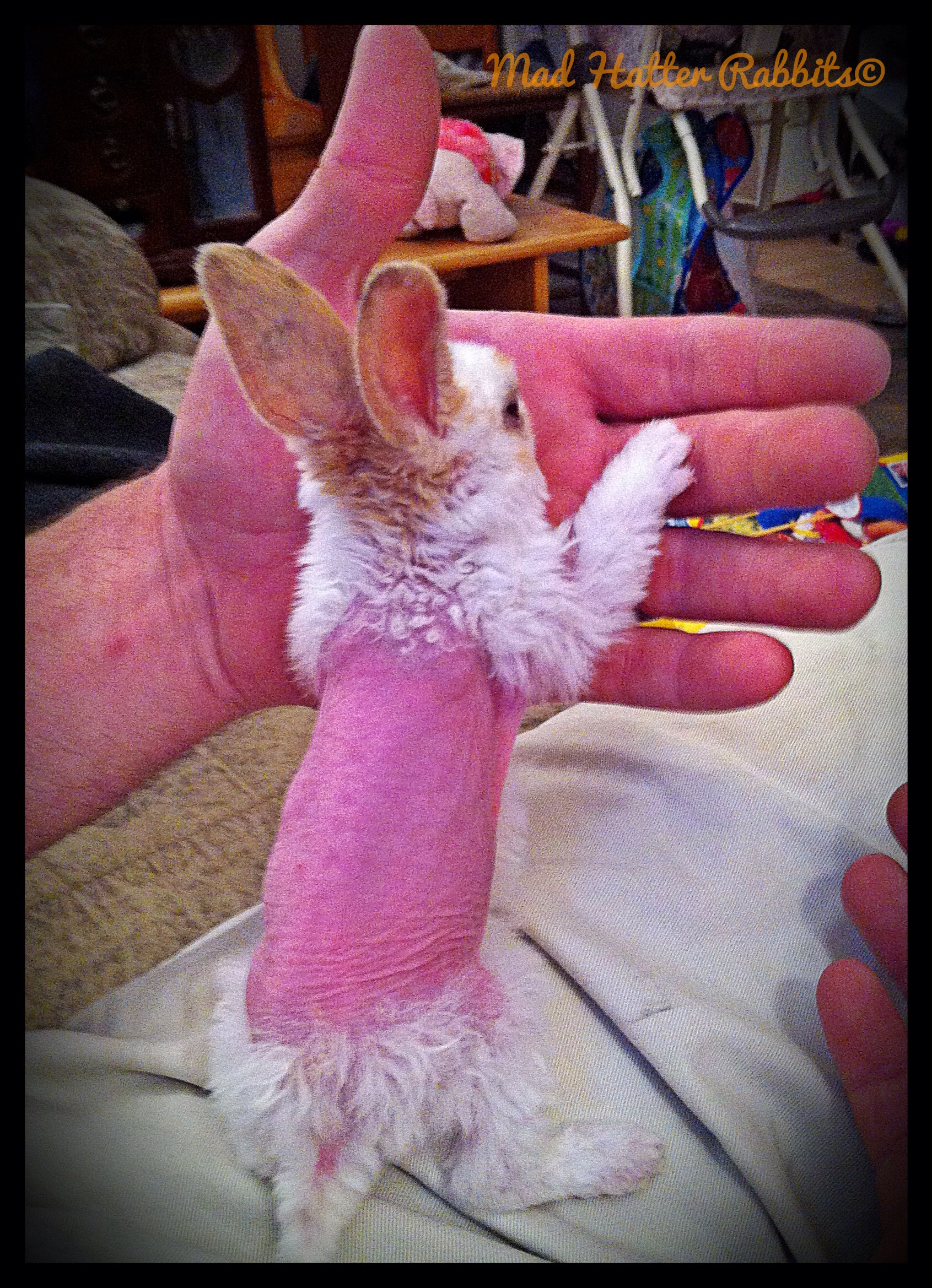
These little Astrex babies are a hoot! We came home from the show and three of our curly-haired babies are almost completely bald!


Although they’re really, really ugly right now because God made rabbits to have hair for a reason and that is that a hairless rabbit doubles as Stephen King’s muse, I’m excited to see how their new fur comes in. The hairlessness is apparently closely related to the curly gene in Astrex and I’ve heard a rumor a bald bunny comes in even curlier when that molt is finished.
Can’t wait to see.


In the meantime, just in case you need a few photos to haunt your dreams, here are a few before and after pictures I’ve found from our own rabbits and the Astrex Facebook group:


This photo is of Kojak, from Rainbow Rex Rabbitry. See how his hair grew back so nicely?!

This photo is of Kojak, from Rainbow Rex Rabbitry. See how his hair grew back so nicely?!


This little beauty is from Soft Paws Haven and I'm hoping will come to our house in the next few weeks!

This little beauty is from Soft Paws Haven and I’m hoping will come to our house in the next few weeks!


Finally, some before and after photos of our Epic:

Epic, pre-balding molt.

Epic, pre-balding molt.


Epic, doubling as a finger puppet.

Epic, doubling as a finger puppet.


Best in Show!

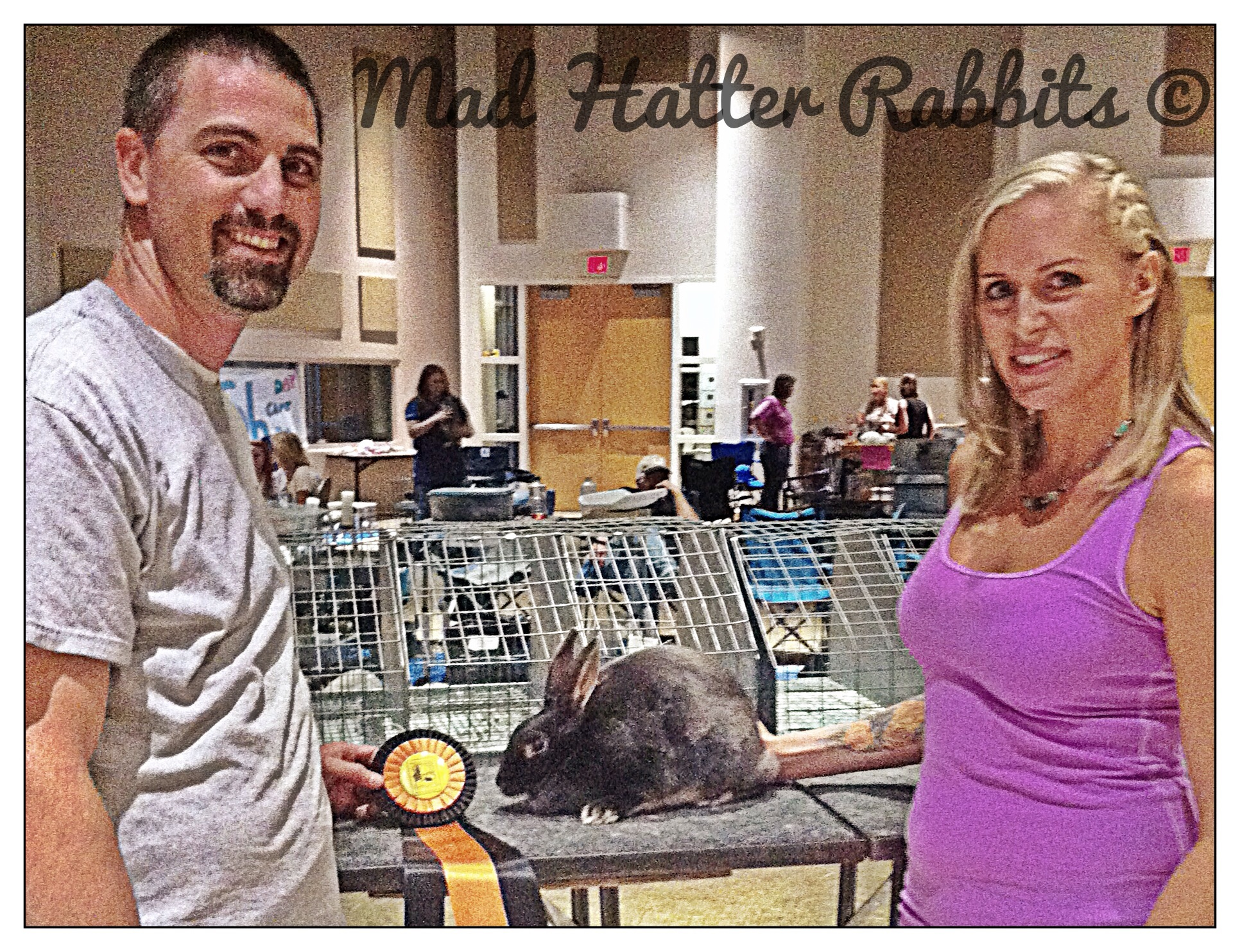
We’ve had our most exciting show experience yet – our 6/8 blue otter Satin doe won Best in Show yesterday!


For those of you who couldn’t care less about show adventures, the Best in Show happens when all of the rabbits who have been judged as best against their own breed (apples to apples) are placed in one last show and compete against one another for top honors (apples to oranges).


We had been talking about whether we should stay for the Best in Show and strongly considered leaving. But something made us stick around and… woo-hoo! It was worth it!


After pulling our jaws up off the floor, we were able to hunt down the ARBA judge, April Wilhour, and get her to take a picture with us. She did the bunny hypnotism thing and Beretta sat nice and still while I snapped the photo:


Beretta, our blue otter Satin doe, won Best in Show!

Beretta, our blue otter Satin doe, won Best in Show!


What a great day! Can’t wait to see how Beretta continues to stack up in the future!

Bunny Vac

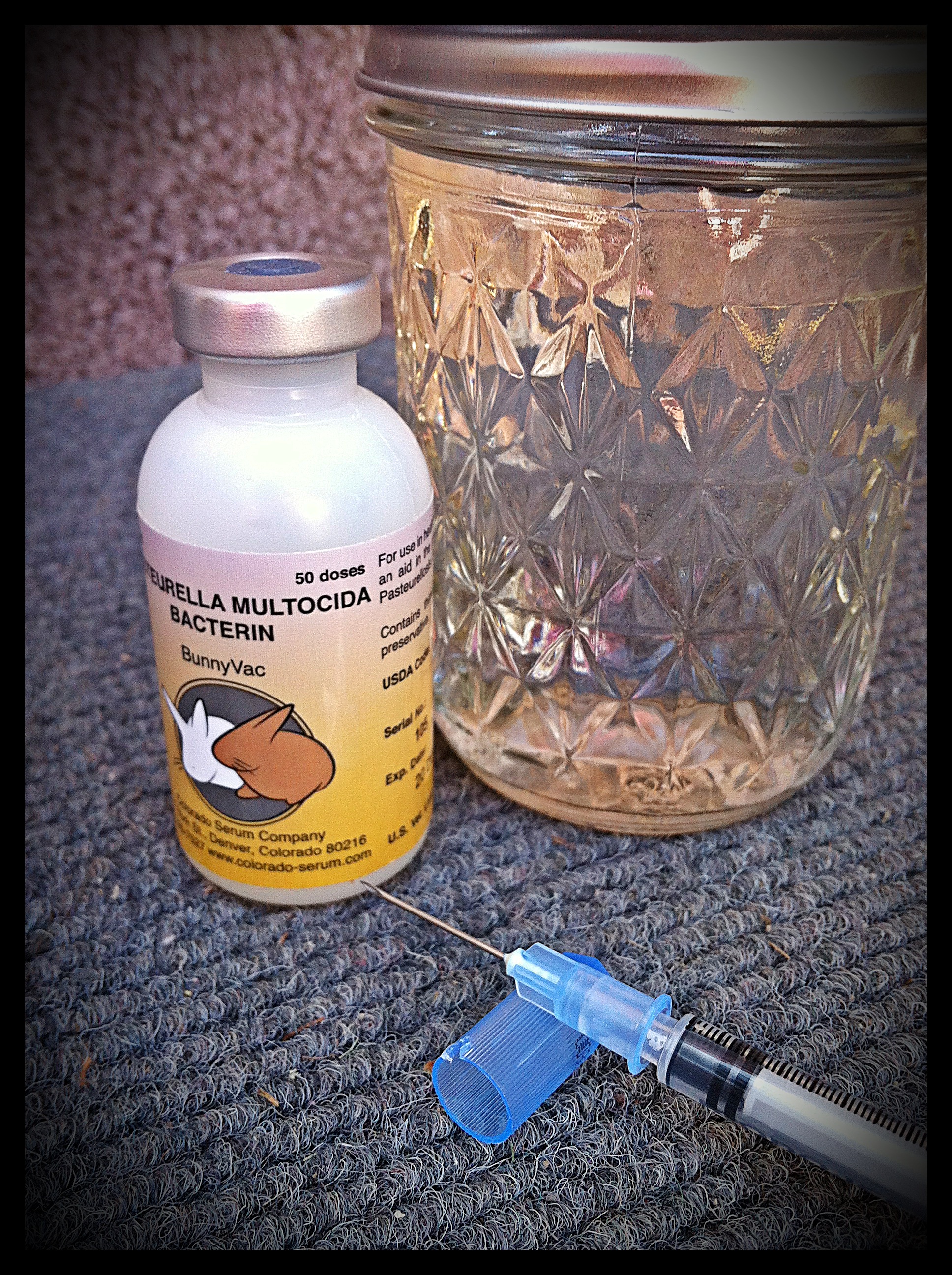
We vaccinated everyone today using Bunny Vac.

We vaccinated everyone today using Bunny Vac.

Today, after a lot of thought, we vaccinated our herd against pasteurella using the Bunny Vac from PanAm Labs. (Here’s a Q&A with Bob Glass describing how the vaccination works.)


I’m a little nervous about this, because we are inherently against using any non-organic substance with our rabbits. However, we discovered we really like to show our rabbits and we’ve invested a bit into getting great quality show animals. The risk of having a chance sneeze from another bunny undo the work we’ve been doing just isn’t worth it.


Plus, every time I hear a sneeze my heart stops in my chest. To be fair, we’ve been experiencing 35 mph -50 mph winds around here and you can see the dust in the air everywhere… but I keep thinking, what if that simple sneeze is the start of what can wipe us out?!


I’ve been inspecting our rabbits noses for about a month now, getting right up close and into their personal space as I try to peer into their nostrils. My husband finally told me I had to stop freaking the rabbits out like that or I couldn’t go into the rabbitry. Ha!


So today we vaccinated everyone except those who are midway through pregnancy or slated to be dispatched in the next few weeks. Tomorrow we go to a show and hope to be competitive with our newly strengthened herd.


I’ll be sure to keep you posted about our experiences with the Bunny Vac. So far, the vaccination of the herd was time consuming but painless.

Escapee!

This is Grommet, one of our Astrex mini Rex:

Grommet, our Astrex mini Rex baby buck.

Grommet, our Astrex mini Rex baby buck.

And this morning when I went outside to take care of the rabbits I saw a black and white blur that scared the *ahem* out of me.


Grommet was loose.


It’s unclear how Grommet got out of his cage but my gut instinct points to our number 2 child who is just tall enough to unlatch the cage… and not quite tall enough to be certain it’s securely locked again. But regardless of who was to blame, there was no doubt we had a problem and that problem was small, speedy, and nimble.


Our rabbitry is set up outside in hutches that look like lean-to’s. There are three sides that go down to the ground. We’re also fortunate to have several pine trees the hutches nestle against. We keep our carrying cages in the rabbitry area, which is enclosed by chain link fencing that keeps the dogs out and the rabbit fairly undisturbed.


What all this adds up to is a rabbit on the loose with several places to hide.


The girls and I tracked that rabbit across the rabbitry for the better part of an hour, with no luck. We ended up laughing quite a bit because all of us would jump and scream whenever the rabbit made a break for it.


It was a mighty battle, ended when the poor, tiny rabbit high centered itself on one of the concrete blocks supporting the hutches. Quick like a bunny (ha!) i was able to snatch it up, brush it off, and return it to its mother, no worse for the wear.


Lesson learned from this whole debacle? DON’T LET THEM OUT! And, if you do… drink about six Mountain Dews so you can speed your reflexes up. You’ll still be too slow for the loose rabbit, but sometimes the secret’s in the surprise!


Wishing you the best in all your rabbit-catching endeavors…


Snuffles, the Rabbit Boogie Man

For the past two months I’ve had an over-riding fear in my gut about our rabbitry. I’ve been gobbling up knowledge on the Facebook rabbit groups, researching, and gaining information from my friends… I’ve been on high alert and on edge, ready to jump at the first sneeze from one of our rabbits.

Snuffles. What on earth is Snuffles and why is it so awful?!

Snuffles is a term for a rabbit virus called Pasteurellosis. It’s associated with colored snot and is the herald of death for a rabbit.

I recently learned that another rabbitry blog I follow is in the midst of a Pasteurellosis outbreak and has lost 75% of the rabbits in only days. He linked to a thread on RabbitTalk that covers how another rabbitry lost every rabbit in their herd over the course of three months after picking up one unknown bunny from the feed store and bringing it home. On one of my Facebook threads I’ve learned that rabbits brought to a national-level show were infected with the virus and sneezing. The rabbits exposed to those have returned to their homes all over the country and come down with snotting and sickness.

This stuff is serious. That’s Serious with a Capitol “S”.

My friend Lisa put together a great description of Snuffles and how and why it is so deadly to a rabbit. She said I could quote her here, so I will!

“Pasteurellosis is like an untreatable plague that can be prevented through culling and quarantine but it cannot be defeated or treated. All rabbits are carriers, normally. They show no symptoms because their body has kept the virus in check.

But a virus overload can happen when they are around other rabbits sick with snuffles because the virus overloads their system to the point where they can’t fight it … it’s like the parasite load gets to be too much and kills its host.

Think of it like an airborne bunny HIV or AIDs – it weakens the immune system to the point that any other virus that comes along – boom! – they’re dead. And because it’s so contagious you will definitely lose your herd if you don’t cull at the first sign of snot. Think of it like a smoker that constantly coughs and can’t breathe – the virus makes it so that the cilia that line their lungs become so damaged that little particles of dust, etc. can get lodged and cause major damage.

Rabbits have never shown a resistance to pasteurellosis so it doesn’t make sense to let snuffles “run its course” in hope of creating a rabbit with immunity. It’s in an area of the nose that doesn’t have much access to blood so it will propagate and continue to develop and be released into the blood stream.”

What makes this harder to get a handle on is that the Pasteurellosis infection is carried in pretty much all rabbits and is seen in practically all large-scale rabbitries and most of the smaller ones. It’s present in laboratories and wherever rabbits tend to congregate.

Here are a few things researchers have discovered about Pasteurella:

  • Snuffles does not usually occur in very young animals whose sinuses have not yet developed.
  • Snuffles is seen more in closed sheds than in hutches in the open air.
  • Affected rabbits sneeze and cough. Their front paws become matted from wiping their noses.
  • Snuffles will become apparent at times of stress such as travel, cage change, pregnancy, etc.
  • The most common cause of death for a rabbit with Snuffles is actually pneumonia.
  • Snuffles is extremely contagious and can be transferred via sneezes, on cage equipment, or even on food dishes, water bottles, or the clothing of the herd caretakers.
  • Traditionally a terminal cull is the only option to stop an outbreak.

There is a treatment for rabbits, Baytril, which can mask the symptoms of Snuffles for awhile in a rabbit, but it looks like two injections a day and a price tag of approximately $75/month. It’s only available with a prescription and only recommended for pet homes where no one will be coming in contact with other rabbits.

A brand-new option is the Bunny Vac. I actually have ours on order and will vaccinate as soon as it comes. We are against putting medicines into our rabbits, but after weighing the options and our desire to take our rabbits to shows, it makes sense to vaccinate our herd. The BunnyVac works to boost the rabbit’s natural immunity and give the rabbits more time to build up their antibodies so they can fight the infection themselves. It’s rather groundbreaking and we hope that it works as promised – clinical trials have had 100% effectiveness in rabbits exposed to Pasteurella not succumbing shortly after. Here is a video with more information and here is a fact sheet put together off of a discussion on the ARBA Facebook page.

Here is a link to an article talking about different rabbit respiratory diseases. Not every sneeze and snot is Pasteurella – but really nothing that is a sneeze or a snot is good news for your rabbit.

A few things you can do to avoid a Snuffles outbreak in your herd:

  • Keep your rabbitry clean. A build up of ammonia from urine and feces can and will irritate your rabbit’s lungs, making them vulnerable to Pasteurelliosis.
  • Quarantine any new rabbits. Keep new rabbits separated from your main herd for a minimum of six weeks (this gives the virus time to make itself known if it is present). Rabbits should be a minimum of three feet from any other rabbits, have a barrier put up between cages (as simple as a feed bag), and be fed and watered with different utensils than the regular herd.
  • Close your rabbitry. Do not allow any people, other rabbits, or possible contaminates into your rabbitry. Do not offer stud service. Produce your own stock or only acquire stock from rabbitries you know breed healthy rabbits with strong immune systems.
  • Terminally cull any rabbit who sneezes colored snot. There is a chance they could be reacting to an allergen or have something stuck in their nose. If you think this is a possibility, isolate the rabbit that sneezed, remove the possible allergens from its environment, and watch it for a minimum of six weeks. If it snots in the meantime, do not give it the benefit of the doubt.

These are pretty hard bits of advice, but this is a harsh disease that can wipe out a herd in a matter of weeks. Sacrificing one rabbit with quick action has the potential to save many other rabbits for the long term.

Bad Timing

Rabbits! There are so many rabbits!

Rabbits! There are so many rabbits!

It’s been a busy weekend for us – three does from three different breeds gave birth! Our Champagne d’Argent, Silver Bell, Silver Fox, Ceres, and Silver Marten, Bonfire, all had large, healthy litters and we’re still waiting on one more mama to pop any time.


That’s a wonderful place to be because getting stock that produces and raises what they bear is quite nice and all of these does are proven and have our trust. They don’t typically lose any babies. Having all of this happen at once is also a bit scary because the size of our rabbitry doubled in a day! Whew! We’ll have babies for sale soon!


Silver Bell threw us a curve ball this time, however, and I thought it would be worth writing about as our friend Primrose the Holland Lop did something similar a few weeks ago.


While I was feeding and watering the rabbits yesterday morning I noticed Silver Bell looked… distressed. We had given her a hard time because she had taken all of the hay out of her nest box and put it in the corner of her cage on the wire. We called her crazy and put the hay back in the nest box, and she began to gather it in her mouth and start to move it out again. We decided to let her be and went on with our chores.


When I came back by in a few minutes I saw the hair around her eye brows was different and I just knew she was in labor. I put my water bottles down and sat still. Within a few minutes I watched Silver Bell deliver a kit, right in front of my eyes! She popped that baby out on the wire in the spot she had tried to make a nest before we took her hay away.


I didn’t want to disturb her, so we left for a bit. When we came back the kit was still alive but she had not pulled any hair. She was still rearranging her hay and didn’t give the impression she was finished delivering. My husband pulled her out and palpated her – her stomach was still hard as a rock and it seemed there were babies still to be had. We spread hay all over the wire of the cage and let her be.


We took her little kit, which was starting to get cold, and tucked it into a warm place for a few hours. When we checked her again mid-afternoon and there was still no hair pulled and no babies we identified the newborn singleton with sharpie marker and put it in with the silver fox litter that was born that morning.


Bed time came and we checked Silver Bell – this is a doe with a proven track record as a mom! She’s a great girl! She was pulling hair frantically and putting it in her hay nest on the wire. The nest box was right there, unused and full of hay. Very strange.


To make a long story short, when we came out this morning Silver Bell had a nice little nest of hay and hair set up in the corner of her cage and nine little babies tucked inside! She delivered the first kit and the other nine at least 14 hours apart from one another!


We got the original kit out of its foster nest and tucked it in with its siblings. Covered in marker but none the worse for the wear.


I mention this because I always expected a rabbit to deliver their babies on Day 31 within about 10 – 15 minutes. That’s what all the experts and books say… yet yesterday’s experience proved this isn’t always the case. Duchess, a Champagne d’Argent, always delivers on Day 33 or 34 (once even on Day 36!).


As another story of non-traditional rabbit birthing, our friend who has Holland lops noticed her first-time mom doe go into labor (displaying spots of blood and amniotic fluid) on Day 30, deliver one kit on Day 32 and another on Day 34. Sadly, both of those kits were born dead. But it was shocking to both of us that there could be a span of five days between the beginning of labor and the end. (And she did consult a veterinarian to ensure the best care for her rabbit… and was told to wait it out.)


I’ve read raspberry leaves can help when a doe is in labor. We don’t have a supply of those handy, so I’ve made Raspberry Zinger tea for our does. I can’t guarantee it’s helped them, but I do know it hasn’t hurt them at all! We also typically follow up the birth with a yummy treat like carrot, apple, banana, or celery and a couple of calcium-enriched antacid tablets.


Good luck with your litters – I’d love to hear your stories of non-traditional rabbit births!
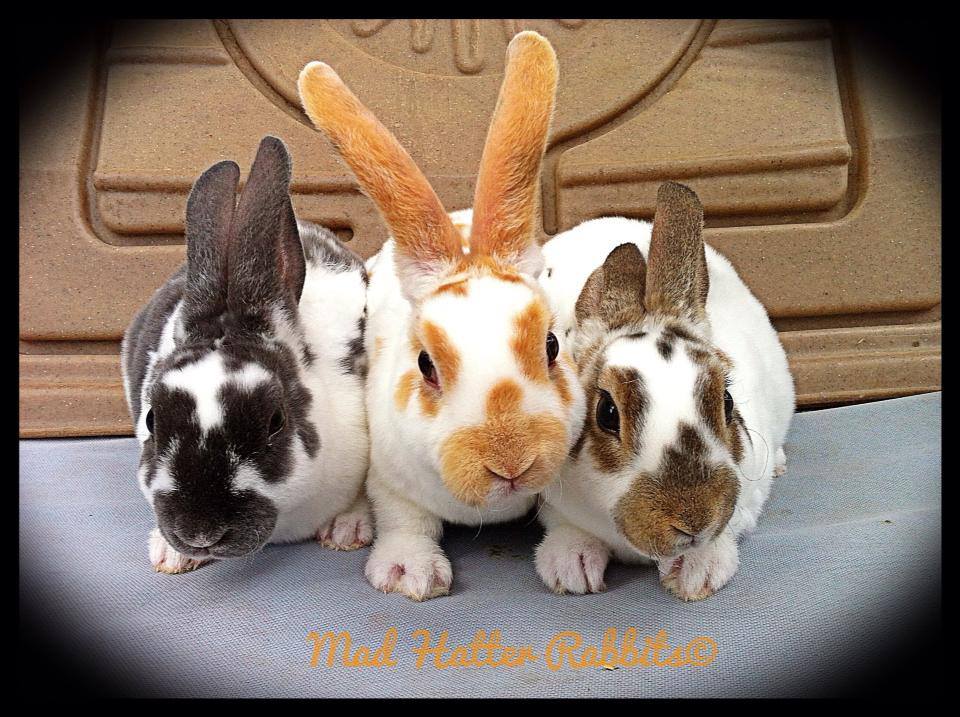


Astrex

I am probably getting in way over my head here, but it looks like we may have a new pet project.

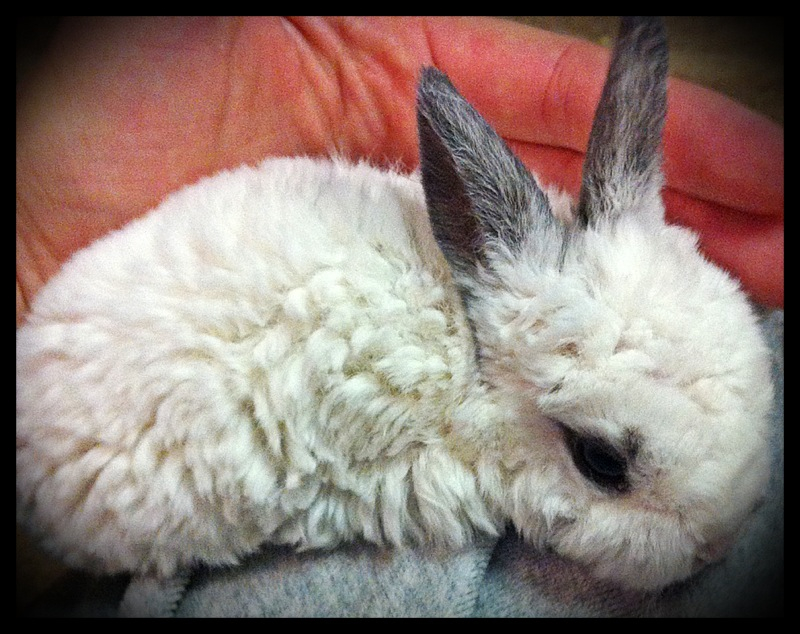
Astrex mini Rex, 19 days old

Astrex mini Rex, 19 days old

Astrex Mini Rex, 19 Days Old

Astrex Mini Rex, 19 Days Old

Our very first litter of mini Rex was born 19 days ago to a first-time mom, Inca and first-time dad, Bushy. They’re both broken, so the resulting litter is 100% broken coloring with many charlies as well. As they’ve developed they’ve caught my attention because their hair seemed to be… peculiar. But it’s our first purebred Rex litter so I wasn’t sure what I was seeing wasn’t… normal.

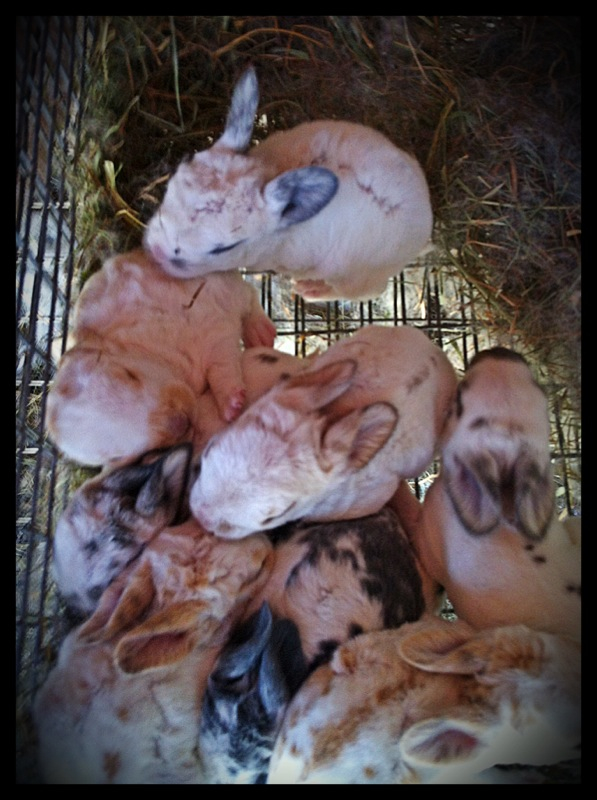
Astrex mini Rex litter, 10 days old

Astrex mini Rex litter, 10 days old

10 Days Old

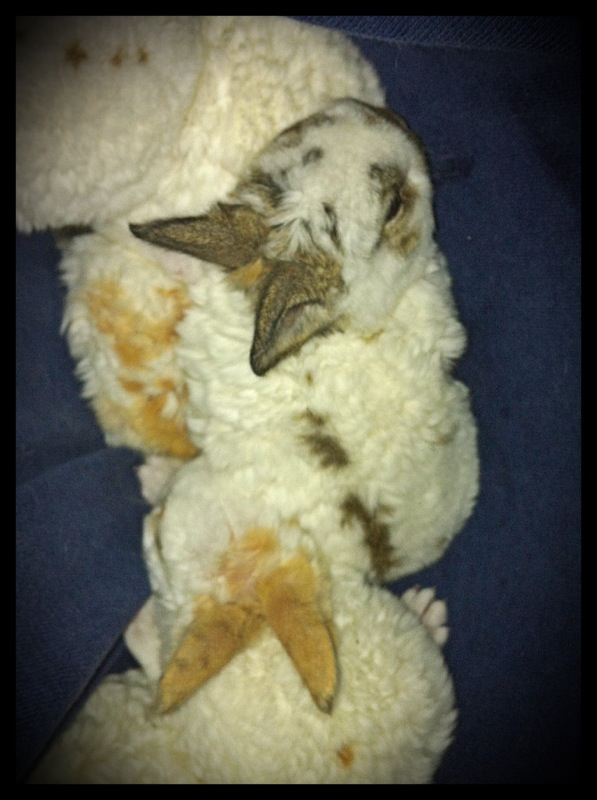
Astrex Mini Rex litter, 19 Days Old

Astrex Mini Rex litter, 19 Days Old

19 Days Old

It appears this litter has gotten a full helping of the very rare Astrex gene. This fur type is not recognized by ARBA, so breeders of show rabbits who find it in their nest boxes typically cull. Also, the curl may not stick around through the baby fur and will molt out to normal… the parents of this litter are completely normal in their mini Rex fur, not a curl to be seen!

I’ve been scouring the internet for information and have discovered a few people who are breeding specifically for this trait. It can be found in several breeds besides Rex and mini Rex, also in Harlequin and New Zealand. I’m trying to learn more, so if you, or anyone you know, has found curly coated rabbits in their nestboxes, please let me know! I’ve also created a Facebook page to further discussion on this topic.


cover


Links to the other pages I’ve discovered talking about Astrex:

Astrex, Curly Coated Rabbits on Facebook

Duman’s Ark (Great Photos!)

Astrex Rabbits Curly Wavy Bunnies

Astrex Rabbits

American Astrex Rabbit Breed Club