When Your Rabbit Won’t Use a Nestbox

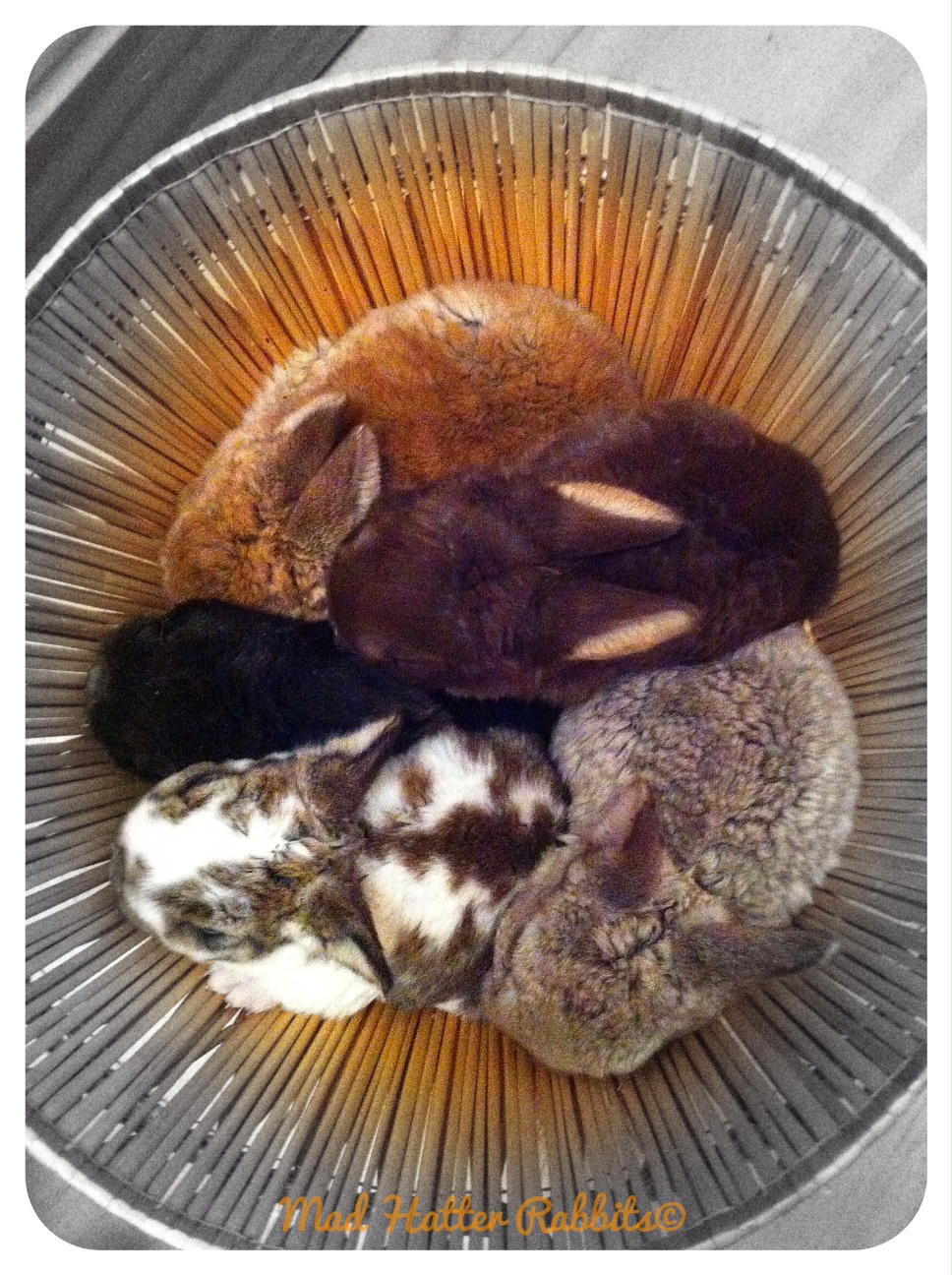
We stuffed the rabbit cages full of hay (like this) and let the mama build a nest.

We stuffed the rabbit cages full of hay (like this) and let the mama build a nest.

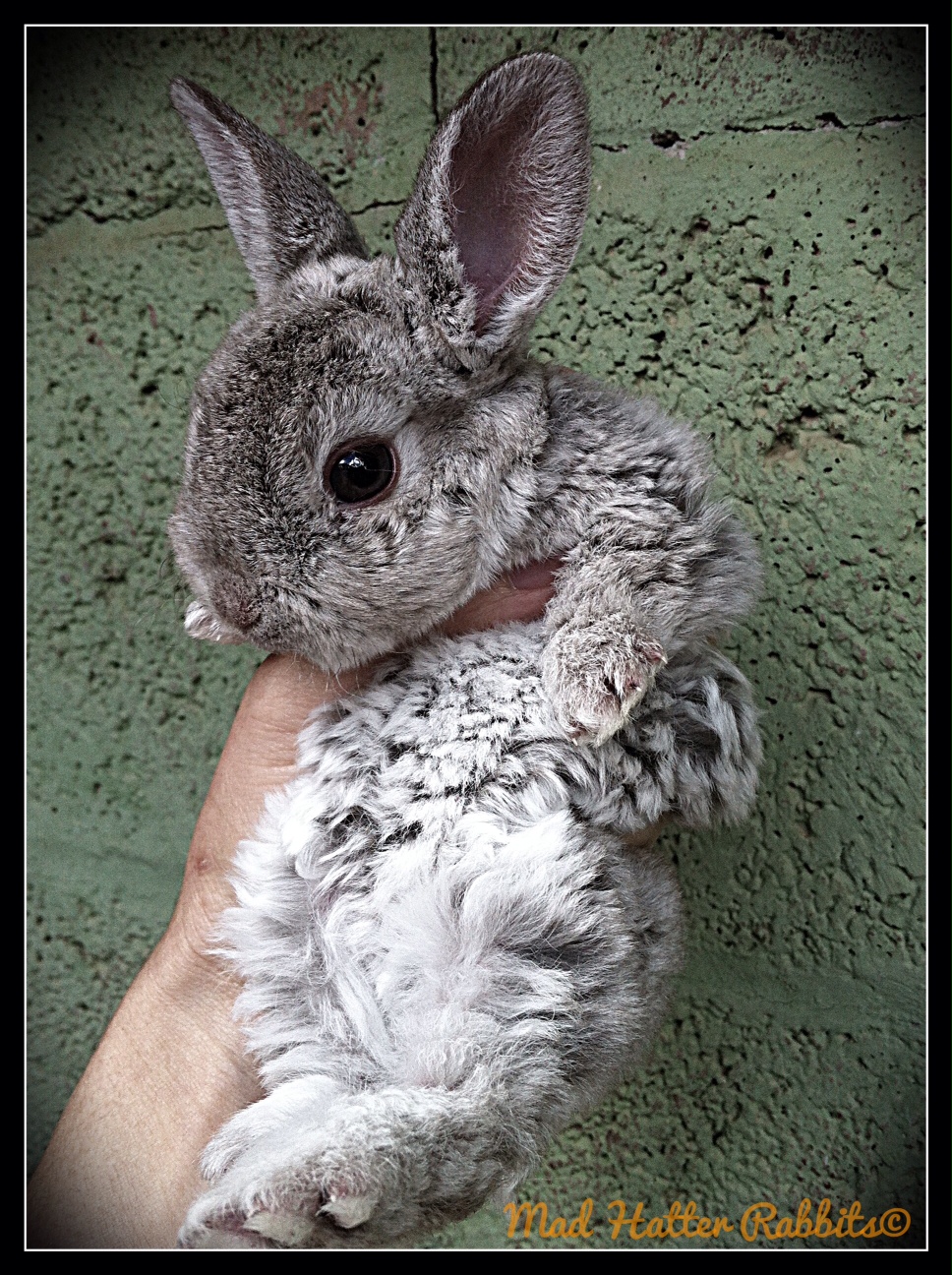
We’ve been busy this week at Mad Hatter Rabbits! Lots of new babies to first-time mamas.


Though we’ve had some great success stories, it hasn’t been without its stress. In particular I had two first-time mamas who were absolutely determined to build their nests outside of the nest box.


I sanitized the boxes in case they smelled like another rabbit and turned my mamas off, lined them with fresh hay, had a serious sit down talk with the rabbits and explained that in this weather, with temperatures dipping down into the teens at night, having babies outside the box simply won’t do. They’ll freeze!


My mamas didn’t care. They did not want to build their nest in the box.


Short of setting up a 24 hour watch outside their cage I wasn’t sure what to do about it. I consulted my Facebook group experts and decided to stuff the entire cages full of hay. This resulted in a big ‘ol mess but also a layer about 4 inches thick that the were able to us as burrows.


In my financial mind, an entire 3 string bale of hay is less than the price of one of those baby rabbits if we sold it. The mess is not fun to clean up in any way, but at least I’d have a little window of opportunity to catch the babies before they froze.


Mama rabbits were pleased as punch at the addition in their cages! They built their nests and I began my 45-minute interval check ups. (Switched to 20-minutes once I saw the mamas pulling hair.)


The first babies were born after midnight. The last doe delivered at 2 a.m.


Of course.


I do love my coffee for a reason!


Once they were born I plucked those little ones up and tucked them with their mama’s fur up into their nestboxes and brought them inside.


(Bringing the nestboxes inside is a controversial move. Some breeders say the shock between inside temperature and outside temperature is not safe for the babies. We’ve left babies outside and we’ve brought them back and forth. Can’t say which method we prefer yet.)


The next morning I took the nestboxes out to their mamas for feeding. The ones who had their babies in the nestboxes to begin with hopped right inside and fed those babies. The mamas who were determined to have their babies outside the nestbox… stayed outside.


Hungry babies.


Repeat at dusk.


I was beginning to get worried and wondered if I needed to foster the kits from the litters with mamas who wouldn’t feed. Since mama rabbits only feed once or twice a day and it can take as long as a day for their milk to come in, I knew we had sometime to play with… but not too much time. By 36 hours post-birth those babies needed a meal or a foster mom.


This morning I took the nestboxes outside again. And the same situation unfolded. Suddenly, a lightbulb went off…


If Mohammed won’t come to the mountain, the mountain must go to Mohammed.


I scooped those  babies out of the nestbox and put them in the holes their mamas delivered them in, in the hay outside the nestbox.


Mama rabbits immediately headed over to the babies and nursed and cleaned them! One of the does even covered them up and pulled more hair. After the mamas finished, scooped the babies up, put them in the nestboxes which are now acting as an RV, and carried them inside.


I feel quite brilliant right now. It only took me two days to figure it out!

Can You Feel The Love Tonight?

ilco / stock.xchng

ilco / stock.xchng

As silly as it may seem, sometimes rabbits don’t… breed like rabbits.

I often hear complaints about a doe that won’t lift or is otherwise reluctant to breed. This is not necessarily uncommon and can be a factor of age, weather, or general temperament. Most often a buck is more than willing to oblige but occasionally you run into troubles with your mister refusing to be a “kisser.”

There are some fairly standard recommendations for getting your rabbits “in the mood”:

  • Add Apple Cider Vinegar to their water or wheat germ to their feed;
  • Make sure they have at least 16 hours of daylight each day;
  • Put the doe and the buck in one another’s cages for 24 hours;
  • Table breeding;
  • Breeding by moon calendar.

But just this month we came across a totally new (to us) method – breeding by moonlight.

Since rabbits are fairly nocturnal it’s not a surprise that they are more active at night. In warm weather we sometimes sleep with our windows open and the noise the rabbits make playing with their toys and thumping around can be quite noticeable. (They’re no match for an antsy barking dog or a cat in heat, but for a rabbit they’re loud!)

Rabbits are lively at night!

Just this month we got home late and remembered that we needed to breed a few rabbits in order to plan their due dates around some travel plans next month. So, even though it was fully dark, we decided to head out to the rabbitry and see if we could get some dirty business started.


Oh. My. Goodness.

What a shock! Those girls were so ready it was as though their backsides were attached to rockets! We had such immediate success by moonlight fraternization we even attempted to breed a few of our most reluctant ladies — and they were quite happy to oblige!


This was such a blatant change of pace that it’s another trick we’ll be adding to the options for what to do when your doe isn’t interested. After all, everybody loves a little late night romance, right?!


*We will continue to use the moon calendar for our breeding programs. Here’s the link to a 2014 moon breeding calendar!*

Bunny Vac: 8 Month Follow Up Report

h_wallace_gromit_bunny_02

Wallace and Grommet aren’t the only people who get a little nervous about what that bunny might be up to in the cage…

Eight months ago we decided to vaccinate our rabbits against pastuerella using the Pan American Veterniary Lab product BunnyVac. This was a controversial move for a few reasons:

  1. Snuffles is the Boogie Man of the rabbit world and people don’t like to talk about it for fear of getting a “bad” reputation so there’s not a lot of information about it;
  2. We hadn’t seen any cases of snuffles in our own herd to prompt the decision;
  3. Our goal is to have an organic meat source and vaccinations are, ahem, not organic.

On the “pro” side for vaccination:

  1. Pastuerella is highly contagious and can wipe out every rabbit in your herd quickly if it is contracted;
  2. We enjoy traveling to shows and every time you go to a show you expose your rabbit(s) to germs and stress;
  3. The cost is about $1 per rabbit per year, certainly not something that we would have to bust our piggy bank open to afford;
  4. There’s something to be said for peace of mind and doing your best to protect your livestock.

After a lot of consideration of the options and possible outcomes, we decided to go ahead and vaccinate. It’s been long enough now that it seems safe to give you an report of what we’ve observed since then:

We vaccinated all of our adult rabbits and show rabbits. We do not typically vaccinate a young junior rabbit unless it will leave our rabbitry and go to a show. We have not seen any signs of snot in our own rabbitry at all. Zero. (We hadn’t seen it prior to vaccination, either.) One rabbit sneezed a few times in the day after we vaccinated which is a stated possible side effect. Since then, any sneezes have had normal causes – things like water or feed fines up their noses or in response to crazy winds (we get wind gusts up to 40 mph fairly regularly around here).

We sent some rabbits to the county fair that had not been vaccinated. From the fair they were purchased and headed to a new home several hours away with an indoor rabbitry set up. Two of those rabbits started snotting within 48 hours. The new owner dispatched them immediately, suspecting Pasteurella. The new owner did not send off for a culture of the snot to determine exactly what was going on with the rabbits, but we both suspect they were exposed to snuffles at the fair from other rabbits, were stressed from being in a hot barn with hundreds of people walking by each day, followed by a journey to an entirely new environment (that had a Haboob dust storm that same day, of all the luck!). Getting snot cultured is quite a chore – this link tells how one person in California is able to culture any possible sickness in their rabbitry: HOW CAN YOU TELL? We did not see any signs of snot from other rabbits that were at the fair – but those rabbits had been vaccinated.

If we had not vaccinated, would all of our fair rabbits exhibited symptoms? We just can’t say. But I do find it compelling that the rabbits were side by side and the unvaccinated fell sick and the vaccinated did not.*

Many of our rabbits developed a small, hard lump at the injection site. That lump has disappeared over time and is the only physical change we have seen in our rabbits. (No personality changes, either!)

We continue to watch carefully. Very carefully! We have been at shows were rabbits are disqualified for exhibiting snot on the show table; I am absolutely certain our rabbits have been exposed to this disease. However, we haven’t contracted it to the best of our knowledge  as all our rabbits are happy, healthy and wise! For about $1 per rabbit per year we think it’s a great insurance policy.

The previous posts I’ve written on this continue to be very popular in the website statistics, so I know there are people trying to find out about BunnyVac and whether it works. In light of providing information, for your convenience here is a compiled list of Questions from around the web, mostly from the Rabbit Pasteurella Vaccine Forum on Facebook.

I did not author these answers, cannot personally vouch for them and cannot be held liable for any action/inaction you take based on the responses. This is simply a list of questions and answers I have seen in discussions, cut and pasted into one location to make your search for knowledge a bit easier. The majority of the answers are direct cuts from Facebook responses to the questions from PanAm Lab’s Bob Glass (who developed the BunnyVac vaccine).

I don’t personally know Bob Glass or have any stake in Pan American Veterinarian Lab. I am not encouraging you to use the BunnyVac in your own herd, but am hopeful that this post provides some information for you to make the best informed decision that fits your management style. I receive no compensation in any way for this post.


Should I give the shot in the muscle or under the skin? Under the skin

What size needle/syringe should be used with BunnyVac?  To each to his own, but try a 25 gauge, 3cc syringe. Some use as large as 20 gauge and some as small as 35 gauge. Size doesn’t matter for the vaccine, the rabbits prefer a smaller needle.

Is there any time of year that is better than others to vaccinate, or does it not really matter? The best time is “AS SOON AS POSSIBLE”; season does not matter.

If a vaccinated rabbit gets exposed, what happens? Nothing? Nothing will happen in the vaccinated rabbit that responds to the vaccine by producing good antibody levels. In our clinical trial we had no vaccinated rabbits that developed clinical disease but it would be wrong to claim it will “never” happen.

Can I have a complete ingredients list please? Killed Pasteurella multocida, saline, and formalin (preservative), aluminum hydroxide adjuvant.

Is it okay to use the same needle over and over while vaccinating the rabbits? No. The ideal is to use a new sterile syringe and needle for each rabbit. this gives the best protection against causing and/or infection. A reused needle/syringe or one used on multiple rabbits is possibly infected and can infect each rabbit on which it is used.

Is a vaccinated rabbit still safe for human consumption? Yes, rabbits vaccinated with BunnyVac are safe to eat after a 21 day withdrawal period.

What is the youngest a rabbit can be vaccinated with BunnyVac? 6 weeks is the youngest. Earlier than that the immune system is not fully functional.

Can you give this vaccine at the same time as you are giving an antibiotic? No problem giving the vaccine with antibiotics.

If you did the first shot, and missed the date for the booster, should you redo both shots? You do not need to repeat the initial dose, just give the booster now.

In the multi dose vials – do all doses need to be used in one round, if a sterile syringe is introduced each time; or can I use 10 doses, and then use the other 10 for my booster in 30 days? While it is ideal to use all when the vial is first opened, the vaccine will be ok as long as it is not contaminated. Using an alcohol wipe to clean the vial top before and after withdrawing vaccine will help to maintain sterility.

How soon after vaccination can I breed my doe? Immediately, no need to wait.

Is it safe to vaccinate a pregnant doe? We have not seen any problems in pregnant does but, to be safe, don’t vaccinate anything that is more than 14 days after breeding.

Is it safe to give a nursing doe a booster? The booster will not hurt nursing does.

My experience reading Facebook rabbit forums has found Bob Glass to be extremely approachable and willing to answer questions and educate others about the disease, vaccine, and treatment. He recently posted (January 2014) that he is working on a test to detect Pasteurella in the nasal exudate (snot) of rabbits and needs samples of snot. He asked that anyone who would like to participate in this project by collecting and sending samples form multiple rabbits email him at bglass@pavlab.com.

Two more items to share, the BunnyVac Information and BunnyVac Clinical Trial Summary. These links will take you through to the documents. I hope it is helpful to have all of these pieces of information in one place!

* After re-reading this post I felt like it might come across as negative to the county fair. The jury is still out on how heavily we’ll participate in future years. We quarantined every rabbit that came home from the fair and didn’t see problems. This included our unvaccinated junior Silver Fox as well (the one that were dispatched were Cinnamons.) So I can’t promise the problem was the fair, although a logical mind says if the rabbits are out of their natural environment for an extended period of time, very hot, and exposed to masses of people and other animals… that’s when IF you’re going to have a problem you DO. Our fair did a vet check on every rabbit that came in and declared all healthy prior to putting them in cages as a precaution, so I may be wrong. I just don’t know. Hence, the jury is still out.

If Worst Comes to Worst: The Second Buck Insurance Policy

Blue Silver Fox

Blue Silver Fox

On the theme of starter stock and how to best begin your rabbitry in our previous post, How Do You Find Starter Stock?, I wanted to share some advice I saw an experienced breeder give recently.


This breeder recommended buying two pair of rabbits, a quad, when beginning your rabbitry. Most experts will suggest buy just a trio, two does and a buck. If you’re in an area where it’s easy to find your breed that is perfectly sound advice as one buck is certainly able to service two does without a single problem.


However, if you’re looking at a hard-to-find or rare breed, or you’ll have to transport the rabbits a good distance to get them home, you might strongly consider purchasing a quad. This helps insure your investment is anything goes wrong (because we all know Murphy and his stinkin’ Law!).


For example, what if something incapacitates just one of your rabbits… but it’s the buck? What will you breed to your does for babies? In the “what if” possibilities that buck becomes pretty important and have another boy around might not be so bad!


I had never considered this prior to reading his advice, but now think it’s a pretty smart plan. That second buck is like purchasing insurance – possibly never necessary or utilized but terribly, terribly important if worst comes to worst.


How Do You Find Starter Stock?

Asking the right questions is the first step to locating great foundation stock.

Asking the right questions is the first step to locating great foundation stock.

I loved this post over at Rabbit Ranching and got permission from Ms. Cahill to reprint it on Mad Hatter Rabbits. If everyone who contacted us for rabbits followed this advice it would be so awesome! (I have added a few thoughts at the end.)

Q&A Session #2 from Rabbit Ranching by JuliCahill

This is the first part of an ongoing series allowing readers to ask questions about the rabbit hobby. There are no rules or guidelines. Have a question? Ask away! Post your question as a comment on our blog or email oakridgerabbits@gmail.com.

Readers are encouraged to share their own ideas or opinions in the comments below.

What questions should you ask a breeder when choosing “show” foundation stock?

Ah, the age-old question. When you’re starting out with rabbits or starting a new breed, your foundation stock will ideally carry you through the first generations of creating your own line. But it’s easy to get burned by lesser quality animals or fake pedigrees if you’re not sure how to search wisely.

The best place to start is ARBA’s recognized breed page, which can be found HERE.

From this page, you can click on the photo of any currently recognized breed, and it will take you directly to the breed’s specialty club. To my knowledge, every (or at least most) breed clubs post sweepstakes standings on their website. Sweepstakes is a contest based on show wins, and only club members are eligible. Look to see who is at the top of the list and keep those names in mind.

Next, visit the registered breeder directory, which should also be available within the breed club website. Keep in mind that this will only list contact information for breeders who are currently members of their specialty club. ARBA has a more general breeder directory on their website. If you don’t find the name you’re looking for on one, check the other.

I would choose about five names of people local to you (or within the distance you’re willing to travel). There is usually an email or phone number listed for contact.

Now…what to ask? …

How should a newbie, who wants to show their favorite breed, approach a show breeder to purchase stock?

Tell them them exactly what your goals are:

Example: “I want to show and raise Holland Lops.”
Example: “I am looking for two Satins to keep as pets and show locally.”
Example: “I want a pet Dutch.”

The breeder needs to know exactly and directly what you want the rabbits for. If you just email asking, “Could you send me a list of rabbits for sale?” you’ll probably find few who take the time to respond. Everyone has rabbits for sale at some point in time, but they need to know exactly what you’re interested in.

Other information to include:

– The number of rabbits you’re interested in buying.
– The time frame in which you’re looking to buy.
– Your location.

Example: “I would like to start with one buck and two does. I am hoping to find my starting stock this spring, and I’m located in Dallas, TX.”
Example: “I want to find two bucks and three does before September. I’m located in Trenton, NJ.”

This is all of the information specifically needed to get you started, and I recommend leaving the rest up to the breeder. If they have other questions, they will ask. Mentioning other specifics (wild, unusual colors being a common one) not only narrows your search, but also makes most serious breeders question your intentions.

Instead, ask the breeder whether they have rabbits available that meet your criteria. If you are unsure of which color, group, or variety is strongest and most developed – just ask! This is what you will want to start with, and an experienced breeder can guide you directly to it.

So, how do you know you’re speaking with someone reputable?

Ask everyone within your original inquiry – “I am new to this breed. What lines do you recommend working with?”

This is the golden question because it will reveal the authority in the breed of your choice. Like it or not, the success of every breed is strongly influenced by a handful of very dedicated, very successful breeders. They are the names you’ll see over and over again on pedigrees all over the nation. If you ask five breeders this question, you are likely to find out quickly which lines are “go to” in the breed.

If you can (whether they are local or whether you have to arrange transport from a national convention), try to purchase stock directly from those people. If you can’t, try to find someone who has used their rabbits to build their herd.

A name doesn’t mean everything, but it does mean a lot. A reputation is something that’s built by word-of-mouth and personal experience. If people, in significant numbers, speak highly of someone in particular, they are likely to be a trustworthy source. If it’s someone no one has heard of or mentions without prompting, it’s generally not a good starting place.

I could talk more about this topic, but I think I’ll save that for another day. This is where I recommend starting. From there, many reputable breeders will be interested in helping you learn more.


A few thoughts from Mad Hatter:

I completely agree about the recommendation to follow breed sweepstakes… and I don’t. We have six different breeds here and are members of the national clubs of only three. Some national clubs have far too many politics for us to want to get too involved right now… or it just isn’t the right time for us to have many memberships… what not. So, while I believe sweepstakes points are one factor in determining a reputable breeder, I would consider it with other knowledge as well.

Another research option is to check the Domestic Rabbits publication from ARBA for those owners who have Grand Champion rabbits in their breeds.

Being completely clear about your intentions is important! For us, since we raise mostly dual meat/show rabbits this is especially significant around here. If you tell us you are going to show rabbits we will set you up with the best-typed rabbit we can. If you tell us your entire purpose is for meat we won’t put as much emphasis on show promise as your desired outcomes will likely have more to do with production, making weight by a specific age, and mothering abilities than the length of shoulders or whether their body is conformed to the Standard of Perfection!

2013 in review

The WordPress.com stats helper monkeys prepared a 2013 annual report for this blog.

Here’s an excerpt:

The concert hall at the Sydney Opera House holds 2,700 people. This blog was viewed about 27,000 times in 2013. If it were a concert at Sydney Opera House, it would take about 10 sold-out performances for that many people to see it.

Click here to see the complete report.

Using Apple Cider Vinegar with Rabbits

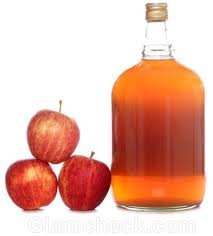
Apple Cider Vinegar has many health benefits for rabbits.

Apple Cider Vinegar has many health benefits for rabbits.

One of the quirky things we do around here for our rabbits is give them a bit of Apple Cider Vinegar (with the Mother) in their water every day.

Early on in raising rabbits we read that this additive is healthy for rabbits and incorporated it into our daily routine but today I decided to research exactly how and why it might be useful to rabbits!

We typically use Bragg’s Organic Apple Cider Vinegar (with the Mother) for our rabbits because A) that’s what’s stocked in our local stores and B) we like that it’s organic. We add about 1 Tablespoon per 1 Gallon of water and give it daily. The Bragg’s website says that research worldwide supports and commends what Hippocrates (the father of medicine) found and treated his patients with in 400 B.C: He discovered that natural, undistilled Apple Cider Vinegar (or ACV) is a powerful cleansing and healing elixir, “a naturally occurring antibiotic and antiseptic that fights germs and bacteria” for a healthier life.

The use of ACV has a long history. It has been traced to Egyptian urns as far back as 3000 B.C. The Babylonians used it as a condiment and preservative, while Julius Caesar’s army used ACV tonic to stay healthy and fight off disease. The Greeks and Romans kept vinegar vessels for healing and flavoring. It was used in Biblical times as an antiseptic and a healing agent and is mentioned in the Bible. In Paris during the Middle Ages, it was sold from barrels by street vendors as a body deodorant, healing tonic and a health vinegar drink. Christopher Columbus and his crew on his voyage to discover America in 1492 had their vinegar barrels for prevention of scurvy as did the soldiers in the American Civil War. For centuries in Japan, the feared Samurai warriors drank it for strength and power. ACV has been used for thousands of years not only for health reasons, but also as a cleansing agent to remove bacteria, germs, odors, and even stains and spots.

All of that is lovely to know and might help you out in a game of Jeopardy! someday, but what is Apple Cider Vinegar and who the heck is it’s “Mother”?!

ACV is an undistilled vinegar containing a potent combination of vitamins and minerals- including potassium, copper and iron, as well as magnesium and phosphorous. Potassium is key for growth, building muscles, transmission of nerve impulses, heart activity etc. ACV  contains natural organic fluorine, silicon, trace minerals and pectin. It is rich in malic acid which gives ACV its anti-viral, anti-bacterial and anti-fungal properties. ACV may help improve bowel irregularity and help to remove toxins from the body at a faster rate. Additionally, a few lab studies have found that ACV may be able to kill cancer cells or slow their growth (in humans).

Ultimately, there is nothing harmful in ACV so it can not hurt your rabbit – I like to think of it as a daily, natural multi-vitamin for our furry friends!

If you decide to use ACV, take care in your selection. It’s important you don’t simply get plain ‘ol Apple Cider Vinegar. Go for broke and get ACV with The Mother

No, this isn’t a Jewish-inspired guilt trip. You aren’t paying homage to the one who birthed you with your vinegar purchase.

Apple Cider Vinegar that includes “The Mother” contains raw enzymes and gut-friendly bacteria that promote healing. Vinegars containing “the Mother” will not be as clean in appearance as other vinegar options, but don’t be scared about this; natural ACV should be rich, brownish color and if held to the light you could see tiny “cobweb-like” substances. That is the “mother.” Usually  “mother” will show in the bottom of the ACV bottle the more it ages.  Seeing it is a good thing! Another tidbit of note is that ACV never needs refrigeration and should therefore never spoil on you.

Apple cider vinegar has many benefits for the domestic rabbit. Here are a few we’ve observed personally and also read about from other people’s experiences:

  • ACV helps reduce the ammonia smell of rabbit urine.
  • Prevents urinary tract problems like bladder sludge (from excess calcium), reducing infections because the organisms can not live in acidic urine.
  • Keeps the body pH regulated, clearing up any skin infections or weepy eyes.
  • Increases the nutrient absorption capabilities of the G.I. tract as well as helping the whole digestive process.
  • Boosts fertility rates and may result in more female kits in a litter.
  • Makes the does more willing to breed.
  • Makes rabbits unattractive to fleas and mites by making the rabbit”smell” off, making it a great repellent.
  • Extensive historical use and veterinary studies indicate that apple cider vinegar added to feed or water can cure a mastitis infection and reduce the transmission rates of the bacteria.
  • One part vinegar and one part water can be sprayed on [any pet’s] fur and rubbed in generously to the skin. Saturate the entire coat, and continue every day for a few days to a week; any flea infestation will disappear.
  • Can  be used as a cleaner for cages and crocks as well as keeping the green algae from growing in water bottles in the summer.
  • Known for keeping  fur softer and shinier.
  • If  bringing your rabbit to a show or transporting them, ACV water will taste the same as the water from home no matter what tap you use.
  • Rabbits like the taste of ACV and drink more water, resulting in better hydrated rabbits.
  • It’s safe to give to pregnant does, great for rabbits at any life stage.
  • Adding ACV to water changes the pH level of the water, lowering the freezing point of water (a handy benefit when you live in the mountains at 8,000 ft. elevation!).

Are you convinced yet? Give it a try! A tablespoon of Apple Cider Vinegar (with the Mother) per gallon is a good starting point. Some people use as much as two Tablespoons per gallon over time. At this point we really don’t measure anymore, just splash it into our gallon jugs, add water, and head out to refill crocks! We add it to the water on a daily basis; some people go on a three-month on/three-months off rotation.

Truthfully, apple cider vinegar is one of those things that some people discount and some people swear by. I was not able to locate any scientific studies regarding ACV and rabbits, but there is a lot of testimonial evidence that it has useful health benefits. At the very least, it will not harm a rabbit, which might make it worth the experiment for you.

Are you using ACV with your rabbits? I’d love to hear about your experience!

These were a few websites I found helpful while researching this topic:

Apple Cider Vinegar for Rabbits (Rise and Shine Rabbitry)

Bragg’s Apple Cider Vinegar (with the Mother)

8 Amazing Uses for Apple Cider Vinegar

How Do Rabbits Mate?

It’s going to be a little talk on the birds and the bees right now. Hopefully it won’t get too X-rated for you.

In order to get this:

It's a baby bunny.

It’s a baby bunny.

You really need to have this:

Bunnies mating. Artistically.

Bunnies mating. Artistically.

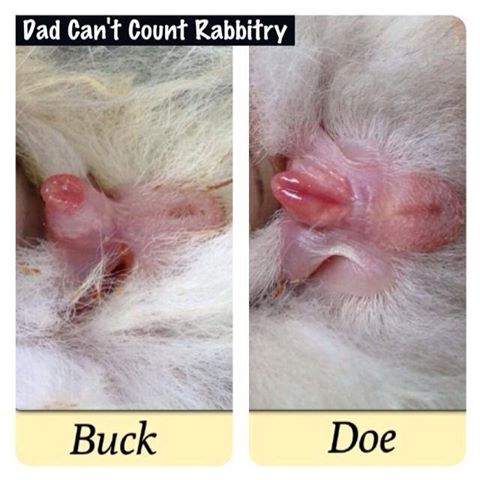
But before you get that, you should make sure you have one each of this:

1459159_467610133360598_2044988860_n

Once that’s all taken care of you might find something like this going on:

And, if you’re really, really lucky you might get a chance to giggle at live version of this:

All clear?


(Thanks to Google, Dad Can’t Count Rabbitry, Sky Island Livestock, and Jason and Crystal Mabb for the visuals for this post!)


(May all your breedings be productive!)

What a Crock!

626 / stock.xchng

626 / stock.xchng

Well, it’s happened.


Our water bottles froze solid in our mountaintop town last night, so it’s time to replace them with crocks for the winter.


Making sure your rabbit has access to water all the time is highly important for the health and security of the rabbit. We have moved all of our rabbits to large water bottles over the summer for the ease of refilling and the pure volume they offer. But when the temperature dip as they can here in the mountains, those water bottles just don’t cut it anymore.


We switch to crocks of water we refill at least two times a day. Last year I found a fantastic price on ceramic bread dishes as Michael’s craft store and stocked up. Our rabbits celebrate Christmas all winter long! This year we are using those crocks as well as EZ lock plastic dishes that attach to the walls of the cages.


We still have to watch the water dishes to make sure the rabbits have their water, but its our solution until we install a heated automatic water system… which is on the list of things to do but not too high!


Now it’s time to wash all those water bottles and get them in spic-n-span condition for the spring when we can use them again!

Exploring Genetic Generations

I hesitate to call our Astrex program an “Astrex program,” but for lack of a better term, that’s what I’ll use as a descriptor! This search for the curl gene has taken us on a massive learning curve, one which we are still exploring today!

One topic I’ve had to learn more about is simple genetic generation labeling. What on Earth does F1 mean? What about F2?! Here’s what I’ve discovered. (And, this is all new to the gal who barely passed biology in college. If I’ve gotten this wrong, please let me know in the comments!)

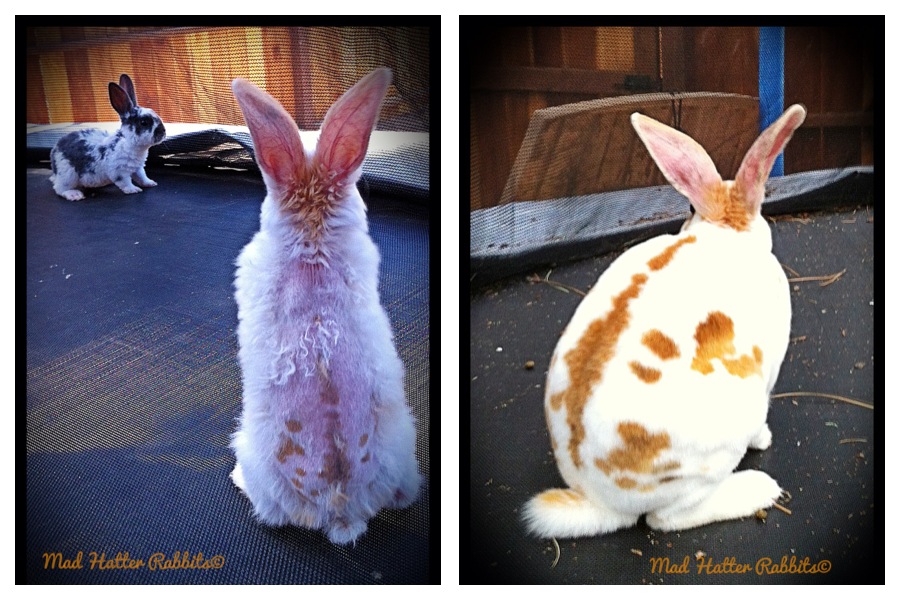
We discovered the curly coat in a litter out of two mini Rex, Bushy x Inca. Here are some baby coat vs. junior coat photos of two of those babies:

Grommet

Grommet

KickFlip

KickFlip

As you can see, the curly and baldness of their 4 week — 6 week age went to pretty straight fur into their 2nd and 3rd months.

These two rabbits are called F1 generation because they are the first generation of our Astrex program, put in another way, they are F1 generation because they are the immediate offspring of the original parents.

Here are some more photos of how the coat seems to be developing in the babies of our program. These photos are of a Bushy x Butterscotch litter, again, they are mini Rex. I’ve highlighted one of our favorites, Vanilla Icing:

10 days

Bushy x Butterscotch, 10 days

21 days

Bushy x Butterscotch, 21 days

Vanilla Icing, 21 days

Vanilla Icing, 21 days

Vanilla Icing, 5 weeks A

Vanilla Icing 5 weeks

Vanilla Icing, 5 weeks B

Vanilla Icing, 5 weeks

Now, what comes next after the F1 generation? Well, creating an F2 generation, of course! An F2 generation is created when you breed two F1 rabbits together. The offspring of the two F1 generation rabbits are automatically F2 generation.

To add another level of confusion, in our breeding program, Bushy, Inca, and Butterscotch can all be termed P1 generation, or “pure parent generation.”

My understanding is that you have to breed through F8 generation before you’ve really recreated something separate and distinct that is able to match up to the hybrid vigor produced in the F1 generation. That gene can only be stabilized through careful selection for the trait you want – in each litter the odds are you will only have a handful of rabbits that have the curly coat you’re seeking (although technically all in the litter should be carriers).

I’ve also found references in several areas that the F2 generation typically has unstable genetics and may not produce consistent or vigorous results. Here’s another way someone stated the difference between an F1 offspring and an F2 offspring: “When (working with) F2 stock, the idea is to search out the better phenotypes, and clone them so in future you only work with the best genetics of the bunch. With F1 stock, you should have more uniform (animals) that all perform similar, and if the breeders done his job correctly, this should be as close to the original description that tempted you to (the animal) in the first place!”

Clear as mud? I know. It’s confusing to me, too. But I will say I’ve learned an awful lot about marijuana seeds, fish, and cats while doing this research! Who knew?

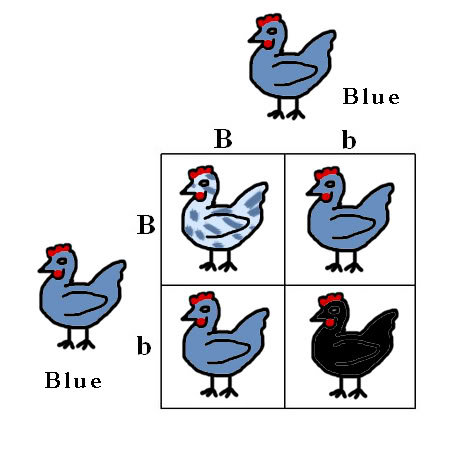
Let’s see if these diagrams can give us one last look at how to make sense of all this genetics stuff. Here’s a Punnett Square. I promise I won’t be testing you on your answers, but if you take a look at it you can see in a simple way how you might get traits passed in various percentages to offspring:

Basic Punnett Square using blue chickens. Aren't they cute? See how the colors change?

Basic Punnett Square using blue chickens. Aren’t they cute? See how the colors change?

Punnett Square using more variations. Don't panic - if you stare at it long enough it begins to make sense.

Punnett Square using more variations. Don’t panic – if you stare at it long enough it begins to make sense.

Now. Rabbits and generations don’t show up quite as well on a Punnett Square, so you can use the same concept in a Pedigree visual:

Pedigree Punnitt Square

Pedigree Punnitt Square

In a pedigree diagram, every row represents a single generation, and these are labeled with Roman numerals (or F1, F2, F3, etc.). Couples within the generation are listed from left to right across the line, and horizontal lines connect the reproductive partners. Vertical lines that descend from these pairs are indicative of offspring from the two parents. Individuals demonstrating a specific phenotype are indicated with filled shapes.

I got some help when a friend gave me this visual of trying to get the chestnut color in a rabbit:

"Take a pedigree and count as far back as you can without reaching another breed. Draw a line to the left of that other breed and count the columns. Here is an example. This is a fake pedigree, crossing Breed A (which comes in black and blue) to breed B (which comes in chestnut) to make chestnuts in Breed A."

“Take a pedigree and count as far back as you can without reaching another breed. Draw a line to the left of that other breed and count the columns.
Here is an example. This is a fake pedigree, crossing Breed A (which comes in black and blue) to breed B (which comes in chestnut) to make chestnuts in Breed A.”

All you definition lovers, here is the way the Lionhead website defines their breeding programs:

“General Genetic Shorthand and Terms –
F1 is a purebred Lionhead crossed with a rabbit of a different breed. Mostly Netherland Dwarf, Polish. In addition some Britannia Petites, Florida Whites, Holland or Mini Lops and Mini Rex have been used. You may also find almost any other breed listed including Dutch, New Zealands and Rex!
It is questionable if a Lionhead hybrid without a mane can be considered a F1 generation because – to be considered a generation the offspring must look like the breed, meeting basic breed requirements. Many Lionhead breeders do count non-maned rabbits that are produced in a F1 Lionhead cross.

F2 is a F1 crossed to a Purebred Lionhead or another hybrid that is F1 or F2. It denotes another generation of Lionhead breeding.

F3 is a F2 bred to a purebred or a F3 or another F2. It denotes you now have three generations of Lionhead breeding before another bred shows on the pedigree.

F4 is the same as purebred. A F3 bred to another F3 or a purebred would produce bunnies with four generations of Lionhead on the pedigree. This is what is required by the ARBA (American Rabbit Breeders Association) to be considered for registration as a PUREBRED if the Lionhead was a recognized breed.

* Some people denote their crosses with percentage number such as 1/2 Lionhead or 3/4 Lionhead but the F system is recognized but almost all animal breeding materials, and is the form most commonly used.
HYBRID is a Lionhead that has rabbits of a breed other then Lionhead showing on a four generation pedigree.
PUREBRED is a rabbit that meets specific breed requirements and has a four generation pedigree showing individual information on each rabbit on the pedigree.
* Currently Lionhead breeders also consider Lionheads imported form overseas as purebred even though most do not have a complete pedigree.”

So, as I understand it, our Astrex program is going to go through some challenges for several generations as we try to stabilize the curly gene. It looks like anyone working with them is going to need a lot of patience and a long term vision!

As I’ve heard before.. I’m sure that all means something! Ha!

Now, what would you add to this short foray into genetics?