Yearly Archives: 2013

Toxic and Poisonous Plants for Rabbits

I have just spent more than an hour searching for the infographic that shares which green things are most certainly inedible for rabbits and come up empty handed.


Because I never want to go through this again, I’ll simply post what I have found about the naturally occuring substances our rabbits should not consume. This particular list is courtesy of Adoptarabbit.com:


Toxic Plants


Following is a partial list of plants that rabbits should not eat. This list is a compilation of lists from various sources.


  • Where available, the parts of the plants to be avoided are included enclosed in parentheses.
  • The exclusion of a specific plant from this list does not indicate that the plant is safe. For a list of fruits and vegetables suitable for rabbit comsumption, please see our ABC’s of Rabbit Safe Vegetables and Fruits.
  • Plants commonly known by more than one name may occur multiple times in the list.
  • If you suspect your rabbit has ingested an unsafe plant, please call your vet and/or your local poison control center or the National Animal Poison Control Center at 1-888-426-4435 (credit card charge).
  • For more information, please see our links at the bottom of this page.


A B C D E F G H I
J K L M N O P Q R
S T U V W X Y Z

A
Agave (leaves)
Almond
Aloe
Amaryllis (bulbs)
Andromeda
Anemone
Angel’s Trumpet
Apple (seeds)
Apricot (all parts except fruit)
Asian Lilly
Asparagus Fern
Australian Nut
Autumn Crocus
Avacado (leaves)
Azalea (leaves)
B
Balsam pear (seeds, outer rind of fruit)
Baneberry (berries, roots)
Barbados Lilly
Begonia
Betel-nut Palm
Bird of Paradise (seeds)
Bitter Cherry (seeds)
Bittersweet (American & European)
Black Nightshade
Black Walnut (hulls)
Bloodroot
Bluebonnet
Boston Ivy
Buddhist Pine
Busy Lizzie
Buttercup (leaves)
Black Locust (seeds,bark, sprouts, foliage)
Blue-green algae (some forms toxic)
Bloodroot
Boxwood (leaves,twigs)
Bracken fern
Branching Ivy
Buckeye (seeds)
Buckthorn (berries, fruit, bark)
Bull Nettle
Buttercup (sap, bulbs)
C
Cactus Thorn
Caladium
Calendula
Calico Bush
Calla Lilly (rhizome, leaves)
Caladiur (leaves)
Carnation
Carolina Jessamine
Castor Bean (seed, leaves – castor oil)
Celastrus
Ceriman
Chalice vine (all parts)
Cherry tree (bark, twig, leaves, pits)
China Doll
Chinaberry tree
Chinese Bellflower
Chinese Lantern
Chinese Evergreen
Choke Cherry (seeds)
Christmas Candle (sap)
Christmas Rose
Chrysanthemum
Cineraria
Clematis
Climbing Nightshade
Clivia (a.k.a Kaffir Lily)
Coffee Bean
Cone Flower
Coral plant (seeds)
Cordatum
Corn Plant
Cowbane
Cowslip
Crown of Thorns
Cuban Laurel
Cuckoopint (all parts)
Cutleaf Philodendron
Cycads
Cyclamen
D
Daffodil (bulbs)
Daisy
Daphne (berries, bark)
Datura (berries)
Day Lily
Deadly Amanita (all parts)
Deadly Nightshade
Death Camas (all parts)
Delphinium (all parts)
Devil’s Ivy
Dieffenbachia (leaves)
Dogbane
Dracaena
Dumb Cane
Dutchman’s Breeches
E
Easter Lilly
Eggplant (all but fruit)
Elderberry (unripe berries, roots, stems)
Elephant Ear (leaves, stem)
Emerald Feather
English Laurel
English Ivy (berries, leaves)
Eucalyptus
F
False Hellebore
False Henbane (all parts)
False Parsley
Fiddle Leaf Fig
Fireweed
Flamingo Plant
Florida Beauty
Flowering Maple
Flowering Tobacco
Foxglove (leaves, seeds)
G
Garden Sorrel
Geranium
German Ivy
Ghostweed (all parts)
Giant Touch-me-not
Glacier Ivy
Gladiola
Glory Lilly
Gold Dust
Golden Chain (all parts)
Golden Pothos
Green Gold
H
Hahn’s Ivy
Hairy Vetch
Hart Ivy
Hawaiian Ti
Heartleaf Philodendron
Heavenly Bamboo
Hemlock, Poison (all parts)
Hemlock, Water (all parts)
Henbane (seeds)
Hogwart
Holly (berries)
Horse Chestnut (nuts, twigs)
Horsehead Philodendron
Horsetail Reed
Hurricane Plant
Hyacinth (bulbs)
Hydrangea
I
Impatiens
Indian Hemp
Indian Rubber
Indian Turnip (all parts)
Indigo
Inkberry
Iris (bulbs)
Ivy, Boston & English (berries, leaves)
J
Jack-in-the-Pulpit (all parts)
Japanese Euonymus
Japanese Show Lily
Japanese Yew
Jasmine
Java Bean (uncooked bean)
Jerusalem Cherry (berries)
Jessamine
Jimson Weed (leaves, seeds)
Johnson Grass
Jonquil
Juniper (needles, stems, berries)
L
Laburnum (all parts)
Lace Fern
Lacy Tree Philodendron
Lady Slipper
Lantana (immature berries)
Larkspur (all parts)
Laurel (all parts)
Laurel Cherry
Lily of the Valley (all parts)
Lima Bean (uncooked bean)
Lobelia (all parts)
Locoweed (all parts)
Lords and Ladies (all parts)
Lupine
M
Macadamia Nut
Madagascar Dragon Tree
Manchineel Tree
Marbel Queen
Marijuana (leaves)
Marsh Marigold
Mauna Loa Peace Lily
Mayapple (all parts except fruit)
Meadow Saffron
Medicine Plant
Mesquite
Mexican Breadfruit
Mescal Bean (seeds)
Milk Bush
Milkweed
Mistletoe (berries)
Mock Orange (fruit)
Monkshood (leaves, roots)
Moonflower
Morning Glory (all parts)
Mother-in-law
Mountain Laurel
Mushrooms (some)
Mustard (root)
N
Nandina
Narcissus (bulbs)
Needlepoint Ivy
Nephtytis
Nicotiana
Nightshades (berries, leaves)
Nutmeg
O
Oak (acorns, foliage) Oleander (leaves, branches, nectar) Oxalis
P
Panda
Parlor Ivy
Parsnip
Patience Plant
Peace Lily
Peach (leaves, twigs, seeds)
Pear (seeds)
Pencil Cactus
Peony
Periwinkle
Peyote
Philodendron (leaves, stem)
Plum (seeds)
Plumosa Fern
Poinsettia (leaves, flowers)
Poison Hemlock
Poison Ivy
Poison Oak
Poison sumac
Pokeweed
Poppy
Potato (eyes & new shoots, green parts)
Precatory Bean
Primrose
Primula
Privet (all parts)
Purple Thornapple
Q
Queensland Nut
R
Ranunculus
Red Emerald
Red Lily
Red Princess
Rhododendron (all parts)
Rhubarb (leaves)
Ribbon Plant
Ripple Ivy
Rosary Pea (seeds)
Rubrum Lily
S
Sago Palm
Schefflera
Self-branching Ivy
Sennabean
Shamrock Plant
Silver Pothos
Skunk Cabbage (all parts)
Snake Palm
Snowdrop (all parts)
Snow-on-the-Mountain (all parts)
Solomon’s Seal
Spindleberry
Split Leaf Philodendron
Star of Bethlehem
Stinkweed
String of Pearls
Sweet Pea (seeds and fruit)
Sweet Potato
Sweetheart Ivy
Swiss Cheese Plant
T
Tansy
Taro Vine
Thornapple
Tiger Lily
Toadstools
Tobacco (leaves)
Tomato (leaves, vines)
Tree Philodendron
Tulip (bulb)
U
Umbrella Plant
V
Vetch (Hairy)
Vinca
Violet (seeds) Virginia Creeper (berries, sap)
W
Walnuts (hulls, green shells)
Water Hemlock
Weeping Fig
Western Lily
Wild Carrots
Wild Cucumber
Wild Parsnip
Wild Peas
Wisteria (all parts)
Wood Lily
Wood-rose
Y
Yam Bean (roots, immature pods) Yellow Jasmine Yew (needles, seeds, berries)
Yucca

For more information…
University of Illinois Toxic Plants Database
ASPCA Poison Control Center
San Diego chapter of HRS Poisonous Plants Page
 

If you can’t keep it in your pants… at least keep it in the family.

Occasionally there's just something a little... off... about a pairing.

Occasionally there’s just something a little… off… about a pairing.

We went to several family reunions this summer and, truth be told, our 5-year-old daughter developed a bit of a crush on one of her cousins.

I overheard the 7-year-old talking to her about this crush: “You can’t marry him! He’s our cousin! If you get married your kids will have two heads and three eyes!”

Yep. We’ve talked about the dangers of inbreeding our family. As a practice for human beings we are 100% against it.

But rabbits are a different story.

When you’re thinking about how to get the healthiest herd with the least amount of animals, there’s no doubt you have to consider how closely related you want your rabbits to be over the long haul.

We have worked pretty hard to get unrelated animals to start our herd, importing bloodlines from all over the United States. That being said, we’re planning on sticking with these animals and their offspring until we have a very solid “Mad Hatter Rabbit” stamp on any animal that comes from our barn.

The Domestic Rabbits publication by ARBA had a great article about the differences between inbreeding (breeding siblings) and line breeding (breeding father/daughter, mother/son, grandparent/grandchild, etc.). Most of the top breeders utilize line breeding regularly to “stamp in” the breed characteristics they find most desirable.  Additionally, traditional wisdom says if you get a brother/sister pair, produce one mating out of that pair (inbreed) and from that point forward switch to line breeding and you won’t run into problems.

I spoke with a friend who is a geneticist and his experience confirms this philosophy. He told me in scientific studies researchers have deliberately inbred their rabbits, trying to get the most genetically similar test subjects possible. It was only after 18+ generations the researchers began to see problems like malocclusion (wolf teeth), compromised immune systems (sickly rabbits), and other common problems associated with inbreeding.

We have personally bred a brother/sister combination of rabbits that we knew nothing of the genetic history about. The litter produced wolf teeth and poor immunity and we ended up culling it from the breeding program and vowing to never repeat that breeding. But remember – we didn’t have a pedigree on that pair and have no idea how many times their ancestors were inbred before they got to us!

This is another reason it makes sense to spring for a pedigreed rabbit when purchasing stock. In one case we found rabbits from different states but after looking over the pedigrees I discovered the rabbit was related identically to our other rabbit after two generations back! We were able to make an informed decision about whether we wanted that rabbit in our herd.

Typically line breeding makes the good stuff you’re seeing in your rabbit better and the bad stuff worse. It’s like getting a double stuff Oreo – augmenting the genetic qualities with potentially awesome or disastrous results.

Here’s a graphic that might make the idea of line breeding a bit more understandable:

line breeding / inbreeding / outcrossing chart

line breeding / inbreeding / outcrossing chart

Ultimately every breeder must make the decision they feel is best for their herd regarding how tightly they breed their rabbits. We do practice line breeding with moderation and willingness to cull hard if a poor pairing appears. With our Astrex program we must do tight breeding to a certain extent to try to isolate and reinforce the curly gene – while always keeping the health of the rabbit in mind.

Fascinating stuff, huh?!

Blanc de Hotot!

20130820-193027.jpg

We are so excited to welcome Blanc de Hotot to our Rabbitry!

Our friend, Lisa, of Trinity Hallow, lured us into the breed by exposing us to some beautiful rabbits. Then my mom decided she likes Hotot (pronounced oh-toe) and my kids started begging for “mascara bunnies” and we ended up with the number one rare breed in the U.S. camped out in our back yard!

We alternate between calling these guys “mascara bunnies” and “rock stars” but there’s no doubt they have explosive personalities and a certain je ne sais quoi about them. (I start using French phrases when talking about French bunnies. He he!)

It will be a few months before we have any Hotot babies and it will be a new challenge to get show marked rabbits without any random black spots (Blancs are genetically black rabbits with a Big White Spot), but we’re looking forward to the experience!

County Fair

kyslesmith / stock.xchng

kyslesmith / stock.xchng

I’m in a quandry about the county fair and how we should participate.

You see, I want to participate. We’re raising some fairly unusual breeds for the area and showing our rabbits at the fair will give them plenty of exposure and possible help new people fall in love with the breeds, which can only help in the long run.

But… there are so many people at the fair and I have a vision of children poking cotton candy sticks through the wire of the cages and temperatures soaring up and away…

I’d love to hear if any of you have any experiences of entering your rabbits in the county fair and what recommendations you might have for us?

Rabbit Road Trips

Transporting Rabbits

Transporting Rabbits

I took a rabbit roadtrip to meet another breeder and pick up some rabbits. We have 8 1/2 hours between us so it was a decent undertaking to meet in the middle, especially considering we are both the primary care takers for our family.


The time driving gave me a chance to think about the logistics of transporting rabbits, however.


Rabbits move quite a bit around the country – more than I realized when I started this hobby. Most travel is by vehicle, although there are a few airlines who allow rabbits to be shipped.


Our rabbitry is living proof of how rabbits travel. We have rabbits from Michigan, Georgia, Indian, Washington, Texas, New Mexico, and Ohio here at our little Arizona rabbitry! This is partially because we have some of the more rare breeds and had to do some footwork to get them here, but I’ve been very impressed with how far rabbits move!


Many times people who are attending shows are willing to drive  a rabbit with them for a charge of anywhere from $10 to $50. A $10 transport is likely only a few hours, a $50 transport fee will usually include a multi-day caretaking project. There is no set rule book for transporting or Rabbit Relay Guild – but if you ask around you can usually find someone trustworthy who will be willing to let your rabbit hitch a ride for a fee that helps them cover the cost of their own travel.


Because there is no standard, it’s important to ask questions before you confirm the transport:


  • How much will the transport cost?
  • Who will provide the carrier? You or the transporter?
  • What are the carrier dimensions? How about food and water dishes?
  • Should you send food with your rabbit(s)?
  • What responsibility does your carrier offer in picking up your rabbit? Checking tattoo for accuracy? Healthy check?
  • What responsibility does your transporter have if a rabbit gets sick during the journey? What if it dies?


If you’re transporting rabbits, make sure you have all of the above questions answered for each of your passengers, plus you might want to consider a few more items:


  • How much room do you have in your vehicle? Will that change based on carrier sizes?
  • Are you able to have rabbits in air conditioning at all times? In your hotel room (if traveling overnight)?
  • How are you organizing your transport? What is your double check that you have every rabbit you should and get it to the right owner?
  • Will you have time to deliver rabbits at a show?
  • How confident are you in your ability to see disqualification, wolf teeth, etc.?


We transported at the West Coast Classic this year (and have for a few short journey’s since then). It was an enjoyable, stressful experience for us. We’re definitely open to doing it again, but it was much more work than I initially expected and we had rabbits hanging out at our house for up to a month after WCC waiting for pick up.

Astrex Update – Who Wants One?!

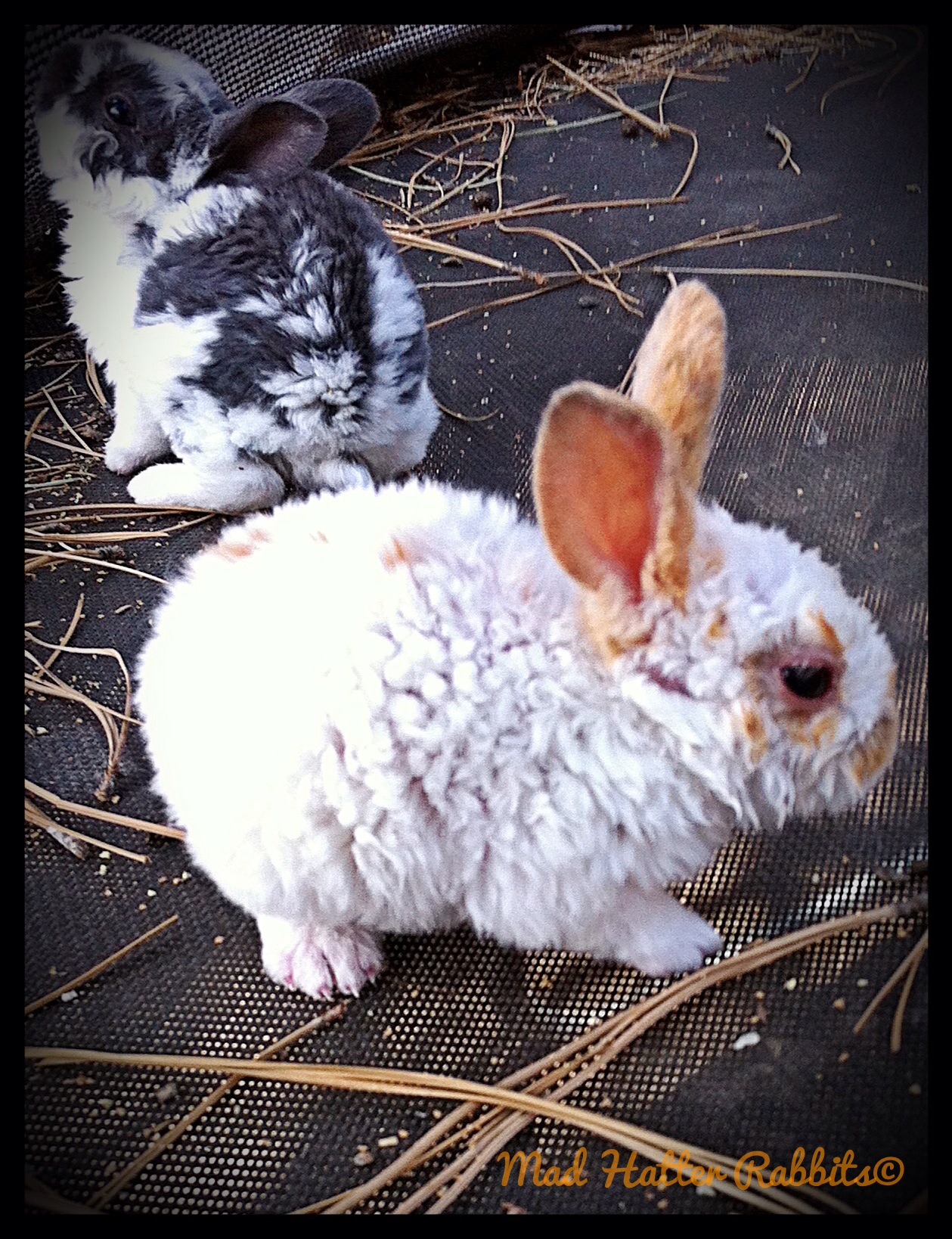
We’ve had three litters of Astrex born around here! They’re pretty cute. I wouldn’t say they’re healthier or sicker than the average litter – so my non-scientific understanding of how the Astrex gene works and whether it’s an indicator of any healthy issues in inconclusive.


Two of the litters have had kits with eye issues, however. My current theory is the eye is irritated by a curly hair hitting the lens. Again, can’t prove it so I don’t know whether to believe this or not without more litters to research.


They are very cute, however! Here are the most recent pictures:


1013493_399480296840249_907247651_n

The Originals (Inca x Bushy DOB 4/29/13)
Left to Right: Grommet (B), KickFlip (B), Zulu (D)


Butterscotch x Bushy DOB 6/13/13 Left to Right: Who (B), What (B), Where (D), Why (D), When (D)

Butterscotch x Bushy DOB 6/13/13
Left to Right: Who (B), What (B), Where (D), Why (D), When (D)


Inca x Bushy DOB 6/26/13 Left to Right: Narabeen (D), Crankin' (B), Gidget (D), Boogie (B)

Inca x Bushy DOB 6/26/13
Left to Right: Narabeen (D), Crankin’ (B), Gidget (D), Boogie (B)


I’m hoping to get these guys out to other people who want to raise Astrex. There’s a wonderful family that will be doing a driving vacation of the US in August. I’m hoping interested people will be able to utilize his services to transport some bunnies their direction!


Keeping Rabbits Cool When It’s Hot Outside

saflora / stock.xchng

saflora / stock.xchng

Remember the Nelly song in the 90s? “It’s getting hot in here so I’m gonna take my clothes off!”

Well, sorry, Nelly, rabbits can’t take their clothes off. They’re stuck wearing a fur coat while temperatures soar.

I’ve been believing, hoping, that we would escape the worst of the heat since we’re living at about 8,000 ft. in elevation. Just this weekend we did a backyard campout and all of us ended up in a huddle in the wee hours of the morning because it got so chilly!

However, today’s temperatures moved into the high 90s and we lost the runt of our Silver Marten litter to heat stroke. I’m a believer in natural selection but I’m mad about the loss and we’re going to do our best to make sure we don’t lose this battle against summer time heat!

We’ll be trying a few different ideas to cool our rabbits down. This afternoon we filled Ziploc baggies with ice and distributed a bag to each rabbit. Tomorrow I have prepared bananas, cut in half and frozen solid. All of my friends are scrounging around for glass jars and bottles I’ll fill with water and freeze over night – I’m hoping by two days from now we’ll have enough to cycle them in and out of the freezer.

Though we have the ventilation of our rabbitry working in our favor – open air hutches are good for catching the breeze – we do still have to take precautions against heat stroke for our rabbits. The ideal temperature in a rabbit’s mind is in the low 50s – so anytime temperatures soar over 85° it makes sense to incorporate some cooling techniques into your animal husbandry tool bag.

Rabbits don’t have the ability to sweat, so their entire cooling system is coordinated by their ears. A cold rabbit will keep their ears close to their neck, a hot rabbit will have their ears high and wide open to cool their necks and catch any breeze that comes by. There is actually a phenomenon called “summer ears” – where a rabbit born in the summer will have longer ears than a rabbit born in the winter!

Rabbits suffering from a heat stroke will have glazed eyes, be relatively motionless, and may have spit coming out of their mouths. This is very bad stuff and can cause permanent brain damage or death.

In a quick, easy to read list, in order to cool your own rabbit(s), you might consider:

  • installing a mister system outside of your hutch.
  • wetting their ears with a washcloth to turn them into swamp coolers.
  • freezing water bottles they can lay next to.
  • giving them ceramic tiles to sit on (this can be a cause of hutch burn so watch and remove if they’re urinating on the tiles).
  • spraying the buns with water.
  • (in extremely hot weather) dunking a rabbit’s body in a bucket of cool water.
  • spraying down the roof of your hutches with a hose.
  • soaking cheesecloth or a burlap bag in water and draping it over the cage.
  • moving them to an air conditioned area.
  • moving them to a well-shaded area or installing a sunshade over their cages.
  • pulling the hair off of babies in the nestbox.

What other suggestions do you have for keeping your rabbits cool in the summer heat?

Our Silver Fox Friends

We’ve decided to put our trampoline to another purpose lately – the large space and netted enclosure has been perfect for doubling as a rabbit run.

The rabbits are on a rotation and it’s fair to say they love their time in the trampoline, bounding, hopping and generally frolicking about.

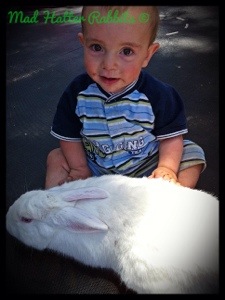
Because I was tired of holding the baby I did some analysis and decided to pop our 10 month old son, who’s a very able crawler, into the tent with the rabbit. Within minutes he’d located Fennel, our white Silver Fox, and was giving him loves.

20130608-140045.jpg

20130608-140159.jpg

This is why I love our Silver Fox rabbits! They are laid back to the extreme. It’s a little bit like what I see in Saint Bernard or Great Dane dogs – they’re huge, they have nothing to prove, and they can just be cuddle bugs!

We have black, blue, and white Silver Fox at our house. The only recognized color for showing right now is black – although blue is under development and will likely be showable in the next year. They are all sweet, but our white SF have really stolen my heart. Their fur is amazing and their personalities are gentle.

When Good Bunnies Go Bald

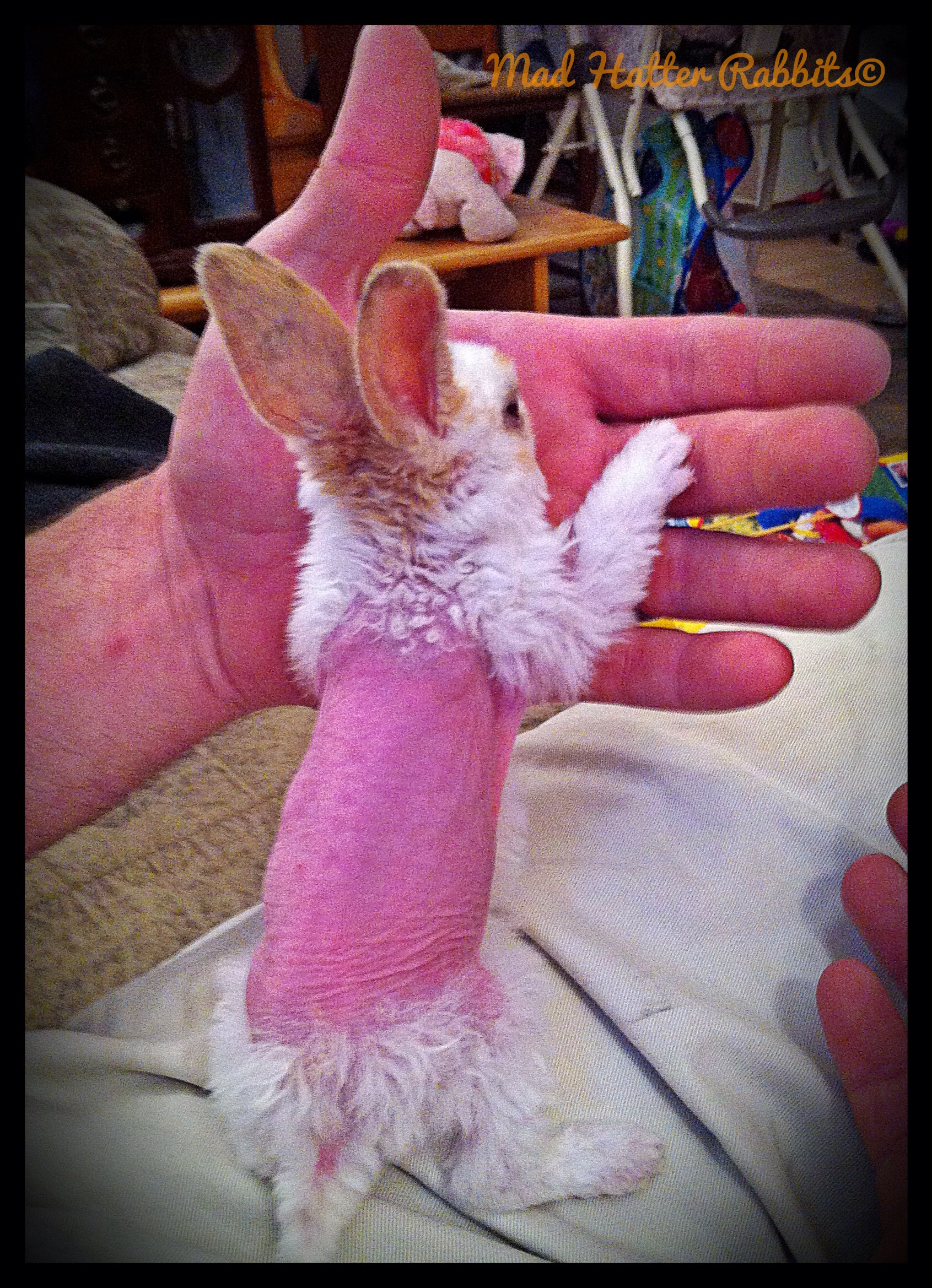
These little Astrex babies are a hoot! We came home from the show and three of our curly-haired babies are almost completely bald!


Although they’re really, really ugly right now because God made rabbits to have hair for a reason and that is that a hairless rabbit doubles as Stephen King’s muse, I’m excited to see how their new fur comes in. The hairlessness is apparently closely related to the curly gene in Astrex and I’ve heard a rumor a bald bunny comes in even curlier when that molt is finished.
Can’t wait to see.


In the meantime, just in case you need a few photos to haunt your dreams, here are a few before and after pictures I’ve found from our own rabbits and the Astrex Facebook group:


This photo is of Kojak, from Rainbow Rex Rabbitry. See how his hair grew back so nicely?!

This photo is of Kojak, from Rainbow Rex Rabbitry. See how his hair grew back so nicely?!


This little beauty is from Soft Paws Haven and I'm hoping will come to our house in the next few weeks!

This little beauty is from Soft Paws Haven and I’m hoping will come to our house in the next few weeks!


Finally, some before and after photos of our Epic:

Epic, pre-balding molt.

Epic, pre-balding molt.


Epic, doubling as a finger puppet.

Epic, doubling as a finger puppet.


Best in Show!

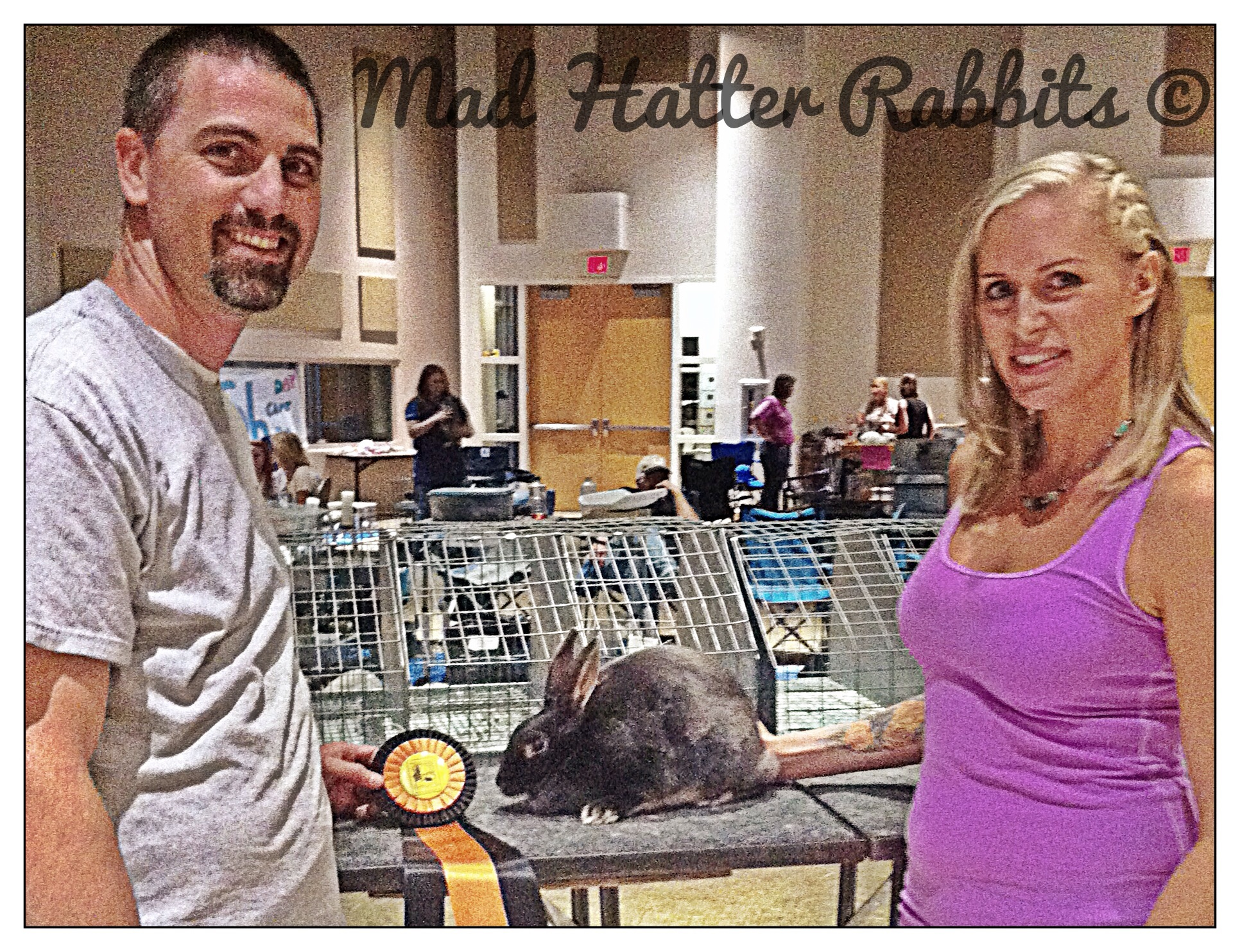
We’ve had our most exciting show experience yet – our 6/8 blue otter Satin doe won Best in Show yesterday!


For those of you who couldn’t care less about show adventures, the Best in Show happens when all of the rabbits who have been judged as best against their own breed (apples to apples) are placed in one last show and compete against one another for top honors (apples to oranges).


We had been talking about whether we should stay for the Best in Show and strongly considered leaving. But something made us stick around and… woo-hoo! It was worth it!


After pulling our jaws up off the floor, we were able to hunt down the ARBA judge, April Wilhour, and get her to take a picture with us. She did the bunny hypnotism thing and Beretta sat nice and still while I snapped the photo:


Beretta, our blue otter Satin doe, won Best in Show!

Beretta, our blue otter Satin doe, won Best in Show!


What a great day! Can’t wait to see how Beretta continues to stack up in the future!