The Scoop on Poop

Image Credit goes to hopperhome.com

Image Credit goes to hopperhome.com

I just found this article on rabbit poop – I thought it was really interesting. Because, you know, poop is a really exciting topic and stuff.


The Scoop on Poop
By Charlcie Gill

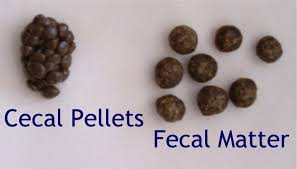
Rabbits produce two types of droppings: fecal pellets and cecotropes. The latter are produced in a region of the rabbit’s digestive tract called the ceacum. The ceacum contains a natural community of bacteria and fungi that provide essential nutrients and possibly even protect the
rabbit from harmful pathogens. By consuming the cecotropes as they exit the anus, the rabbit takes in nutrient-packed dietary items essential to good health. Though often referred to as “night droppings”, cecotropes can be produced at almost any time of day.

Unlike the small brown “bunny marbles” we know as fecal pellets, normal CECOTROPES resembles a dark greenish brown mulberry, or tightly bunched grapes. Composed of small, soft, shiny pellets, each is coated with a layer of rubbery mucus, and pressed into an elongate mass.
Cecotropes have a rather strong odor, as they contain a large mass of beneficial cecal bacteria. When a rabbit ingests cecotropes, the mucus coat protects the bacteria as they pass through the stomach, then re-establish in the ceacum.

When things go wrong…

Diarrhea
True diarrhea is more common in young kits than older rabbits. One of the most common causes is coccidia. In a kit, dehydration caused by diarrhea can rapidly result in death. It is wise to consider incidences of diarrhea a true emergency. Common antibiotics used to treat coccidia
include Albon™ and the potentiated sulfas, such as Trimethoprim Sulfa (TMZ) or Bactrim™. Another cause of diarrhea in kits is stress at weaning. Very young rabbits have a sterile lower intestine until they begin to eat solid food at the age of 3-4 weeks. It is during this time that their intestines are at their most critical phase. Weaning too early or weaning under stressful conditions, can make kits susceptible to enteritis (inflammation of the intestinal lining), which can cause fatal diarrhea. When I wean kits, I always offer good grass hay. Adding rolled oats to the ration at a rate of 20% in relation to pellets for about a week is also a helpful preventative.

Unformed Cecotropes
The ceacum is a delicately balanced ecosystem. If the intestine is moving too slowly, or if the rabbit is getting a diet too rich in digestible carbohydrates and too low in crude fiber, the complex population of bacteria in the ceacum can become unbalanced.


Continue reading…. https://www.arba.net/PDFs/poop.pdf

Wild Rabbit Nursing Babies

nursing babiesThis is a really fascinating video of a wild rabbit feeding her babies. I’m absolutely amazed… even though it’s a slow video, stick with it to the end – amazing finish!


//

If this doesn’t work try this link: Wild Rabbit Nursing Kits

Diagnosing Snuffles

Pan American Vet Labs has announced they will offer a service to diagnose pastuerella.

Pan American Vet Labs has announced they will offer a service to diagnose pastuerella.

If you’ve been reading here for awhile you’ve probably figured out I have a bit of a personal problem. I get very nervous about germs.


On a human stand point this means that I groan internally every time I use a public bathroom, get totally freaked out if someone offers to let me drink after them, and one of my “must haves” on a husband list was that the poor man had never had cold sores. Yep. I was in to the important stuff.


From the rabbit side my germophobia has caused several arguments with my husband about proper rabbitry ventilation and sun exposure, two separate quarantine areas, and a slightly neurotic fear of any rabbit that sneezes. That fear of sneezing is also a fear of snuffles, and my desire to just plain not have to worry about it brought us to a decision to vaccinate every show rabbit we have with BunnyVac before we ever put it on a table.


Awhile ago we were at a show and happened to be set up next to some rabbits that sneezed. At the first sneeze I was completely alert and aware of everything those rabbits did. I calculated the four foot radius around their carriers and breathed a sigh of relief when I realized my rabbits were far enough away that those rabbits would have to be expectorating ninjas to infect my rabbits with anything. Then I settled down and watched.


The rabbits in question were consistently sneezing. I even saw snot from them on occasion as I observed. However, their eyes were bright, they ate food from their dishes, they drank water, their ears were perky… they didn’t seem sick. They just sneezed.


This is a problem. I live in a world where I like things to be black and white and a sneezing rabbit needs to be clear to me that it has pastuerella or snuffles. After hours of observation of those rabbits across the way, to this day I still can’t be sure what I was observing. Sure, a sneeze is suspicious but in the spring time with things blooming coupled with the 50 mph wind gusts in our area… how can you know for sure what that sneeze means?


I’ve discovered another tool in the tool box of diagnosis. Pan American Vet Labs in Texas, the same company that produces the BunnyVac, has recently made a diagnostic option available to the general rabbit breeder.


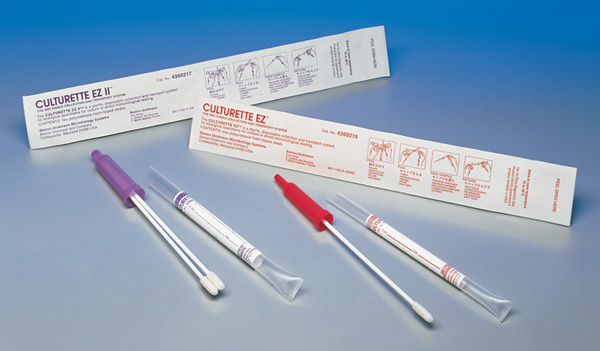
The bacteriologic culture service toolkit contains a snot extractor (that’s my non-official name for the instrument that snatches the boogers out of the rabbit’s nose) and mailing supplies. Breeder supplies postage. As I understand it, if you have a rabbit that is looking suspicious, you can grab a mucous sample from the nose or an abscess using the “sterile culturette swab,” put it in their media kit, and mail it off. (Samples should be shipped within 12 hours of collection by a service like FedEx or Priority Mail that can deliver to the lab within 72 hours.)


PavLab will test the sample for pastuerella, bordetella, staphylococcus, and streptococcus. Additional identification is possible for E.Coli, pseudomonas, proteus, and similar enteric bacteria may also be done. Generally they have about a 48 hour turn around before you get an email identifying exactly what’s going on with your rabbit, giving you the clarity that I (and the other type-A germophobes in this world) may desire.


It’s not exactly cheap – the toolkit costs $4 per culturette (plus shipping which is about $7 in the US). The culturettes have a year or two shelf life, so you can keep the swabs on hand until needed. At the time the culture is sent off there will be an additional $30 charge to run the diagnostic test to culture and identify bacteria.


For what it’s worth, Pan American Vet Labs is not the only place you can get this service, but it seems to be the cheapest. Here is information complied by Kelly P. on the facebook forum that discusses other options:


I spoke to several labs around the USA regarding culturette testing for p. multocida and bordetella. I live in California, so most of the labs were here in my area. I also limited my research to labs that accept culturettes and excluded labs that require a serum specimen, since most rabbit breeders don’t have the means to extract serum from whole blood. Here’s what I found:

•UC Davis, Ca
oUC Davis’ PCR lab doesn’t test for p. multocida, but does test for bordetella. Since I am interested in both, I didn’t ask their pricing. The other labs on campus only deal with large animals. The direct phone number for the PCR lab is 530-752-7991. If you’re interested in checking out their website for these tests and others, go here: http://www.cahfs.ucdavis.edu/lab_tests/
• Zoologix, Inc in Chatsworth, Ca
oTests for both p. multocida and bordetella, uses culturette swabs, but each test costs $85 (that’s $85 for p. multi and $85 for bordetella). Their phone number is 818-717-8880 and their website is http://www.zoologix.com/rodent/Menu.htm 
•Texas A&M Veterinary Medical Diagnostic Laboratory (TVMDL)
oTVMD tests for both, uses a culturette, and charges about $30 per animal (pricing varies whether you live in Texas or are out-of-state). I spoke with Dr. Naikari who works in the Amarillo lab. He was very polite, professional, and happy to answer questions and explain procedures. The number to the Amarillo lab is 888-646-5624 and the web address is http://tvmdl.tamu.edu/ 

It was a little difficult to obtain the bacterial transfer media. I discovered they’re sold on the Internet, but only in bulk quantities much greater than I’ll need before they expire. I called a local hospital, a (human) medical supply company, and several pharmacies. None were willing to sell me less than a case. I also called about five vets before finding one that was willing to sell me a handful of them. If you’re unable to obtain these locally, along with the appropriate shipping material, you can order them from TVMDL.

When you purchase the culturettes, be sure to get the kind with the suspension in them (bacterial transport media). According to Dr. Naikari, the suspension helps preserve the bacteria and also keeps it from drying out. I found culturettes on the Internet that are “dry” and won’t work if you plan on shipping to a lab. TVMDL’s website has a very informative page on all the rules and procedures for shipping lab samples. It can be found here: http://tvmdl.tamu.edu/products-services/shipping/


In the end, at approximately $1/rabbit/year it’s still cheaper to vaccinate your whole herd than test individually for sickness, as it will likely be about $50/rabbit to run a diagnostic test. But for those who have that special rabbit and need to know whether to cull or treat, or whether it’s allergies or pastuerella, it’s really nice to know this is an option!


I haven’t used this myself, so I can’t speak for this service personally. However, I do appreciate knowing what options exist. I’m certain if you have any questions you can contact Bob Glass, bglass@pavlab.com and he will respond to your specific concerns.
 

Fostering Kits

When to foster baby bunnies.

When to foster baby bunnies.

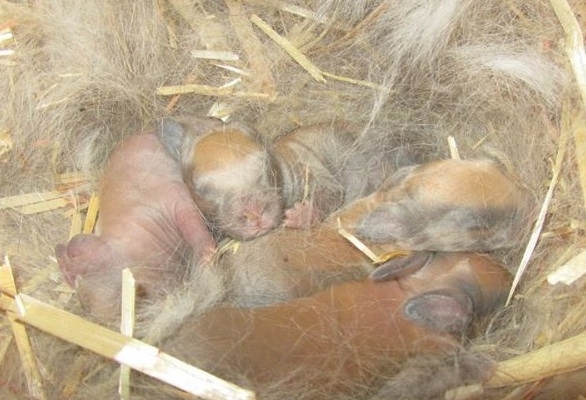
Today we woke up to find our Cinnamon doe, little miss Fancy, hovering over a nest filled with – count them! – 13 babies!


{Let’s have a moment of silence to be thankful that humans don’t have 13 babies at a time. I can only imagine the gray hair I would be sporting if I had multiples…}


We have a few more litters due right now as well, so once I saw the crazy number of babies in Fancy’s nest, I started hoping that another doe would have a small litter so we can foster babies to the other doe. That brought up the idea of fostering and I realized I haven’t blogged about it here yet.


One relatively common practice for rabbit husbandry is fostering kits from one doe to another. There are typically specific reasons why this would be advantageous as a management technique: perhaps the original doe had too many kits for them to thrive, perhaps one doe is exhibiting a distinct lack of maternal instinct, perhaps it makes sense to have a fantastic show rabbit birth the litter but not raise it so there is less wear and tear on her body. There are several rationale for fostering to begin with, so…


How do you actually do it?! The basic premise is to take kits from one litter and place them with another litter. We have had good success with this when we do the fostering within the first 2-3 days of a newborn kit’s life. We will remove both nestboxes from the cage and rearrange as needed. (I usually keep the nestbox away from mama for about an hour so that any scents will have a chance to mingle.) Then I put the nestbox(es) back and let the does do all the dirty work!


Remember to identify the moved kits in some way! Some will tattoo a dot in the moved kit’s ear, another idea is to put nail polish on the kit’s paws or fur. Just remember that all bunnies tend to look remarkably alike when side by side… and to keep your pedigrees straight you’re going to need some type of identification on the newborn kits.


I’ve also heard suggestions of putting a bit of vanilla extract on the foster mama’s nose so she won’t be able to smell the difference between her birthed and adopted kits. This might be a useful tactic for a high strung mother… but it’s not one we’ve yet practiced or even felt like we needed.


When do you know when fostering is needed? Most commercial breed does can very adequately handle 6-8 babies with plenty of milk for them to grow and thrive. When you have more kits than nipples, you might want to consider fostering! So far, the largest litter we’ve had a mama successfully raise is 10. Those kits were healthy but definitely did not have the weight gain and growth we see in a smaller litter. There’s a lot of flexibility in what an individual doe can handle with her milk supply. Regardless, consider putting her on 18% protein feed for as long as she’s nursing her kits.


We’ve only had one complete fostering failure and that was when we tried to put a baby about 10 days old in with a new litter. The foster mama was not pleased with this state of affairs and the kit was dead by the morning, which was a major bummer all the way around.


Only in rabbits can your animals actually claim the “brutha from anotha mutha” phrase! May your nestboxes be full!

When Kids Win, We Win

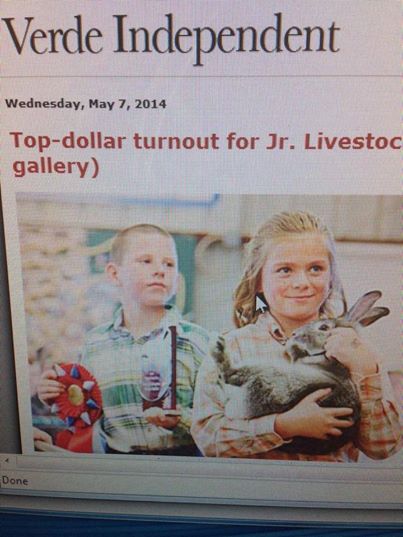
That's our rabbit in the paper! Just pulled in $550 at auction because that child rocked her fair experience! Woo hoo!

That’s our rabbit in the paper! Just pulled in $550 at auction because that child rocked her fair experience! Woo hoo!

This year we worked with several 4H groups around the state to set kids up with rabbits for their upcoming fairs. We decided early on that kids would have access to the best rabbits we have available at a discounted rate. Our decision was to start with a set price that was discounted from our normal sales prices, and then give the kids a chance to answer three trivia questions about rabbit husbandry. Each correct answer was an additional $5 discount.


The rules for showing in 4H are different from the rules for showing in ARBA. Typically the 4H guidelines are not as stringent on the “show” quality of a rabbit, which has led to some breeders selling 4H members their worst rabbits and justifying it by saying, “It’s just for 4H.”


When we first got in to rabbits we had an experienced breeder get quite animated about how rotten he thought that mindset was, so from the very beginning we have been of the opinion that 4H kids will get the best quality show rabbit we have available. We want them to love their rabbit, be proud of their animal, and have a decent chance at continuing to show as adults. Getting good rabbits in to the hands of kids is a major step toward achieving those goals.


Having four kids of our own might have also biased us toward helping kids as well!


Over the past few months we have gotten messages from the parents of the 4H-ers who have our rabbits with reports of does having litters as expected and rabbits showing well at the fair. Then today I got news that one of our rabbits went to auction at the fair and earned a $550 bid!


We’re so stinkin’ proud of these kids and the hard work that goes in to preparing for a fair and for showmanship! They have worked their tails off to learn their breeds, about rabbits, and how to present themselves with confidence! Their parents have made sacrifices to get livestock and educate themselves so they can help their children succeed and their project leaders have gone the extra mile to arrange for quality animals. It truly is a group effort and we appreciate that so very much!


We’re thrilled that our rabbits have been able to play a piece in the success of these kids, but mostly just proud of these children who are willing to go the extra mile and participate in agriculture and their communities. When they win, we win… and we truly believe they are a light toward a brighter future for our country.

About those Poodles…

Alright friends, here comes my bah humbug, outraged rant… and it’s not about rabbits. It’s about those poodle puppies.


Our poodle puppies are ready to go to new homes and I posted their sale on several facebook groups this morning. Since then I have answered a bundle of inquiries on their pricing and availability because, seriously, who doesn’t think these little boogers are cuter than a bug?!

Mama Kisses for Florin

Mama Kisses for Florin


My frustration is erupting because I’ve had some people respond to our listing that our prices are high. They were expecting to get a $50 puppy. Even our local dog pound charges around $200 to bring a dog home! This is a dog with no knowledge of the health issues in the background, unproven breed, no knowledge of socialization, etc. (I don’t mean to be disparaging toward the humane society because they do provide an important service. But I do mean to highlight that these dogs are NOT CHEAP and they’re UNKNOWNS. This is a dog that is an inherent risk due to unknowns and it is still priced several hundred dollars!)


To be fair, before I started researching breeding our dog I didn’t understand how expensive it would be to pursue this venture, starting from the initial investment to purchase our girl. But I’ve learned…


What I didn’t realize before this, and what I think these people who are shocked at our prices don’t understand, is the effort and cost involved in bringing these pups to the table. This isn’t 20 years ago when people would just have puppies and offer them for free. Bob Barker and Animal Rights groups have seen that almost every reputable breeder has gone out of business. It’s fairly impossible to get a purebred, papered dog of a specific breed in your area.


I spent time and energy researching a breed that I love and can talk about knowledgably. We searched a stud dog and went with the one that would be the best fit for our girl, complementing her both her strengths and weakness, even we had to travel several hours to arrange their meet up. We contacted the veterinarian throughout her pregnancy because it’s important to us to be ethical and put the welfare of our dogs as a priority.


Since birth the puppies have kept us up at night because they’re in our house with us, visited the veterinarian, gotten their tails docked and dew claws removed. We’ve taken them and their mom with us if we left town to ensure their well-being. We’ve fed them quality food that we researched as best for their growth and breed.


All of this is not to say we’re such amazing people; it’s to note that we have consistently invested money and intention into producing an animal that is set up for success to be a wonderful addition to anyone’s family. There were costs involved in this that we are out of pocket for and we did anyway gladly because we felt it was a best practice.


I’ve searched all over listing across the country to come up with what seems to be a reasonable, fair amount to ask as far as pricing. After considering all this and taking into account our own desires to place them in homes where love, not price, is the main consideration, we priced our dogs on the low end of that pricing structure for the breed.


When I tell a prospective buyer the price I am completely understanding it is not within their budget. It was a swing for us to purchase their mama and sometimes you have to save up to get what you really want! That’s perfectly fine with me as I respect your ability to make the right decisions with your finances.


BUT… don’t come at me for being over priced and unethical because you wanted to spend less than the amount of a bag of dog food for a puppy! We are not a money hungry puppy mill! It’s also ok (actually ethical) for us to be compensated for our time and effort in creating a dog you actually enjoy spending your life with!


It’s not particularly good mannered to post this frustration I have publicly, but I do hope it will help any readers at large who find us on some search engine of the world wide web realize there is a reason the pricing for purebred, pedigreed, family-raised dogs is not less than a monthly cell phone bill. THERE ARE EXPENSES TO RAISING AN ANIMAL ETHICALLY. This is a good thing for you, as a breeder who cares is a person who has made a commitment to ensuring as much as they can your satisfaction from your future companion!


And that is my story. Sorry for the rant… and thanks for listening. I feel much better now.

Request for Reviews

Whatcha thinkin' 'bout?!

Whatcha thinkin’ ’bout?!

Hi, friends!


I’m working on creating some testimonials/reviews of Mad Hatter Rabbits. This will likely look a little different as I gain more computer literacy, but for now it’s as simple as leaving a comment on our “Review” page.


If you have been pleased with a rabbit purchased from us…

If you have benefitted in any way from the posts on this website…

If you’re just generally in a good mood and want to share the lovin’…


Would you please head over to our Reviews page and leave a comment for us? This will help anyone getting to know us in the future know what they’re getting in to! Thanks!


https://madhatterrabbits.wordpress.com/reviews/

Poodles Ready for Deposits!

4While dogs are not our main focus around here, we will occasionally have a litter of poodles available for sale. We breed selectively for red and/or black, our pups are CKC and APRI registerable.

Right now we have a litter born 2/7/14 we are taking deposits on. Mom is on the small side of miniature poodle, dad is a toy poodle. We’re waiting to see what the growth patterns predict, but these little pups are likely going to be toy poodle sized.

Get your own cuteness!

123photo 5

A Rabbit With No Ears

It’s not a movie, even though there’s a movie by that name. (Rabbits Without Ears.) It’s also not a response to a nuclear disaster, as people fear is the reason behind a rabbit born with no ears after Fukushima meltdown in Japan.

It’s ugly and strange, but it’s happened to us. We have some earless bunnies.

The vast majority of the rabbits in our rabbitry are excellent mothers, even our first-timers. But then, occasionally, just like in real life, there are…

The ones.

You know. The ones you don’t really like to take out in public because you aren’t quite sure what will happen. Kind of like that one family member who might get rowdy at a holiday dinner and be the star of a story told for generations?

Yeah. We have one of those.

Let it be freely said, I adore our Cinnamons. They are beautiful rabbits, friendly, and easy to hold and cuddle. They’re fabulous!

But then, there’s the one.

One Cinnamon doe had her litter a few weeks ago. I’m not completely bitter she had it at about 1 am and I stayed up to make sure she did alright so the babies wouldn’t freeze to death. (Alright, I’m a little bitter.) (I’m also glad I stayed up because she made a nest of hay out of the nestbox!)

I’m bitter because the darn rabbit did such a fabulous job of cleaning her newborns up that she ate the ears right off of them! Out of six babies, only two have been left untouched, one poor baby lost half of its head as well!

An overzealous mama took the ears clean off these babies at birth while cleaning them up.

An overzealous mama took the ears clean off these babies at birth while cleaning them up.

Darn doe.

We weren’t sure if the babies would survive their injuries, after all, losing a large flap of skin at birth seems to put a damper on the whole, “Welcome to life!” philosophy. Particularly in the case of the scalped baby, we didn’t know if it would be a more humane choice to put it down immediately.

But when we felt the hurt babies they didn’t seem to be in pain, so we let them go for 24 hours. A day later everyone was fat and the ears were scabbed. And 24 hours after that those babies were thriving.

So now we have some disfigured rabbits. What do we do with them?!

Well, first and foremost, we give their mama another chance. The rule of thumb is to give a brand new mom a chance at three strikes before you removed her from your breeding program. I will also say that even though she stinks at cleaning her kits up at birth this particular doe has been a great mom, nurses well, and has even fostered a few kits for us.

Mama's been feeding this baby Cinnamon WELL!

Mama’s been feeding this baby Cinnamon WELL!

Second, we wait to see how the babies develop. Because they don’t have anything genetically wrong with them, if they have killer body types they could still be an asset to a breeding program. That is a question only time and growth will answer.

Finally, if they don’t have a body type we’d like to incorporate into our breeding program, they are still useful as sustenance for our family.

We’ll see how these little ones develop, but I’m comforted that it’s not the end of the world that we have some earless wonders!

Blanc de Hotot Babies!

I posted these photos on our facebook page, so I really don’t have to post them here… but they’re so darn cute I can’t help it! It’s exciting to have Blanc de Hotot babies around!


1689175_510961495692128_1089312646_n

This is Carol’s classic “whatchoo talkin’ ’bout, Willis?!” look. She’s been an awesome mama and is fostering 3 kits from other does.


1796485_510961445692133_856498497_n

Every time we turn a nestbox on its side the moms find their own way to get away from the babies! Velma is safe… for now!


Cuteness!

Cuteness!


Is there anything sweeter than those cute, pink ears?!

Is there anything sweeter than those cute, pink ears?!