Category Archives: Meat Rabbits

Common Terminology for Rabbits and Rabbit Shows

Sometimes terms can be confusing. Use this guide to help!

Sometimes terms can be confusing. Use this guide to help!

A HUGE “Thank You” to Kim’s Rabbit Hutch for this helpful guide to rabbit terminology.

Buck – A male rabbit
Doe – A female rabbit
Junior – A rabbit under 6 months of age
Senior – A rabbit over 6 months of age
Intermediate or 6/8 – A rabbit between 6-8 months of age. Most common in larger breeds

Varierty – Color of a rabbit
Class – Age group of the rabbit. Either Junior, Intermediate or Senior
Broken – A color in conjunction with white. With either a blanket or spotted pattern of the color on the body.

Solid – A color of a rabbit that is covering the entire body
Agouti – A type of color that has bands and ticking. Most common colors are Chestnut and Chinchilla

Shaded – Refers to colors like Sable Point. These colors have darker colors on the nose, ears, and other parts of the body. While the whole of the body is one solid lighter color.

Molt – A coat that is shedding and out of condition.
Finish – A coat of a rabbit that either lacks finish (poor condition, molting, etc) or has a good finish (well groomed, not molting) could mean the difference between winning and losing.

Pedigree – A piece of paper charting 3 generations of the rabbit with ancestory history.

Registration – A piece of paper also charting 3 generations of the rabbit with ancestory history. This paper however states (for the rabbit it is issued to) that it has free of disqualifications and has been deamed an acceptable representation of said breed. The rabbit also recieves a registration number unqiue to that rabbit.

Ear Number / Tattoo – A series of numbers and/or letters tattooed into the rabbits left ear. Usually no more then 5 are in the ear. A circled R may be tattooed in the left ear if the rabbit has been registered.

Leg – A leg is earned by winning in an ARBA-sanctioned show as long as there are three exhibitors and five rabbits competing for the win. For example, first place in a class of five or more bunnies showed by three or more different exhibitors would earn a leg. For classes without enough exhibitors and/or bunnies, it may be possible to earn a leg by winning BOSV (if there are sufficient numbers of the related sex in the variety), BOV (if there are sufficient numbers in the entire variety), BOS (if there are sufficient number in the related sex of the breed) or BOB (if there are sufficient numbers in the entire breed). A rabbit may only earn one leg per judging.

BOB – Best of Breed
BOS – Best Opposite Sex of Breed (ie. If the BOB rabbit is a buck, BOS winner must be a doe. Which is why it’s called Opposite Sex

BOV – Best of Varierty
BOSV – Best Opposite Sex of Varierty (ie. If the BOV rabbit is a buck, BOSV winner must be a doe. Which is why it’s called Opposite Sex

BOV and BOSV winners go on to compete for BOB and BOS
BIS – Best in Show (this is big. To win it, your rabbit must get BOB. At the end of the show, all of the breeds who had a BOB winner compete to see who is the best of the best.)

1st Runner Up / Reserve to BIS – This is the 2nd place rabbit to who won BIS
2nd Runner Up – This is the 3rd place rabbit to who won BIS
DQ – Disqualification. A rabbit can be disqualified for many reasons. Most common is over the weight limit, bad teeth, or illness present.

Flesh condition – Just like it sounds. If a rabbit is “rough” in flesh it means the skin over the backbone is very loose and thin. Bones are easily felt. Most common in rabbits suffering from some illness, not being fed enough, or does coming off weaning litters.

Open – Usually refers to an all “adult show.” Which means anyone of any age is allowed to enter, but it is usually adults competing with other adults. They will usually add the letters: A, B and C to the end of “Open Show” if they are having multiple shows.

Youth – An all youth only show. Only those 18 and under are allowed to enter these shows. Youth breeders must put their own rabbits on the judging table.

Cull – A breeder goes through a litter selecting ones he/she wishes to keep. The rest are sold (or eaten, if they’re a meat breed.)

Kindling – Term used to mean giving birth to baby rabbits.
Kits – Term describing baby rabbits.
Cavy / Cavies – These are not rabbits. They are shown sometimes at rabbit shows. They are basically guinea pigs.


Funny Things Rabbit People Say

zettmedia / stock.xchng

zettmedia / stock.xchng

One of the very best things we’ve done as people who will be taking rabbit breeding seriously is join the American Rabbit Breeders Association, Inc., or ARBA. One of the supports offered by this organization is a Facebook group where breeders gather to compare stories, share remedies, and communicate best practices.


I’ve learned an amazing amount from reading through past posts… but one thread tickled me more than any other! For the rabbit newcomer, there are many aspects about the care and nurture of our four-legged friends that might be confusing. Other breeders shared some of the funny questions and statements they’ve gotten from rabbit innocents:

“My female rabbit keeps pulling fur and putting in the corner of our sofa.”

Friend’s reply, “Are there any other rabbits in the house?”

“Yes.”

Friend’s reply, “IS the other rabbit a male?”

“Yes.”

Friend’s reply, “Then your female is making a nest to have babies.”

“But they’re brother and sister. They wouldn’t do that!.” (courtesy of N. Anderson) (Rabbits have no regard for anything except gender!)

“How far can my rabbit swim?” (courtesy of S.H. Brown) (Rabbits don’t do well with water at all)

“I judge 4H rabbit kids & sometimes you get some very funny answers. My favorite: I asked a young man senior showman (very experienced) What is smut? He lowered is head, face blushing & answered very quietly, “My momma won’t let me look at that stuff.” It was hard not to laugh but I continued with the judging. Later that day the young man came up to me and asked about the question. I showed him in the book & explained it to him. We had a good laugh together. Gotta love those 4H kids!” (courtesy of B. McCall) (Smut is a reference to poor coloring)

“I once had a FFA mom call me in a panic because she was bunny-sitting her daughters rabbit and while playing with it noticed a large tumor on its end. I asked her to go get the rabbit and bring it back with her to the phone. She did and I asked her to turn it over which she did and started screaming! She was so freaked out because now there were two growths on the rabbit! After I stopped laughing I told her, “Congratulations you have a boy!” (courtesy of B. Rowan)

“Can I breed this 3 lbs. mini Rex doe with that 11 lbs. Satin buck?” they asked me. To which I replied, “All things may be possible but common sense says that’s not prudent.” (courtesy of J. Veale)

“I was on one group and and one woman told everyone else that rabbits store MILK in their dewlap…I was like, “Really now???” (courtesy of K. Southall) (The dewlap is an extra amount of hair used by mama rabbits to pull and line their nests)

“At our local fair last year people kept asking us “What’s wrong with all the rabbits that they are broken?” (courtesy of K. Krejci-Giminiani) (“Broken” is a coloring description. It means the color is broken instead of solid)

“I have to admit I was confused with the “legs” a rabbit has when we were new. I told L. there was no way I’d pay for a three-legged rabbit that she couldn’t even show! But we figured it out!”(courtesy of M.S. Guidry) (When a rabbit wins at a show it is awarded a “leg.” After earning three legs, it is eligible to be given the honor of Grand Champion, which is quite desirable.)


I hope this has given you a bit of a chuckle, as I got a chuckle while reading! Thank you to all the people who posted on the FB page… and I’d love to hear of any funny questions you’ve gotten in the comments!

Rabbit Legends

Rabbit Legends!

Rabbit Legends!

Raising these rabbits has gotten me thinking about “Rabbit Legends” – as opposed to Urban Legends. Stories of circumstances that seem completely impossible and yet… are true!

There’s a wealth of bunny misinformation around the internet and a simple Google search is as likely to lead you astray in rabbit husbandry as award you a prize! Where do you go to find out the real scoop?!

I’ve found talking to other breeders to be the best way to figure out if what you’re witnessing is normal, possible, or just plain strange! Even among breeders there are some urban legends – “rabbit legends” if you will – things that some say are impossible… and yet others have experienced firsthand.

Just for giggles I thought I’d list a few of the rabbit legends that others have had to see to believe!

Here are some “Rabbit Legends” for the ladies:

1. Concurrent pregnancies. Perhaps the most hotly debated rabbit legend is the ability for rabbits to be pregnant with two separate litters at the same time. Here’s how it happens. Flopsy is bred on Day 1. One Day 14 the breeder palpates the doe and feels nothing, so, not wanting to waste time, rebreeds her. On the original Day 31, the doe drops some babies… and has more on Day 45!

I wouldn’t have believed this was possible except it’s happened to our friend. It’s not a good thing – in fact, she lost all the babies from both litters – but it is possible. Apparently this has to do with having two uterine horns, and one side can fertilize at one point while the other fertilizes at another. Some dangers are the physically taxing effect of dual pregnancies, delivering both litters at once (one set would be to term while the other obviously underdeveloped), or the doe terminating the pregnancy on her own.

2. Absorbing the feti. (I’m not sure the plural of fetus, but it’s from Latin so, in the theme of an educated guess, I’m going with the plural Latin ending “i.”) Here’s the situation: you breed your rabbit. You know for a fact the deed was accomplished. You watch your doe, she gets fatter and fatter, she even palpates pregnant! The appointed time comes and you wait. And wait. And wait. And nothing happens.

You aren’t crazy. That sweet little doe has reabsorbed the tissues of her babies back into her body. There are various reasons for this, most blame stress, sickness, or ill-formed embryos. Some rabbits have been known to do this if they seem to feel the timing isn’t right or they can’t find a safe place to build their nest. Who knows what’s going through a rabbit’s mind – after all, they aren’t genius or they wouldn’t be at the bottom of the food chain – so it may be the result of a special little bit of rabbit crazy. Regardless of the reason, it happens!

3. Multiple delivery dates. Another situation for the rabbit legend record books? Delivering the same litter over several days. It stands to reason if you bred the rabbit on one day the delivery would take place on one day, right?

Wrong. Many, many breeders report their does giving birth over the course of 2-to-4 days! After all, who needs to condense the child-bearing experience?! All a female of any species really wants is to be in labor for hours… no! days!

Depending on the rabbit this may result in the loss of all, some, or none of the babies. But there’s no doubt, the laboring process can take as little as 10 minutes, or it can extend for days.

Let’s talk about “Rabbit Legends” for those bucks:

1. Sympathy pregnancy symptoms. One breeder has a buck who gains weight and builds a nest, right along with his mate! She was so rattled by this behavior she checked him over thoroughly, convinced she had somehow gotten the buck and doe mixed up. But, no. It was the buck who was getting all maternal! That’s a prouder papa than most rabbits!

2. Breeding through the wire.  It’s never a good idea to keep a buck and a doe in cages right next to one another. Not only because your doe can get seriously aggressive, but also because two rabbits can be horny like… rabbits! When friskiness is in order, why let a sheet of wire stand in the way?! A pair of rabbits in the mood to do the deed will do the deed, right through galvanized steel if necessary.

Quite a surprise for the breeder who walks out to their “unbred” doe and sees her pulling hair for a nest!

3. Intentional castration. It’s an ugly facet of breeding rabbits – sometimes a doe isn’t too excited about a buck getting his north and south end confused. The truth is, a buck on a love-making mission is a hot, frenzied mess – and he’ll leap at anything he can manage to mount, without concern of whether his mounting is on the backside or in a doe’s face! One breeder tells the horribly story of a buck who was confused in this way and ejaculated up the doe’s nose! Ewwww!!!!

A doe, when inclined, can participate in a Lorena Bobbit-like manuever without hesitation! This is excellent motivation for not keeping litter-mates together for too long, as well. When it comes to romance there are some pairs that can be left without supervision for extended periods of time. But there are the other does who need constant observation or that poor buck may end up with only one (or no) testicle.

It’s a sad truth, don’t trust the ladies. And if you’re a buck, keep your tendermost parts away from a lady’s whose teeth never stop growing.

A few more, health-related “Rabbit Legends”:

1. Loss of pupil. One breeder took her rabbit to the fair – it was VERY hot in the rabbit barn and suffered a heat stroke. After cooling her rabbit off, she realized her rabbit was missing a pupil! The heat of the experience had caused her to blow her eye! She recovered her health, but was blind in that eye forever.

2. Rabbit c-section. One breeder had a doe that not only survived a c-section delivery, but went on to have four more litters as VBAC. Talk about talent!


Do you have any rabbit legends of your own to share? Please tell us in the comments!


Nesting & Birth!

We caught the nesting and birthing on video! Dallas was an amazing mom and we have 8 new little ones!

Each baby has its own birth sack and placenta, which mom eats. Dallas got all but two and that’s what you can see her eating in the video.

The video isn’t professional quality, but it’s more than you usually see. Enjoy!

(Also need to mention these are not her normal quarters! This is a special cage we’re using because we had to bring her inside. It was -6* last night! We will move her back to her big space as soon as we can without losing all of them to the cold weather.)

Sexing your Rabbit

We welcomed a litter of Silver Marten babies yesterday! It’s so exciting to see those little ones wiggling around and mama so proud!

Earlier this year I saw a post on a rabbit group claiming you can sex a rabbit at birth. I had never heard of this, so I’ve decided to try it with this newborn litter and see how it turns out in the end.

Traditionally, you need to wait until the rabbits are about six weeks or older to see if you’ve got a male or female. To check this, turn the rabbit over on its back and clasp the base of the tail between your second and third fingers. Using your thumb on the same hand, press down at the top of the genital area. This will cause the area to open and you will see a slit opening for a doe and a round opening for a buck.

Older bucks protrude a lot – there can be no doubt you’re looking at a penis! Another clue is whether testicles have descended, they would be located on either side of the genital area. The funniest thing I’ve read is about a gal who was too embarrassed to sex her rabbits and would sneak out at night with a flashlight to shine under the cage and try to catch a glimpse of testicles!

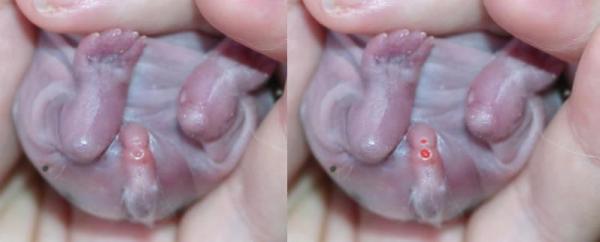
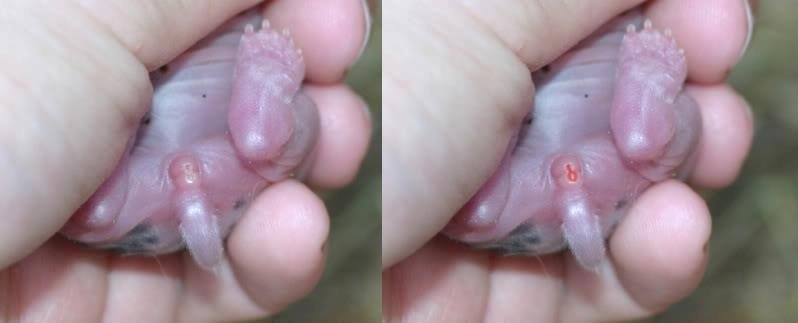
The post I read recently claims you can sex your rabbits at birth! They posted the following picture and explanation:

buck

“Both pictures of a buck, the one on the left is actual the one on the right is marked in red to make it a little easier to see. There is a little bit of a gap between the penile opening and the anus. This will not be present in the newborn doe.”

According to our observations last night of the newborns, we believe we have three does and three bucks. We have put a mark with sharpie on the left ear for our buck guesses and the right ear for our doe guesses. Now it’s just a matter of time to see if we guessed right! I’ll be sure to update and let you know!

20130113-212425.jpg

“This is a doe. The anus and vent will be touching.”

How to Make Your Rabbit A Smoothie

oatmeal-face-mask

Simply oats help relieve gastrointestinal stress.

I just finished making a bunny smoothie and thought it might be interesting to share.


In theory, this could be an occasional treat for any rabbit, but for us I had a rabbit who had diarrhea. Yuck! The first step was to take him off of his regular pellets and give him some hay. Next step, oatmeal smoothie!


I had recently made some yogurt for the family, so I got about 1/2 cup of the plain, unflavored yogurt and mixed it with regular oats until the oats were coated. We’re on day three of the oatmeal smoothie for his food, along with hay, and the diarrhea… cleared up!


The active cultures from the yogurt give the natural, good bugs in the rabbit tummy a boost, while the oats add roughage into the diet, making stools more firm.


The oats are simple (I used Quaker) but here is the recipe for the home made Crock Pot yogurt. (Adapted from Money Saving Mom)


Homemade Yogurt in the Crock Pot Recipe

  • 1/2 gallon milk (Whole milk will make the yogurt thicker, but any milk will work.)
  • 1/2 cup plain unflavored yogurt (Any kind with live active cultures will work but I use Greek. Be sure to save a half cup of this batch of homemade yogurt to use as a starter next time!)
  1. Pour the half gallon of milk into your Crock Pot and turn it on low. Cook it for 2 hours and 45 minutes.
  2. After 2 hours and 45 minutes, turn the Crock Pot off and let it sit for 3 hours.
  3. Spoon a small amount of the milk into a small bowl and add the half cup of yogurt to it. Mix together thoroughly.
  4. Dump this mixture back into the milk in the Crock Pot and mix it around well.
  5. Put the lid back on your Crock Pot and wrap pot with a large beach towel or blanket (make sure it is unplugged and turned off!). This step helps keep the heat in the Crock Pot and allows it to cool more slowly.
  6. Let the beach-towel-wrapped Crock Pot sit for 8-12 hours (or overnight). After 8-12 hours, it should be thickened.

You can stop at this step, but I like my yogurt thicker, so I go a little farther!

  1. Get a piece of cheesecloth and create a “bowl” by tying the corners around a sink or bathtub spout. (I use a large baby cloth given to me as a shower gift made of muslin. It comes in packages of three at Target).
  2. Pour the yogurt into the cloth bowl and let it sit anywhere from 1 to 6 hours, depending on thickness desired. The cloth allows the whey to drain – a long hang will end up turning into cream cheese! (The whey can also be collected and used for other healthful purposes, if desired.)
  3. When yogurt is desired consistency, spoon it into jars or plastic containers and refrigerate a few hours before eating. (It’s normal for the yogurt directly touching the cloth to be thicker.)

This will keep for one to two weeks in the refrigerator. Be sure to save a half cup to use as a starter for your next batch of homemade yogurt.

When we eat it we add a spoonful of sugar and about 1/4 teaspoon of vanilla extract to eat bowl. Yummy – and cheap!


Here is another list of Medicinal Herbs for Rabbits compiled by Rise and Shine Rabbitry. If your bunny is sick but you don’t have to use medicine, don’t!

When the Weather Outside is Frightful…

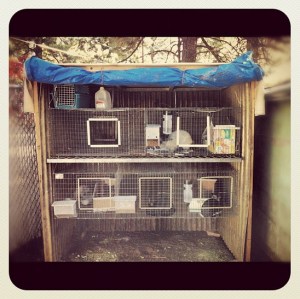
20121219-074814.jpgThe challenge of living in our area during the winter include a wicked wind and occasionally several feet of snow. It’s Arizona, but it’s definitely not the desert in our mountain top town!

This picture is of one of our hutches. It’s enclosed on three sides, and has a simple tarp that can be dropped down to shield the rabbits against our high winds. Having the entire area fenced helps as well. Not only from the wind, but from any passing dogs or other animals who might be inclined to make trouble or consider our rabbits their dinner!

We have been pleasantly surprised at the effectiveness of the tarp. The last several days, when the overnight temperatures have been in the teens, the water bottles have not been frozen (the metal spouts are another story, however…) Each morning we roll the tarp up and are greeted by sweet, furry, curious faces with wiggly noses!

One additional thought, we pull the tarp up every single day to allow for as many sunlit hours as possible. Rabbits have a hard time breeding if they spend too much time in darkness (natural instincts take over). We will only keep the tarps down during the day if we have driving, wind swept rain that would end up soaking the rabbits or extremely cold temperatures (well below zero).

Hutch

How do you keep your rabbits warm?

A Family Affair

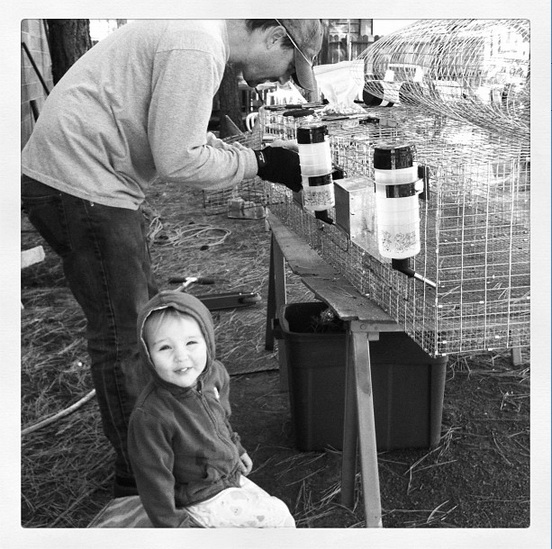
Daddy’s overseer during cage manufacturing!

One of the great draws for us in raising rabbits is the ability for each member of our family to participate.


Our children can help around the rabbitry in many ways each day:


  • They can check the food and water levels
  • They can watch the weather report and make sure our rabbits are protected in inclement weather
  • The are able to rake up any bunny berries that get out of line
  • They can socialize each rabbit


Additionally, our children are learning life skills from their time working with the rabbits:


  • They learn how to respect a precious creature and honor life
  • They gain pride in accomplishment as the animals thrive
  • They experience joy in the companionship of their rabbit
  • They understand financial responsibility and opportunity cost as they raise and sell
  • They gain knowledge of where their food comes from
  • They learn basics of genetics through breeding


There are many other ways our children benefit from having rabbits, but these are a few that are compelling for us. What would you add to the discussion?

What About the Poop?!

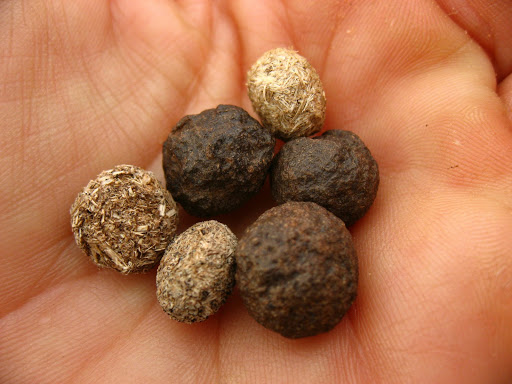
Bunny Berries are excellent for reuse in gardens.

USES FOR RABBIT MANURE

Rabbit manure, or “bunny berries,” used as a plant fertilizer is superior to other manures due to its unique composition. Often referred to as “super fertilizer” or “Bunny Gold,” gardeners revel in the fast and abundant growth of their crops, plants, gardens and produce. Rabbit manure will not “burn” the plants when applied directly to the plants.

Composting with rabbit manure is also popular and rabbit manure ranks among the finest of all manures to use for this purpose.

Worm farming (Vermiculture) has additional benefits as the worms thrive in properly maintained worm beds and rabbit manure is the favorite manure to use for raising worms. The raising of worms under cages can be used to eliminate odor in the barns. Open, ventilated barns are ideal for this venture.

Worm farming also provides additional income by selling the worms for bait or composting, and the worm “castings” as potting soil.


Written by Pat Lamar, President of the Professional Rabbit Meat Association (PRMA) and the Chairperson of the Commercial Department Committee for the American Rabbit Breeders Association (ARBA), 1998

Preparing Your Hutch for Winter

Now that winter is upon us, we take a few different precautions winterizing our rabbits. Rabbits thrive in cold weather, but it still makes sense to make sure you don’t wake up one morning after a frigid night and discover your livestock frozen solid!

Our hutch is a double-decker, lean-to style. The sides are made of T11 insulating material with corrugated fiberglass interiors. We’ve attached a heavy tarp to the front of the hutch that can be dropped down in driving rain, super snow, or during our terribly windy spring days.

We also give each of our rabbits a box stuffed with hay for the below-freezing weather.

Image